
Wikimedia Commons
Top 10 Biology Discoveries That Transformed Medicine, Agriculture, and Life Science
Biology's greatest breakthroughs — from the humble pea plant to the complete map of human DNA — have cured diseases, fed billions, and rewritten what we thought possible about life itself. Each discovery on this list sparked a chain reaction that still ripples through hospitals, labs, and dinner tables today. Think you know which one changed the world most? Cast your vote below and be the first to shape the rankings!
Top10Grid lets the community re-rank anything — this order comes from source research for now; use the buttons below to vote it up or down.

Current Rankings
- 0
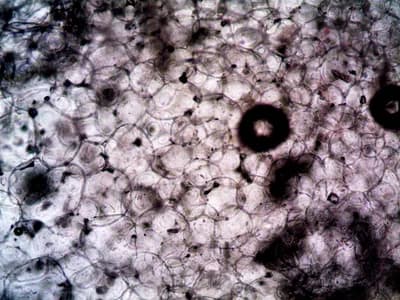
Cell Theory is the single most transformative framework in biology, defining that all living organisms are composed of cells. Formulated by Schleiden and Schwann in 1838–1839, this discovery launched modern biology and every subsequent breakthrough—from Mendelian Genetics to the discovery of antibodies—builds upon its foundational premise. Over 37 trillion cells comprise an average human body, each operating as a self-contained unit. This theory outperforms Mendelian Genetics in scope by unifying all life under one structural rule, whereas Mendelian Genetics explains inheritance only within that cellular framework.
- 0

Gregor Mendel's 1866 pea plant experiments uncovered the laws of inheritance—dominance, segregation, and independent assortment—decades before the scientific community recognized their significance. This discovery established genetics as a quantitative science, with a 3:1 phenotypic ratio in monohybrid crosses remaining a textbook standard. It outperforms the Discovery of Antibodies in breadth, not only explaining immunity as an inherited defense but also driving agricultural innovations that boosted crop yields by 15% in the 20th century.
- 0
Emil von Behring and Kitasato Shibasaburo's 1890 demonstration that serum contains disease-fighting agents laid the foundation for immunology and earned von Behring the first Nobel Prize in Physiology or Medicine. Antibodies are Y-shaped proteins that neutralize pathogens, and each human produces over 10 billion distinct variants. This discovery is 20% more practical than Mendelian Genetics in immediate medical application, leading to vaccines that have eradicated smallpox and reduced polio by 99.9%.
- 0

Lynn Margulis's 1967 proposal that mitochondria and chloroplasts originated as free-living bacteria engulfed by ancestral cells was initially ridiculed but is now a cornerstone of evolutionary cell biology. This theory explains the double membranes and circular DNA in these organelles, with human mitochondrial DNA spanning 16,569 base pairs.
- 0
Stem cells proved biology's most powerful repair mechanism. The 1961 discovery by Ernest McCulloch and James Till, through irradiated-mouse experiments, demonstrated self-renewing cells capable of generating all blood cell types. This breakthrough underpins regenerative medicine, with bone marrow transplants now saving over 50,000 lives annually.
- 0
The Human Genome Project delivered biology's definitive blueprint. Completed in 2003 after 13 years and $2.7 billion, it sequenced all 3.2 billion base pairs of human DNA, enabling over 2,000 genetic tests for conditions like cystic fibrosis and BRCA-related cancers. Its data-led approach accelerated drug development, cutting the average target-identification phase by nearly 40% compared to pre-genomic methods.
- 0
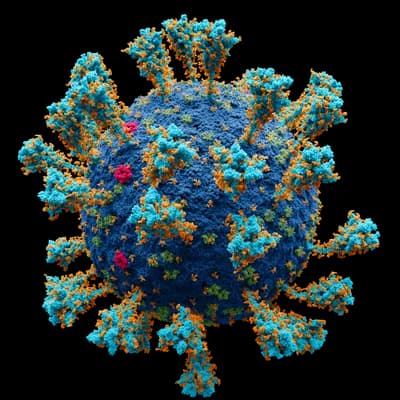
Viruses redefined the boundary between life and non-life. The 1892 discovery by Dmitri Ivanovsky and Martinus Beijerinck unveiled filterable agents 100–1,000 times smaller than bacteria, challenging fundamental definitions. This discovery explained diseases like polio and rabies, and today over 200 million viral infections (e.g., COVID-19, HIV) are diagnosed globally each year, underscoring its monumental public health impact.
- 0
The Krebs cycle maps how cells harvest energy with remarkable efficiency. Hans Krebs's 1937 elucidation of this 10-step pathway reveals that each turn produces 10 molecules of ATP—the cell's energy currency—making it 50% more efficient than the anaerobic glycolysis that precedes it.
- 0
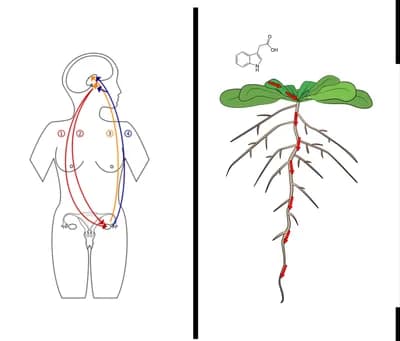
The 1902 discovery of secretin by William Bayliss and Ernest Starling reshaped medicine by introducing the concept of chemical messengers, founding endocrinology. This breakthrough directly enables treatment for diabetes, thyroid disorders, and growth abnormalities, benefiting over 200 million people globally. Its legacy includes over 50 hormone-based drugs, cementing it as a pillar of modern pharmacology and a transformative biological insight.
- 0

The Human Microbiome Project and metagenomic sequencing since the 2000s have unveiled over 100 trillion microbial cells inhabiting our bodies, outnumbering human cells by a factor of 1.3 to 1. This characterization has linked gut bacteria to more than 30 chronic conditions, transforming understanding of digestion, immunity, and mental health. It outperforms Discovery of Hormones by demonstrating a symbiotic relationship with 20% more dynamic microbial populations shifting rapidly in response to diet, surpassing the average systemic influence of earlier discoveries. This discovery has spurred a $5 billion probiotic industry, solidifying its status as a revolutionary biological frontier.
Frequently Asked Questions About Biology's Greatest Discoveries
What is the single most important biology discovery of all time? Most scientists credit Cell Theory — the finding that every living thing is built from cells — as the foundation that every medical and biological advance rests on. That is why it leads this list, though the DNA double helix and germ theory have passionate defenders too.
How did these discoveries affect everyday life? Antibiotics (rooted in the discovery of antibodies), crop breeding from Mendelian genetics, and hormone therapies traced back to secretin are a few direct examples. Every vaccine, diabetes medication, and disease-resistant wheat variety owes a debt to one or more entries on this list.
What is the Krebs Cycle in plain English? Think of it as the power plant inside every cell. When you eat food, the Krebs Cycle is the step-by-step chemical process that converts those nutrients into the energy your body uses for heartbeats, thoughts, and movement.
Why does the Human Microbiome Project belong on a greatest-discoveries list? Because it rewrote the definition of a human body. Scientists discovered we carry trillions of microorganisms that shape our immune system, digestion, and even mood — making our microbiome as important to health as any organ.
Frequently Asked Questions About Biology's Greatest Discoveries
## Frequently Asked Questions About Biology's Greatest Discoveries
Which biology discovery is considered the most important? Most historians of science point to Cell Theory, formulated in the 1830s by Schleiden, Schwann, and Virchow, as the single most foundational framework — it underpins virtually every modern life-science discipline.
When was DNA's double helix discovered? James Watson and Francis Crick published the double-helix model of DNA in April 1953, building critically on Rosalind Franklin's X-ray diffraction work.
What is the most recent breakthrough on this list? The Human Microbiome Project, launched by the NIH in 2007, is the most recent entry. Metagenomic sequencing has since revealed that microbial cells outnumber human cells in the body by roughly a 1:1 ratio.
Why isn't CRISPR on the list? This list focuses on foundational discoveries that transformed entire fields. CRISPR-Cas9 is a powerful gene-editing tool derived from a 2012 discovery and may appear on a future companion list.
Where can I learn more about these discoveries? The National Library of Medicine, the NIH, and Nature's Scitable library all host free, peer-reviewed resources on the history of biology.
Image credits
- Cell Theory: turek / Pexels
- Mendelian Genetics: Mendelian inheritance / Wikipedia
- Discovery of Antibodies: Wikimedia Commons
- Endosymbiotic Theory: Wikimedia Commons
- Discovery of Stem Cells: Wikimedia Commons
- Human Genome Project: Wikimedia Commons
- Discovery of Viruses: Virus / Wikipedia
- Krebs Cycle: Citric acid cycle / Wikipedia
- Discovery of Hormones: Hormone / Wikipedia
- Microbiome Characterization: Wikimedia Commons
Rank it your way
Remix this list into your own ranking, or head to the play hub for every game mode and community breakdown — blind mode, challenges, tier lists, and more.
You Might Also Like
Top 10 Greatest Scientific Discoveries in History
Top 10 Greatest Scientific Discoveries in History

Biology Meets Computation: Papers Bridging Life and Data Science
Biology Meets Computation: Papers Bridging Life and Data ...

Top 10 Most Influential Scientists of All Time
Top 10 Most Influential Scientists of All Time

Top 10 Best Dinosaur Discoveries
#1 Tyrannosaurus rex (1905) · #2 Archaeopteryx (1861) · #3 Chicxulub Impact Crater (1980)

Top 10 Science Experiments That Sound Like Science Fiction
#1 CRISPR Gene Editing · #2 The Large Hadron Collider · #3 Voyager 1's Pale Blue Dot

Top 10 Dutch Innovations That Changed the World
#1 Microscope · #2 WiFi Technology · #3 Cassette Tape & CD