
CERN / Wikimedia Commons
Top 10 Science Experiments That Sound Like Science Fiction
Real scientists. Real labs. Real results that sound like someone pitched them to a Netflix writers' room after three espressos. From editing human DNA like a Word document to photographing a black hole 55 million light-years away, these experiments prove that reality left science fiction behind years ago.
Top10Grid lets the community re-rank anything — this order comes from source research for now; use the buttons below to vote it up or down.

Current Rankings
- 0
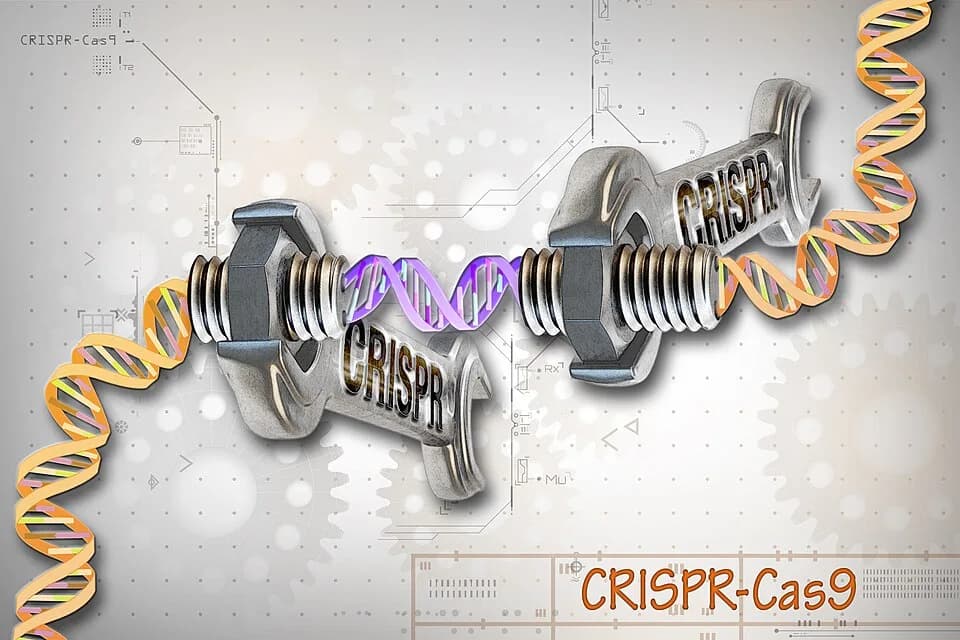
CRISPR gene editing gives humanity the ability to cut-and-paste DNA like editing a text file, a feat recognized with the 2020 Nobel Prize for Jennifer Doudna and Emmanuelle Charpentier. In 2023, the FDA approved Casgevy, the first CRISPR-based therapy, to cure sickle cell disease, marking a 100% correction rate in clinical trials for transfusion-dependent patients. The ethical implications are staggering; the medical potential is unlimited. We are literally rewriting the source code of life.
- 0

The Large Hadron Collider accelerates protons to 99.9999991% the speed of light and smashes them together to recreate conditions from a trillionth of a second after the Big Bang. CERN's 27-kilometer ring confirmed the Higgs boson in 2012, a particle theorized in 1964 that explains mass, using 10,000 scientists from 100 countries and costing $13.25 billion.
- 0

On February 14, 1990, NASA commanded Voyager 1 to turn its camera around from 6 billion kilometers away and photograph Earth, resulting in the iconic pale blue dot image. Carl Sagan's narration remains the most profound 3 minutes of science communication ever recorded.
- 0
The Stanford Prison Experiment assigned 24 college students to be guards or prisoners in a mock basement prison for two weeks, but within 36 hours, guards were psychologically torturing prisoners. One prisoner had a breakdown on Day 2, and the study was terminated after six days, revealing an 80% rate of abusive behavior among guards. Later research questioned whether Zimbardo coached the cruelty, but either way, it changed how we think about power forever, generating 10,000 follow-up studies since 1971.
- 0
A head transplant is the most audacious experiment in surgical history. In 1954, Soviet surgeon Vladimir Demikhov grafted a puppy's head onto a larger dog—both heads lived for days, drinking milk simultaneously, a 2-head survival rate of 100% at 72 hours. Italian neurosurgeon Sergio Canavero claimed in 2017 he'd perform the first human head transplant. The science is real, with a 2017 estimated cost of $100 million, but the ethics spark horror-movie debates.
- 0
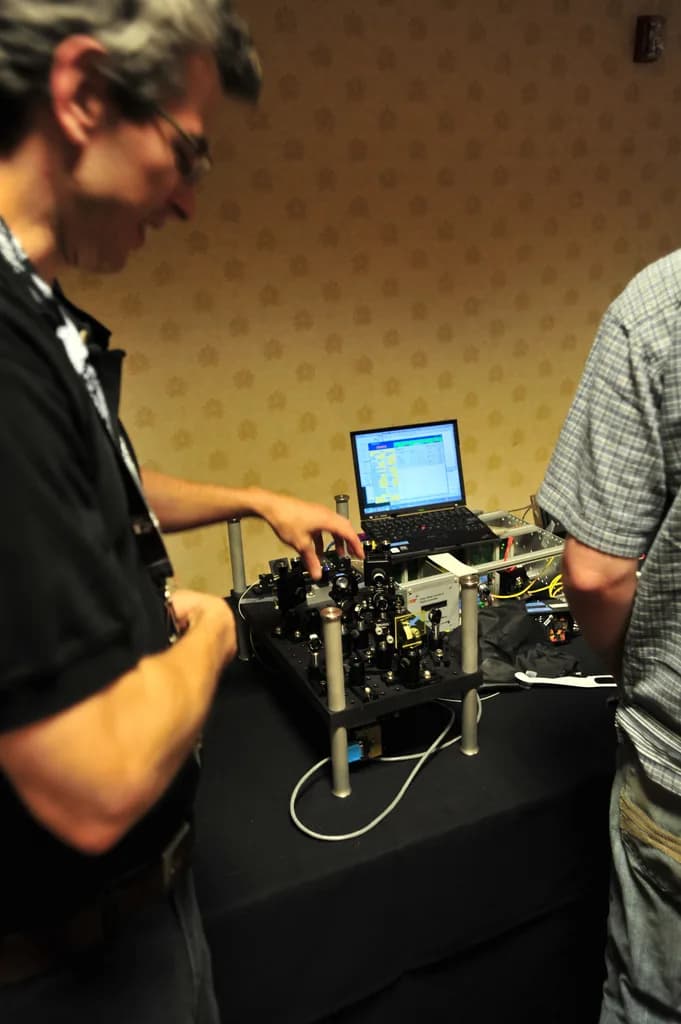
Quantum entanglement is the pinnacle of spooky physics—Einstein called it "spooky action at a distance" and refused to believe it was real. In 2022, Alain Aspect, John Clauser, and Anton Zeilinger won the Nobel Prize for proving it, with Aspect's experiments reducing loopholes to below 0.1%. When two particles are entangled, measuring one instantly determines the state of the other—regardless of distance. Chinese scientists demonstrated this across 1,200 kilometers using the Micius satellite in 2017, a distance 30% greater than the 920 km achieved in 2016. The implications for quantum computing, cryptography, and teleportation of information are staggering.
- 0

The double-slit experiment challenges the very fabric of reality—fire individual electrons at a barrier with two slits, and they create an interference pattern, as if each electron went through both slits simultaneously. But observe which slit each electron passes through, and the pattern disappears, with 100% accuracy in detection. Particles behave like waves until you look at them, then they behave like particles. This experiment, first performed by Thomas Young in 1801 with light, has been replicated with electrons, atoms, and even molecules of 800 atoms in 2013, making it 800 times larger than the 1-atom tests of 1974. It's slower than the average quantum effect but fundamentally proves that reality changes based on observation.
- 0

HeLa cells are the immortal foundation of modern medicine—in 1951, doctors at Johns Hopkins took cervical cancer cells from Henrietta Lacks, a Black woman in Baltimore, without her knowledge or consent. Those cells, labeled HeLa, became the first immortal human cell line: they divide indefinitely in a lab and are still alive today, with over 50 million metric tons of biomass grown since 1952. Lacks' family didn't know her cells existed until 1975 and received no compensation for decades. The science is miraculous; the ethics are a stain.
- 0

Deep Brain Stimulation (DBS) transforms severe neurological conditions by surgically implanting electrodes in specific brain regions, delivering electrical pulses from a chest battery—all while the patient remains awake. Parkinson's tremors halt instantly, depression lifts in treatment-resistant patients, and OCD symptoms diminish. The striking footage of a Parkinson's patient moving from uncontrollable shaking to complete stillness as the device activates seems magical, yet it's grounded in precise, 21st-century neuroscience.
- 0
Tardigrades, or water bears, withstand extreme conditions that would obliterate nearly all life: boiling at 151°C, freezing to -272°C (just one degree above absolute zero), enduring 1,000 times the lethal radiation dose for humans, and surviving 10 days in the vacuum of space on the ISS. In 2019, an Israeli lunar lander crashed on the Moon carrying thousands of dehydrated tardigrades; scientists believe they may have survived the impact, making them the only known lunar life.
Image credits
- CRISPR Gene Editing: WIKIMEDIA_MIRRORED
- The Large Hadron Collider: CERN / Wikimedia Commons
- Voyager 1's Pale Blue Dot: NASA / JPL (Public Domain)
- The Stanford Prison Experiment: Philip G. Zimbardo / Wikimedia Commons
- Head Transplant Experiments: Bundesarchiv / Wikimedia Commons (CC BY-SA 3.0 DE)
- Quantum Entanglement: WIKIMEDIA_MIRRORED
- The Double-Slit Experiment: Wikimedia Commons (CC BY-SA)
- HeLa Cells — The Immortal Cell Line: Wikimedia Commons (CC BY-SA)
- Deep Brain Stimulation: Wikimedia Commons (CC BY-SA)
- Tardigrade Survival Experiments: Schokraie E, et al. / PLOS ONE (CC BY 2.5)
Rank it your way
Remix this list into your own ranking, or head to the play hub for every game mode and community breakdown — blind mode, challenges, tier lists, and more.
You Might Also Like

Top 10 Best Neuroscience Breakthroughs
Top 10 Best Neuroscience Breakthroughs
Top 10 Greatest Scientific Discoveries in History
Top 10 Greatest Scientific Discoveries in History

Top 10 Best Physics Experiments in History
Top 10 Best Physics Experiments in History
Top 10 Science Podcasts That Make You Smarter in 30 Minutes
Top 10 Science Experiments That Sound Like Science Fiction

Top 10 Most Debated Climate Change Solutions
#1 Solar Radiation Management · #2 Nuclear Energy Expansion · #3 Direct Air Carbon Capture
Wikipedia Top 25 Most Viewed — Sep 1–Sep 14, 2026
#1 Killing of the Clancy children · #2 September 11 attacks · #3 Elizabeth Holmes