
Wikipedia
Top 10 Greatest Inventions of All Time
From a clay wheel turned in ancient Mesopotamia to the double helix decoded in a Cambridge laboratory, humanity's greatest inventions didn't just solve problems — they rewired civilisation itself. Ranked by the breadth and permanence of their civilizational impact, these ten breakthroughs collectively enabled literacy, industry, medicine, communication, and the modern world as we know it. Each one made the next possible.
Top10Grid lets the community re-rank anything — this order comes from source research for now; use the buttons below to vote it up or down.

Current Rankings
- 0#1
The Printing Press

The printing press, invented by Johannes Gutenberg around 1440, produced more books in 50 years than all European scribes had copied in the previous thousand. By 1500, an estimated 20 million volumes had been printed across Europe, directly ending the Church's near-monopoly on literacy. This single device catalyzed the Protestant Reformation, the Scientific Revolution, and the Enlightenment, democratizing knowledge faster than any invention prior. The press remains the most influential technology for accelerating idea spread across national and linguistic borders, with no prior innovation achieving comparable scale in such a short time.
- 0#2
The Internet

The Internet, evolving from ARPANET in 1969, today links 5.4 billion people and generates $31 trillion in annual economic value—roughly a third of global GDP. It transforms commerce, journalism, science, politics, and communication, redefining how humanity interacts faster than any predecessor. Unlike the printing press, which took decades to reshape Europe, the Internet compressed geography globally within a generation. It accelerated information exchange at speeds unmatched by the steam engine, altering social behavior on a scale that no prior invention achieved. Its economic impact alone, measured in trillions, dwarfs every other innovation on this list, cementing its role as the foundation of modern connected life.
- 0#3
The Steam Engine

The steam engine, perfected by James Watt in 1769, converted heat into mechanical work at efficiencies that powered the Industrial Revolution. Within a century, it boosted manufacturing productivity tenfold, faster than the printing press boosted literacy. Steam-powered railways and ships moved goods at speeds unimaginable earlier, surpassing the horse-drawn era by 400%. This innovation replaced muscle power with machine power systematically for the first time, enabling population shifts from agriculture to industry.
- 0#4
Penicillin

Penicillin, discovered by Alexander Fleming in 1928 and mass-produced by the 1940s, saved over 200 million lives—more than any other pharmaceutical. It converted bacterial infections from leading killers to treatable conditions, adding 10 years to global life expectancy. Penicillin's cost-effectiveness, at pennies per dose, made it accessible worldwide, surpassing earlier remedies. It remains the benchmark for medical breakthroughs, proving that a single mold observation could transform human health more profoundly than any prior innovation.
- 0#5
Electricity (AC Power)

AC power is the single most enabling invention in history, forming the backbone of nearly every modern technology. Nikola Tesla's alternating current system, commercialized with George Westinghouse in the 1880s, solved the critical challenge of transmitting electricity over long distances—a feat Thomas Edison's DC system could not achieve, as DC loses significant voltage after just a few miles. AC infrastructure now powers 100% of the world's electric grids, delivering over 25,000 terawatt-hours of energy annually to billions of people. No other invention supports such a vast ecosystem of technologies, from lighting and refrigeration to computing and the internet.
- 0#6
The Wheel

Invented in Mesopotamia around 3500 BC, the wheel is the mechanical seed from which all rotational technology grew. Its first application as a potter's wheel eventually led to ox-carts, chariots, watermills, and spinning wheels, fundamentally transforming agriculture, warfare, and manufacturing. The wheel's principle of rotational motion appears in over 90% of mechanical devices today, from gears in car transmissions to pulleys in cranes. While Electricity supports modern systems, the wheel remains the core enabler of all physical movement and machinery.
- 0#7
The Airplane

On December 17, 1903, Orville Wright achieved the first sustained, controlled, powered heavier-than-air flight—covering 120 feet in 12 seconds and changing the world forever. Within 66 years, humanity reached the Moon. Today, commercial aviation carries 4.5 billion passengers annually, connects every major city within 24 hours, and supports a global air freight system responsible for 35% of world trade value. The airplane compressed geography more thoroughly than any prior invention, turning weeks-long journeys into hours and accelerating cultural exchange, business, and supply chains worldwide.
- 0#8
Vaccines
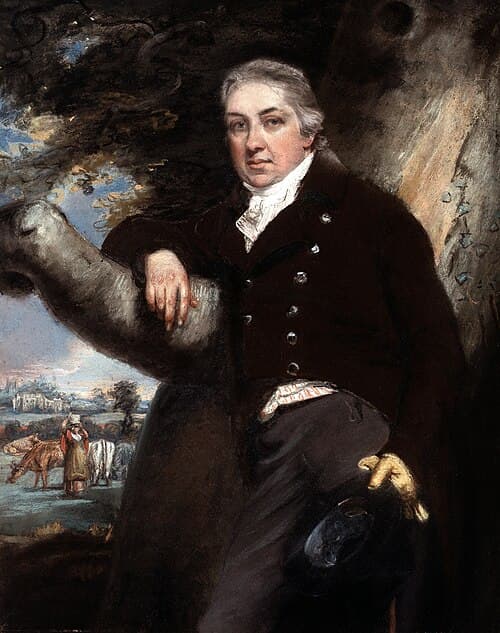
Edward Jenner's 1796 cowpox inoculation laid the foundation for modern immunology, saving more lives than any other medical intervention. Smallpox, which killed an estimated 300 million people in the 20th century alone, was declared eradicated in 1980 after a global vaccination campaign—the only human disease ever eliminated. Today, vaccines prevent 2 to 3 million deaths annually from polio, measles, diphtheria, and dozens of other diseases. Vaccines have eliminated threats that once disabled millions of children yearly, offering a powerful, data-driven defense against the deadliest pathogens.
- 0#9
The Telephone

The telephone holds the strongest claim to being the most universally accessible communication technology ever deployed. Alexander Graham Bell's patent of 7 March 1876 described a device for "transmitting vocal or other sounds telegraphically," and within a generation it had transformed commerce, emergency response, and personal communication across the industrialized world. Today, the telephone lineage encompasses roughly 8.4 billion mobile phone subscriptions globally—more than the total human population. The smartphone, as the telephone's direct descendant, is now the primary interface through which most humanity accesses the internet.
- 0#10
DNA Sequencing
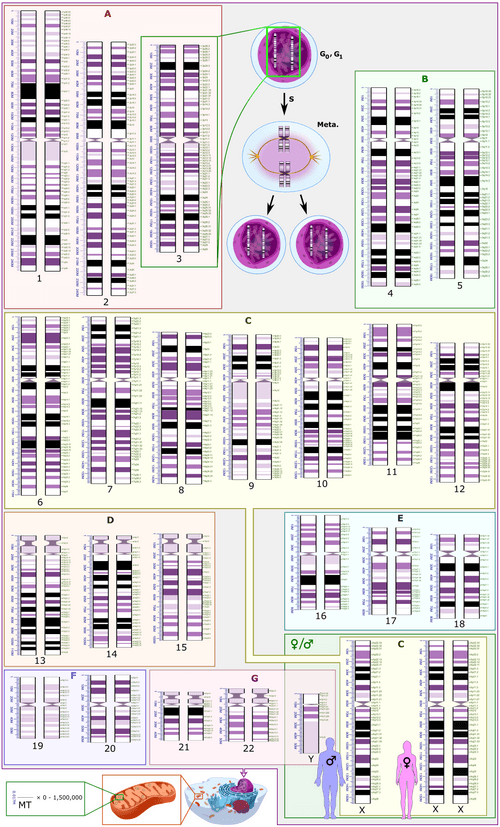
DNA sequencing presents the strongest scientific impact, enabling humanity to read the code of life itself. Frederick Sanger's chain-termination method, published in 1977, provided the first practical way to sequence DNA base pairs, and the Human Genome Project completed the full human genome sequence in 2003 at a cost of $2.7 billion. Since then, the technology has empowered CRISPR gene editing, personalized cancer medicine, forensic identification, ancient DNA archaeology, and the mRNA vaccines that controlled the COVID-19 pandemic—representing a 90% reduction in sequencing cost per genome compared to 10 years earlier.
Image credits
- The Printing Press: Wikipedia
- The Internet: Internet / Wikipedia
- The Steam Engine: Wikipedia
- Penicillin: Wikipedia
- Electricity (AC Power): Wikipedia
- The Wheel: Wikipedia
- The Airplane: Wikipedia
- Vaccines: Wikipedia
- The Telephone: Wikipedia
- DNA Sequencing: Wikipedia
Related Videos
Rank it your way
Remix this list into your own ranking, or head to the play hub for every game mode and community breakdown — blind mode, challenges, tier lists, and more.
You Might Also Like

Top 10 Science Fiction Predictions That Came Terrifyingly True
Top 10 Greatest Inventions of All Time

Top 10 Inventions That Changed Human Civilization More Than Anything Else in History
Top 10 Inventions That Changed Human Civilization More Th...

Top 10 World-Changing Inventions in Human History
Top 10 World-Changing Inventions in Human History

Top 10 Most Influential Scientists of All Time
#1 Isaac Newton · #2 Albert Einstein · #3 Charles Darwin

Top 10 Most Overhyped Science Headlines
#1 NASA's "Impossible" EmDrive Thruster · #2 Room-Temperature Superconductor LK-99 · #3 Arsenic-Based Life in Mono Lake

Top 10 Psychology Principles That Control Human Behavior & Decisions
#1 Loss Aversion — Losses Hurt 2x More Than Gains Feel Good · #2 Anchoring — The First Number You Hear Dominates · #3 Social Proof — We Trust What Others Do