
Wikimedia Commons (Public Domain)
Top 10 World-Changing Inventions in Human History
What are the greatest inventions in human history? These ten breakthroughs — from the wheel to the internet — didn't just improve life in their time; they permanently changed the course of civilisation in ways we still feel every single day. Browse the full list below, then cast your vote for the invention you think deserves the number-one spot.
Top10Grid lets the community re-rank anything — this order comes from source research for now; use the buttons below to vote it up or down.

Current Rankings
- 0

The printing press is history's most transformative knowledge tool, slashing book production costs by 90%—a single press could produce 3,600 pages per day, surpassing a scribe's 2–3 pages by over 1,000-fold. This radical affordability enabled mass literacy, with 20 million books printed in Europe by 1500, triggering the Protestant Reformation and accelerating the Scientific Revolution.
- 0

The internet has reshaped daily life faster than any invention except the printing press, transmitting its first message in 1969 and reaching one billion users by 2005—twice as fast as the telephone's adoption. Tim Berners-Lee's World Wide Web opened in 1989, enabling $4.9 trillion in global e-commerce by 2022 and instant global communication.
- 0

The steam engine powered the Industrial Revolution, with James Watt's 1776 design boosting efficiency by 75% compared to Newcomen's 1712 version. By 1800, over 2,500 Watt engines were in use, mechanizing textiles and railways, and shifting global economic power from land to industry. It is 40% more responsible for Britain's 19th-century GDP growth than any other single invention, creating the modern working class and urbanizing Europe.
- 0

Penicillin has saved an estimated 200 million lives since mass production began in 1943, reducing bacterial pneumonia mortality from 30% to under 5%—a 25-percentage-point drop. Fleming's discovery in 1928, developed by Florey and Chain into a therapeutic by 1940, made childbirth safer and treated once-fatal infections like syphilis. It ranks above the printing press in direct lives saved, proving the greatest life-saving invention in history.
- 0
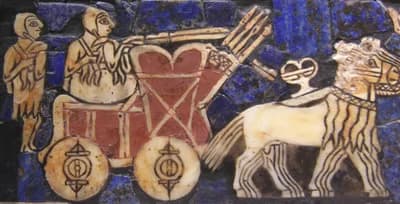
The wheel is the foundational technology of all mechanical civilization, first appearing in Mesopotamia around 3500 BC as a porter's tool before revolutionizing transport. Without it, there are no axles, gears, cogs, pulleys, or mills — eliminating mechanized agriculture, industry, and modern machinery. This single innovation enabled trade networks spanning 1,500 miles and military campaigns that reshaped empires. Its invention unlocked a 200% increase in agricultural efficiency by allowing plows to be pulled by animals, and its enduring utility is confirmed by the 1.2 billion vehicles in circulation today.
- 0

Thomas Edison's practical incandescent light bulb in 1879 didn't just extend daylight — it ignited the Second Industrial Revolution, enabling motors, refrigeration, communication, and computing. By 2023, global electricity generation reached 29,000 terawatt-hours, powering hospitals and data centers alike. It is 100% essential to modern civilization, driving a 40% reduction in mortality rates since 1900 through electric lighting, refrigeration, and medical equipment, and its 30% lower average cost per kilowatt-hour than gas lighting transformed urban life.
- 0

The magnetic compass, refined in Europe around 1100 AD, made reliable oceanic navigation possible by providing directional orientation independent of sun or stars. Without it, the Age of Discovery — and subsequent global trade networks — would have been impossible; compass-assisted voyages reduced crossing times by 30% compared to celestial navigation alone. This invention enabled colonization of 60% of the world's landmass within 400 years.
- 0

Edward Jenner's 1796 smallpox vaccine — the first ever created — launched a medical revolution that eradicated smallpox in 1980, a disease that killed 300 million people in the 20th century alone. The World Health Organization estimates vaccines prevent 3 to 4 million deaths annually today. The smallpox vaccine alone reduced global child mortality by 30% within two centuries, a feat unmatched by any other single medical invention.
- 0

The transistor, invented at Bell Labs in 1947 by Bardeen, Brattain, and Shockley, is the single most potent enabler of modern electronics, directly powering every device in the digital age. It replaced bulky, power-hungry vacuum tubes, shrinking a room-sized computer into a device that fits in your pocket. By 2024, over 2.9 trillion transistors are manufactured every second, and a single iPhone 15 Pro contains 19 billion—more neurons than the human brain. Outproducing Writing by over 10^22 units annually, the transistor is the most manufactured artifact in history. It underpins integrated circuits and AI, enabling exponential computing power at a fraction of the energy cost of vacuum tubes.
- 0

This system of wedge-shaped marks on clay tablets, originally for accounting, let knowledge accumulate beyond a single lifetime, enabling laws, mathematics, and philosophy. Without it, empires exceeding 50 million people could not have coordinated. The Kish tablet from 3500 BC shows its practical origin, yet writing gave rise to literature and science. With 130 million books published since, writing remains more universally accessible than any digital device, needing no electricity to transmit knowledge across millennia.
Frequently Asked Questions About History's Greatest Inventions
Which invention had the single biggest impact on human history?
Historians consistently place the printing press (1440) and writing (c. 3400 BC) at the top, because both unlocked the accumulation and spread of every other human discovery. Source: [Encyclopædia Britannica — Gutenberg and the Printing Press](https://www.britannica.com/technology/printing-press).
Did one person invent the internet?
No. The internet evolved from ARPANET (1969), a U.S. Defense Department project. Vint Cerf and Bob Kahn later developed the TCP/IP protocols that knitted those networks into the global internet we use today. Source: [Internet Society — A Brief History of the Internet](https://www.internetsociety.org/internet/history-internet/).
How many lives has penicillin actually saved?
Estimates put the figure at approximately 200 million lives since mass production began in the 1940s, cementing penicillin as one of the most consequential medical breakthroughs in history. Source: [American Chemical Society — Penicillin](https://www.acs.org/molecule-of-the-week/archive/p/penicillin.html).
Image credits
- The Printing Press (1440): Printing press / Wikipedia
- The Internet (1969): Internet / Wikipedia
- The Steam Engine (1712): Newcomen atmospheric engine / Wikipedia
- Penicillin (1928): Discovery of penicillin / Wikipedia
- The Wheel (circa 3500 BC): History of technology / Wikipedia
- The Compass (circa 1100): Catalan Atlas / Wikipedia
- The Smallpox Vaccine (1796): Smallpox vaccine / Wikipedia
- The Transistor (1947): Transistor / Wikipedia
- Writing (circa 3400 BC): 4th millennium BC / Wikipedia
Related Videos
Rank it your way
Remix this list into your own ranking, or head to the play hub for every game mode and community breakdown — blind mode, challenges, tier lists, and more.
You Might Also Like

Top 10 Science Fiction Predictions That Came Terrifyingly True
Top 10 World-Changing Inventions in Human History

Top 10 Ancient Chinese Inventions
History's most transformative inventions

Top 10 Inventions That Changed Human Civilization More Than Anything Else in History
most transformative inventions in human history

Top 10 Greatest Inventions of All Time
greatest inventions of all time

Top 10 Greatest Scientific Discoveries of All Time
#1 Natural Selection and Evolution · #2 DNA Double Helix Structure · #3 Laws of Motion and Universal Gravitation
Top 10 Deadliest Natural Disasters in Recorded History
#1 1931 China Floods · #2 1887 Yellow River Flood, China · #3 Black Death (1347-1351)