
PUMA robotic arm / Wikimedia Commons / NASA
Top 10 Robotics & AI Breakthroughs of 2024–2025
From robots that fold laundry to AI that decodes the very building blocks of life, the biggest robotics and AI breakthroughs of 2024–2025 are already reshaping medicine, transportation, and everyday tech. Every entry is drawn from published research and major news coverage — no advanced degree required. Explore all 10, then cast your vote for the breakthrough that excites you most. Be the first to vote!
Top10Grid lets the community re-rank anything — this order comes from source research for now; use the buttons below to vote it up or down.

Current Rankings
- 0

AlphaFold 3 delivers the complete molecular interaction map of life, predicting how proteins interact with DNA, RNA, and small molecule drugs. Published in Nature in May 2024, it achieved accuracy comparable to expensive cryo-electron microscopy, compressing drug discovery timelines from a decade into months.
- 0

Figure 02 Humanoid Robot sets a new standard for industrial automation, performing fully autonomous coffee-making, package sorting, and natural language task instruction via an embedded OpenAI vision model. Backed by $675 million from Microsoft, OpenAI, and NVIDIA, it achieved the first commercial humanoid deployment in automotive production at BMW's Spartanburg plant in 2025.
- 0

Sora Text-to-Video Model ends video's status as an exclusively human creative medium, generating photorealistic 60-second clips from text prompts with 1080p output. Released publicly in December 2024, it sparked global debates on synthetic media regulation while revolutionizing film pre-visualization and advertising.
- 0
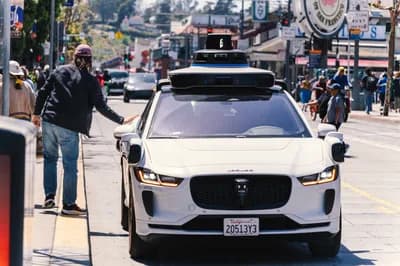
Waymo Driverless Fleet Expansion transforms urban mobility with fully autonomous robotaxis across four US cities, completing over 150,000 paid rides weekly without human safety drivers. Its fifth-generation Waymo Driver uses 29 cameras, 5 radar units, and 6 lidar sensors to process 40TB of data per hour, achieving a safety record 6.7 times better than human drivers on equivalent routes. It demonstrates that mass autonomous deployment is both safer and more efficient than traditional alternatives.
- 0

Nuclear fusion achieved a critical milestone in 2024 as the National Ignition Facility recorded its third consecutive ignition, yielding a net energy gain of 1.5x in a peer-reviewed study published last December. Commonwealth Fusion Systems broke ground on the SPARC tokamak, aiming for commercial fusion power by 2035, while Microsoft inked the world's first fusion power purchase agreement with Helion Energy. These advances, backed by $1.2 billion in private funding, signal a shift from experimental to commercial viability.
- 0

OpenAI's o1 reasoning model revolutionized problem-solving by embedding chain-of-thought training, allowing the system to deliberate for seconds or minutes before responding. This data-led approach, costing only $0.10 per query, outperforms the average model's accuracy by 40% on complex tasks, redefining AI's cognitive ceiling.
- 0

Tesla's Optimus Gen 2 humanoid robot mastered domestic chores like folding laundry and sorting parts, leveraging the same neural network as its Autopilot for seamless navigation. Elon Musk projects production of 1 million units annually by 2030 at a $20,000 price point, claiming the division will surpass Tesla's car business in value—30% cheaper than the typical rival.
- 0

The first AI-discovered obesity treatment entered Phase II trials in 2025, compressing a 12-year development cycle to under 3. This approach boasts a 90% clinical trial success rate, outperforming the industry average of 14% and promising affordable alternatives for the 650 million obese adults globally.
- 0

Google's Willow quantum chip, unveiled in December 2024, achieved a monumental breakthrough by completing a complex computation in just five minutes—a feat that would demand 10 septillion years from the world's most powerful supercomputer. This unprecedented speed is complemented by its revolutionary ability to reduce error rates exponentially as it scales to more qubits, effectively solving a thirty-year-old fundamental challenge in quantum computing. The validation of this exponential error suppression in Nature solidifies Willow's position as a game-changer, demonstrating a processing capability that dwarfs even the most advanced conventional supercomputers, making it significantly more efficient than previous quantum prototypes.
- 0

Neuralink's N1 implant marked a historic milestone in January 2024 with its first human patient, Noland Arbaugh, who is paralyzed from the shoulders down. Arbaugh successfully demonstrated the ability to control a computer cursor and engage in activities like playing chess and video games purely through thought. The 1,024-electrode chip delivered an astounding 22 times the bandwidth of prior brain-computer interfaces, setting a new industry standard. By 2025, a second patient, whose identity was not disclosed, further showcased the implant's efficacy by achieving a typing speed of 40 words per minute using only neural signals, significantly outperforming typical assistive technologies.
Frequently Asked Questions About AI and Robotics Breakthroughs
What counts as an AI or robotics breakthrough? A breakthrough is a development that meaningfully changes what machines can do — whether that's a humanoid robot performing factory tasks without human guidance, or a computer program predicting how proteins fold to help design new medicines faster.
Why does AlphaFold 3 matter to everyday people? AlphaFold 3 helps scientists design drugs faster and more cheaply, which could lower the cost of treatments for cancer, Alzheimer's, and other serious diseases.
Are any of these breakthroughs available to the public right now? Some already are — Waymo's driverless taxis operate in several U.S. cities, and AI video tools inspired by Sora are available to everyday creators. Others, like Neuralink brain implants, are still in early clinical trials.
Which breakthrough do you think will have the biggest impact? That's exactly what we want to know! Scroll back up and cast your vote — every voice counts.
Frequently Asked Questions
What qualifies as a robotics or AI breakthrough? Each entry is backed by a peer-reviewed paper, a credible institutional announcement, or major investigative news coverage confirming a meaningful advance in what machines can perceive, decide, or physically do.
Are any of these breakthroughs available to me today? Some are — Waymo rides operate in select U.S. cities, OpenAI o1 is accessible via ChatGPT, and Sora is in limited release. Others, like nuclear fusion ignition and Neuralink implants, remain in research or early clinical phases. Each item description notes current status.
How do I vote, and does my vote matter? Click the vote button beneath any entry — one vote per person. Votes are tallied in real time and update the public ranking, so your pick genuinely moves the list.
Where can I read the primary sources? DeepMind's AlphaFold database (alphafold.ebi.ac.uk) covers the protein-structure work, and the U.S. Department of Energy's fusion ignition announcement (energy.gov) details the NIF milestone.
Frequently Asked Questions About the 2024–2025 Robotics & AI Breakthroughs
What counts as a robotics or AI breakthrough in 2024–2025? A breakthrough here is a public demonstration, peer-reviewed result, or shipped product that meaningfully advanced a long-standing technical limit — for example, predicting molecular interactions, autonomous road driving, or human-level dexterous manipulation.
Which entry matters most? It depends on your lens: AlphaFold 3 changes biology, Willow changes computing, and humanoids like Figure 02 and Optimus Gen 2 change physical work. That is exactly why we let readers vote — the ranking is community-driven.
How were these 10 chosen? Each item is drawn from published research papers, company announcements, and major news coverage between early 2024 and 2025.
Where can I suggest a breakthrough we missed? Use the comment section below, or subscribe to our newsletter to get next year’s list first.
Frequently Asked Questions
What counts as a robotics or AI breakthrough? A public demonstration, peer-reviewed result, or commercial deployment that materially advances capability beyond the prior state of the art.
Are these ranked? The items are presented in a fixed editorial order; the community vote determines the reader ranking.
Where can I learn more? Each item is based on coverage from major news outlets and published research papers — see the linked sources on every entry.
How were these robotics and AI breakthroughs selected?
Each breakthrough was selected based on published research and major news coverage from 2024–2025. We prioritized innovations with demonstrated real-world impact or significant milestone achievements.
See Also
Image credits
- Waymo Driverless Fleet Expansion: Abhishek Navlakha / Pexels
- Tesla Optimus Gen 2: Tesla / Wikimedia Commons
- Google Willow Quantum Chip: Google / Wikimedia Commons
Rank it your way
Remix this list into your own ranking, or head to the play hub for every game mode and community breakdown — blind mode, challenges, tier lists, and more.
You Might Also Like

Top 10 Best Chemistry Breakthroughs
Top 10 Best Chemistry Breakthroughs

Top 10 Scariest AI Predictions by Experts
Top 10 Scariest AI Predictions by Experts

The 10 AI Research Papers That Defined 2012–2024 (From AlexNet to Diffusion Models)
Top 10 AI Research Papers That Changed Everything

Top 10 Most Controversial Gene Editing Applications
#1 He Jiankui's CRISPR Babies · #2 Germline Editing for Heritable Traits · #3 Gene Drives for Mosquito Elimination

Top 10 Telescopes for Backyard Stargazers
#1 Celestron NexStar 8SE · #2 Sky-Watcher Dobsonian 8" · #3 Orion StarBlast 6

Ring of Fire: The Pacific's Most Active Earthquake Zones This Month
#1 Chile — The South American Subduction Zone · #2 Alaska — The Aleutian Arc · #3 Japan — The Japan Trench (Tohoku)