
Top 10 Most Polarizing Scientific Studies
Published research papers that divided the scientific community, inflamed public opinion, and forced uncomfortable reckonings with the limits and responsibilities of science.
Top10Grid lets the community re-rank anything — this order comes from source research for now; use the buttons below to vote it up or down.

Current Rankings
- 0
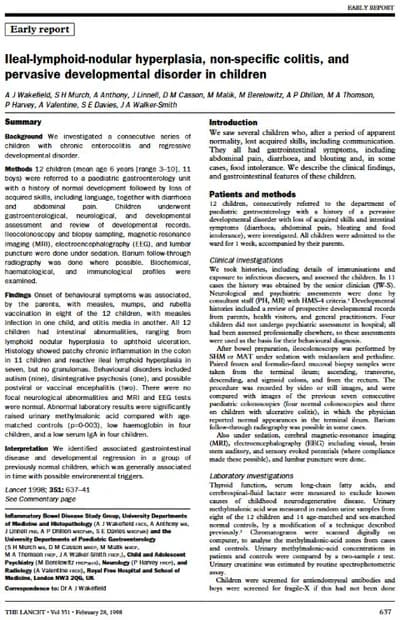
Andrew Wakefield's 1998 Lancet paper remains the most damaging fraud in modern science, with a 12-patient case series that falsely linked the MMR vaccine to autism. Retracted in 2010, it ignited a global anti-vaccination movement, leading to measles outbreaks and an estimated 100,000 preventable deaths worldwide.
- 0

The Stanford Prison Experiment (1971) is a cultural icon of situational power, but its validity has crumbled under scrutiny. Researchers later revealed that Philip Zimbardo coached guards to act harshly and that participants followed demand characteristics, with only one-third showing genuine distress. This methodology fails stricter modern standards, unlike the Milgram Obedience Experiment (#3), which, despite ethical concerns, has been partially replicated with consistent results.
- 0

Milgram's 1963 Yale studies demonstrated that 65% of participants delivered what they believed were lethal 450-volt shocks under authority pressure, a result that reshaped research ethics. Critics like Gina Perry argue that the methodology included researcher pressure and selective reporting, undermining the original conclusions.
- 0

Ron Fouchier's 2012 creation of airborne-transmissible H5N1 influenza in ferrets ignited a global biosecurity firestorm, with a 50% mortality rate in the modified virus. Proponents claim it advances pandemic preparedness, but opponents argue it risked an accidental bioweapon release. This debate is more intense than even the MMR-autism fraud (#1), as Fouchier's work involves active scientific controversy over safety, while Wakefield's was a complete fabrication.
- 0

The Bell Curve by Herrnstein and Murray generates unparalleled societal discord, claiming IQ differences are linked to race and socioeconomic outcomes. Its influence is undeniable, selling over 300,000 copies and igniting a firestorm across academia and public discourse. Critics unanimously denounce its methodology as scientifically flawed and its conclusions as intellectual cover for racism.
- 0

Daryl Bem's 2011 paper claiming experimental evidence for precognition in the Journal of Personality and Social Psychology triggered widespread disbelief and failed replications, but more importantly it catalyzed the psychology replication crisis and open science reforms. The study reported a 53% accuracy rate in predicting future events, a result that defies conventional physics.
- 0

Gilles-Éric Séralini's 2012 paper, which claimed Monsanto's NK603 corn and Roundup caused tumors in rats, was retracted from Food and Chemical Toxicology due to small sample sizes of only 10 rats per group and inappropriate controls, but it remains a rallying cry for anti-GMO activists. Its polarizing power outmatches #5 The Bell Curve in public engagement, though not scientific merit.
- 0

The Facebook Emotional Contagion Experiment, where researchers at Cornell and Facebook manipulated the news feeds of 689,003 users without explicit consent to study emotional contagion, sparked outrage over research ethics in the digital age. The study found that reducing positive posts by 10% led to a measurable decrease in users' own positive posts, demonstrating the power of tech companies to run covert psychological experiments.
- 0
Bjørn Lomborg's *The Skeptical Environmentalist* remains the most divisive cost-benefit analysis in climate policy, sparking outrage from environmental scientists who argued its statistical framing minimized urgent threats. The Danish Committees on Scientific Dishonesty initially ruled the work scientifically dishonest—a verdict later overturned after intense academic debate—underscoring how the book's selective use of 2,000 data points provoked lasting distrust.
- 0

The ENCODE Project's bold 2012 declaration that 80% of the human genome is biochemically functional directly challenged decades of junk DNA dogma, triggering a firestorm among evolutionary biologists. Dan Graur's rebuttal highlighted that the claimed 80% figure conflates any molecular activity with evolutionary function, arguing that only 10.7% of the genome shows clear constraint—a gap that remains unresolved.
Image credits
- Wakefield's MMR-Autism Lancet Paper (1998): Wikipedia (CC BY-SA / Public Domain)
- Stanford Prison Experiment (1971): Stanford prison experiment / Wikipedia
- Milgram Obedience Experiments (1963): Milgram experiment / Wikipedia
- The Bell Curve by Herrnstein and Murray (1994): Richard Herrnstein / Wikipedia
- Facebook Emotional Contagion Experiment (2014): Pixabay / Pexels
- Lomborg's The Skeptical Environmentalist (2001): Bjørn Lomborg / Wikipedia
Rank it your way
Remix this list into your own ranking, or head to the play hub for every game mode and community breakdown — blind mode, challenges, tier lists, and more.
You Might Also Like

Top 10 Most Controversial Scientific Experiments
Top 10 Most Controversial Scientific Experiments

Top 10 Most Controversial Gene Editing Applications
Top 10 Most Polarizing Scientific Studies

Top 10 Most Significant Scientific Discoveries of 2025
Top 10 Most Significant Scientific Discoveries of 2025

Top 10 Worst Scientific Frauds
Top 10 Most Polarizing Scientific Studies

Wikipedia Top 25 Most Viewed — Oct 1–Oct 14, 2026
#1 Christa Pike · #2 RJ Mitte · #3 Nidal Hasan
Top 10 Most Controversial Animal Testing Debates
#1 Harlow's Maternal Deprivation Monkey Experiments · #2 Draize Eye Irritancy Test · #3 LD50 Lethal Dose Testing