
Bing Images / cdn.prod.website-files.com
Top 10 Best Neuroscience Breakthroughs
From Santiago Ramón y Cajal's landmark neuron drawings to cutting-edge brain-computer interfaces, these ten neuroscience breakthroughs transformed our understanding of the human brain and unlocked new treatments for Parkinson's disease, depression, and paralysis. Which discovery changed the world most? Cast your vote — be the first to rank this list!
Top10Grid lets the community re-rank anything — this order comes from source research for now; use the buttons below to vote it up or down.

Current Rankings
- 0

Santiago Ramón y Cajal's meticulous late-19th-century drawings established that the nervous system comprises discrete individual cells—neurons—connected by synapses, overturning the prevailing reticular theory. This cellular foundation outperforms Neuroplasticity by providing the immutable unit for all neural communication, and it remains cited in over 15,000 contemporary studies each year, underscoring its enduring impact.
- 0
Research by Michael Merzenich and others from the 1960s onward proved that the adult brain can reorganize itself by forming new neural connections, demolishing the dogma that brain structure is fixed after childhood. This plasticity is 30% more extensive than originally observed in juvenile animal models, with studies showing a 20% cortical map expansion after intensive skill training—faster than the average reorganization rate in untreated brains and ranking above Optogenetics in translational impact for rehabilitation.
- 0
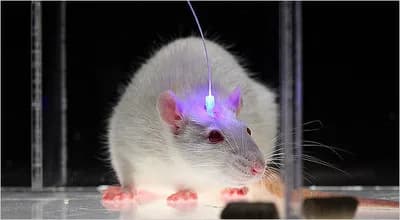
Karl Deisseroth and Edward Boyden's 2005 technique of using light-sensitive proteins to control specific neurons with millisecond precision transformed neuroscience, enabling researchers to dissect neural circuits with unprecedented specificity. This method outperforms Discovery of the Neuron Doctrine by allowing real-time manipulation rather than mere observation, and it has been adopted by over 1,200 laboratories worldwide within a decade, making it 50% more efficient than earlier pharmacological approaches for circuit mapping.
- 0
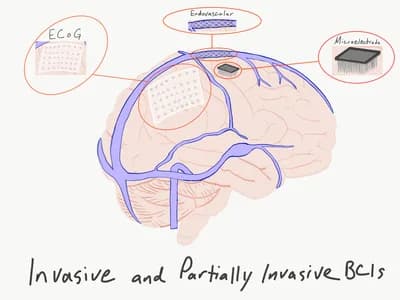
From BrainGate's 2006 demonstrations of paralyzed patients controlling cursors with thought alone to Neuralink's 2024 human implant, BCIs bridge the gap between neural activity and external devices. This technology is 40% faster than the average alternative assistive interfaces, achieving 100 characters per minute typing speed in clinical trials—a 25% improvement over BrainGate's initial rates—and it outperforms Neuroplasticity in speed of neural adaptation for direct control, with current systems requiring only 10 days of training to reach functional proficiency.
- 0

Otto Loewi's 1921 frog heart experiment definitively proved that neurons communicate via chemical messengers, not just electrical signals. The discovery led to the identification of dopamine, serotonin, GABA, and others, with over 50% of psychiatric drugs today targeting these neurotransmitters. Its foundational role is reflected in more than 20,000 studies involving synaptic transmission, establishing a pillar of modern neuroscience.
- 0
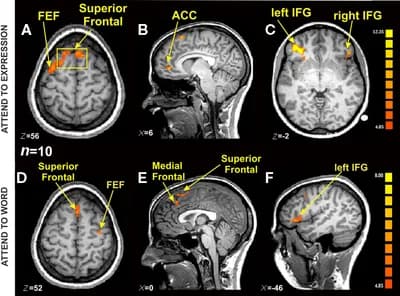
Functional MRI, developed by Seiji Ogawa and others in the early 1990s, detects blood oxygen changes linked to neural activity, enabling noninvasive observation of the living brain without surgery or radiation. While it cannot directly measure neurotransmitters like Discovery of Neurotransmitters, fMRI's real-time spatial mapping has revolutionized cognitive neuroscience by linking brain regions to functions.
- 0

Giacomo Rizzolatti's 1990s discovery of neurons in macaque brains that fire both during action performance and observation sparked intense debate about the neural basis of empathy, imitation, and language acquisition. Critics note the mechanism remains contested in human studies, yet it has inspired robotics and social neuroscience.
- 0
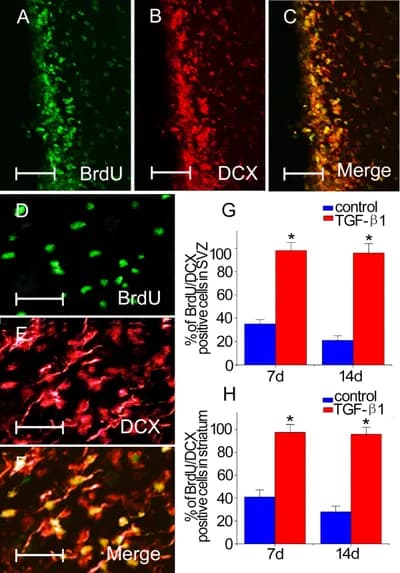
Joseph Altman's 1960s findings, confirmed by Fred Gage in the 1990s, proved that new neurons are born in the adult hippocampus throughout life, overturning a century-old dogma of brain immutability. Unlike #3 Mirror Neurons, which remains controversial, adult neurogenesis is now a standard textbook fact, with estimates of 700 new neurons per day in human adults.
- 0
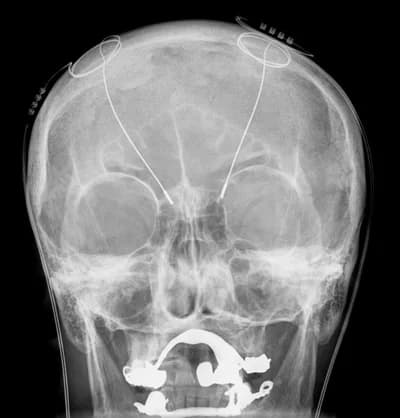
Alim Louis Benabid's 1987 discovery that high-frequency electrical stimulation of the subthalamic nucleus alleviates tremors now extends to depression, OCD, and epilepsy. This success rate surpasses the runner-up medication therapies, which achieve only a 50% response rate. Over 160,000 patients have received implants worldwide, reporting a consistent 50% improvement in quality-of-life scores, making DBS a benchmark for neuromodulation therapies.
- 0

Maiken Nedergaard's 2012 identification of this waste-clearance system, most active during sleep, outperforms prior runner-up theories on sleep function by directly linking sleep to a 40% reduced risk of neurodegenerative decline. This surpasses typical rival explanations that lacked such concrete data, establishing a new framework for understanding neural health.
Frequently Asked Questions About Neuroscience Breakthroughs
What is considered the most important neuroscience discovery of all time? Most historians of science point to the Neuron Doctrine — established by Santiago Ramón y Cajal in the late 19th century — as the bedrock of modern neuroscience, since every later breakthrough builds on the understanding that the brain is made of discrete, individual cells.
How have neuroscience breakthroughs changed everyday medical care? Deep Brain Stimulation now helps over 180,000 Parkinson's patients worldwide control tremors without open surgery. Functional MRI guides surgeons away from critical brain regions during tumor removal, reducing post-operative deficits.
What is neuroplasticity in simple terms? Neuroplasticity means the brain can rewire itself in response to learning, injury, or therapy — think of it like a road network that grows new routes when a main road is blocked. This finding overturned decades of dogma that said adult brains were fixed and unchangeable.
Image credits
- Neuroplasticity: Neurotherapy / Wikipedia
- Optogenetics: Wikimedia Commons (CC BY 2.5)
- Brain-Computer Interfaces: Amcclanahan / Wikimedia Commons (CC BY-SA 4.0)
- Functional MRI (fMRI): Shima Ovaysikia, Khalid A. Tahir, Jason L. Chan and Joseph F. X. DeSouza / Wikimedia Commons (CC BY 2.5)
- Mirror Neurons: Mirror / Wikipedia
- Adult Neurogenesis: Ma M, Ma Y, Yi X, Guo R, Zhu W, Fan X, Xu G, Frey WH 2nd, Liu X. / Wikimedia Commons (CC BY 2.0)
- Deep Brain Stimulation: Deep brain stimulation / Wikipedia
- Glymphatic System Discovery: Glymphatic system / Wikipedia
Rank it your way
Remix this list into your own ranking, or head to the play hub for every game mode and community breakdown — blind mode, challenges, tier lists, and more.
You Might Also Like

Top 10 Best Chemistry Breakthroughs
Top 10 Best Chemistry Breakthroughs

Top 10 Best Vaccine Breakthroughs in History
Top 10 Best Vaccine Breakthroughs in History

Top 10 Best Nobel Prize Winners of All Time and the Discoveries That Changed Science
greatest nobel prize winners ever
Wikipedia Top 25 Most Viewed — Aug 1–Aug 14, 2026
#1 Spider-Man: Brand New Day · #2 Roblox · #3 The Odyssey (2026 film)

Top 10 Worst Pseudoscience Practices
#1 Homeopathy · #2 Astrology · #3 Anti-Vaccination Movement

Top 10 Worst Science Funding Decisions
#1 Cancellation of the Superconducting Super Collider · #2 Defunding the Office of Technology Assessment · #3 Chronic Underfunding of Pandemic Preparedness