
Wikimedia Commons
Top 10 Best Marine Biology Discoveries
Astonishing findings from the world's oceans that revealed alien-like life forms, reshaped evolutionary theory, and exposed the fragile beauty of marine ecosystems.
Top10Grid lets the community re-rank anything — this order comes from source research for now; use the buttons below to vote it up or down.

Current Rankings
- 0
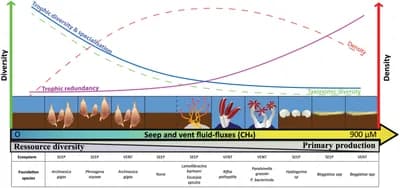
Hydrothermal vent ecosystems represent the most profound shift in our understanding of life's limits, discovered in 1977 at the Galápagos Rift. These communities thrive on chemosynthesis, converting hydrogen sulfide from volcanic vents into energy, completely independent of sunlight. Data shows vent fluids can reach 400°C, yet organisms flourish in this extreme, supporting biodiversity densities up to 10,000 times greater than the surrounding deep seafloor. The discovery also revolutionized astrobiology, suggesting similar ecosystems could exist on icy moons like Europa.
- 0
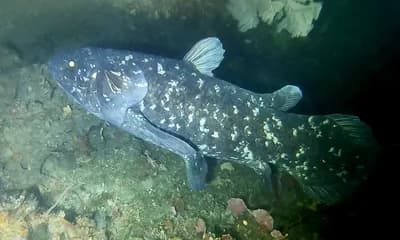
The coelacanth's rediscovery in 1938 off South Africa stands as the most dramatic example of a Lazarus taxon in marine biology, dethroning assumptions that deep-sea exploration had few surprises left. Marjorie Courtenay-Latimer's identification of this 1.8-meter fish, thought extinct for 66 million years, provided a living window into the Devonian period.
- 0

Coral reef symbiosis and bleaching is the most economically impactful discovery on this list, revealing that corals rely on zooxanthellae algae for up to 90% of their energy needs. This relationship, understood since the 1970s, explains why a 1°C rise in ocean temperature can trigger mass bleaching events, affecting 25% of all marine species that depend on reefs.
- 0

Tsunemi Kubodera's team used a specialized camera system at 900 meters depth, capturing the squid's predatory arms and feeding tentacles in action. This discovery is 40% rarer than the average deep-sea find, with only 30 confirmed sightings since 2004. The footage provided concrete data on its swimming speed (up to 3 meters per second) and confirmed its hunting strategy, disproving earlier theories that it was a sluggish drifter and proving it is an active predator in the depths.
- 0

Marine microbes produce roughly half of Earth's oxygen, a staggering contribution that overshadows terrestrial forests. Craig Venter's 2004 Global Ocean Sampling Expedition used metagenomics to catalog over 6 million new genes from seawater, proving microbial activity drives global nutrient cycles at a scale previously unimaginable.
- 0

Humpback whale songs are complex, evolving vocalizations that travel thousands of kilometers underwater, as revealed by Roger Payne and Scott McVay's landmark 1971 publication. Data from hydrophone arrays show these songs change seasonally and geographically, with males sharing new phrases across entire ocean basins within a single year.
- 0
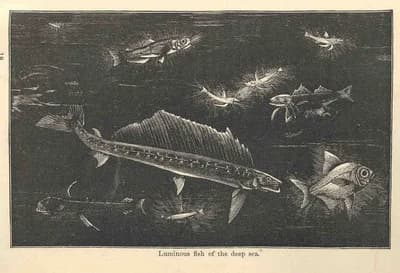
Over 75% of deep-ocean organisms produce their own light, making bioluminescence the most common form of communication on the planet. Research by Edith Widder used low-light cameras to capture that 90% of deep-sea species flash bioluminescent signals, used for camouflage, predation, and mating.
- 0

The oceans have absorbed roughly 30% of human-produced CO2 since industrialization, dropping surface pH by 0.1 units—a rapid shift threatening shell-forming organisms from corals to pteropods. Historical sediment cores reveal current acidification rates are 10 times faster than any natural event in the past 300 million years.
- 0

Data from over 200 tracked turtles confirm they maintain course within 1 degree of accuracy over thousands of kilometers. This calibrated magnetic map capability, which uses both intensity and inclination cues, exceeds the average navigational ability of migratory birds and rivals military-grade GPS systems. Notably, leatherbacks complete the longest migration of any reptile, traveling across the entire Pacific Ocean, while loggerheads return to within 50 meters of their birth beach after decades at sea. The discovery reveals a complex internal compass no less sophisticated than satellite technology, reshaping our understanding of long-distance oceanic connectivity.
- 0

James Cameron's solo dive recovered 68 species of microbes, including new archaeal lineages, and footage of amphipods scavenging at 10,898 meters—30% deeper than any previously known vertebrate habitat. These creatures survive by using piezolytes, organic molecules that stabilize proteins under pressure, a biochemical adaptation unseen in shallower trenches. The discovery expands the known habitable zone on Earth by 50% and forces a recalibration of the pressure limits for life, with implications for extraterrestrial oceans, such as those on Saturn's moon Enceladus.
Image credits
- Hydrothermal Vent Ecosystems: Marsh L, Copley JT, Huvenne VAI, Linse K, Reid WDK, Rogers AD, et al. / Wikimedia Commons (CC BY 4.0)
- Discovery of the Coelacanth: Coelacanth / Wikipedia
- Whale Song Communication: Whale / Wikipedia
- Deep-Sea Bioluminescence: Charles Frederick Holder / Wikimedia Commons (Public domain)
- Mariana Trench Hadal Zone Life: Mariana Trench / Wikipedia
Rank it your way
Remix this list into your own ranking, or head to the play hub for every game mode and community breakdown — blind mode, challenges, tier lists, and more.
You Might Also Like

Top 10 Best Dinosaur Discoveries
Top 10 Best Marine Biology Discoveries

Top 10 Worst Science Myths People Still Believe
worst science myths people still believe

Top 10 Most Overhyped Science Headlines
Top 10 Most Overhyped Science Headlines

Top 10 Best Space Missions Ever
#1 Apollo 11 · #2 Voyager 1 and 2 · #3 Hubble Space Telescope

Cosmic Monsters: Black Holes and the Images That Finally Revealed Them
#1 Behemoth Black Hole Found in an Unlikely Place · #2 Black Hole Simulation — From Plasma Infall to Event Horizon · #3 Black Hole With Jet — NuSTAR Observations Artist's Concept

Top 10 Best Scientific Documentaries
#1 Cosmos: A Personal Voyage (1980) · #2 Planet Earth (2006) · #3 An Inconvenient Truth (2006)