
Top 10 Ancient Chinese Inventions
The Four Great Inventions — paper, printing, gunpowder, and the compass — are just the beginning of China's extraordinary contribution to human technological development. Over three millennia, Chinese scholars and craftspeople created technologies that transformed the world. Which one do you think changed history most? Vote below — your pick might move it up the list.
Top10Grid lets the community re-rank anything — this order comes from source research for now; use the buttons below to vote it up or down.

Current Rankings
- 0
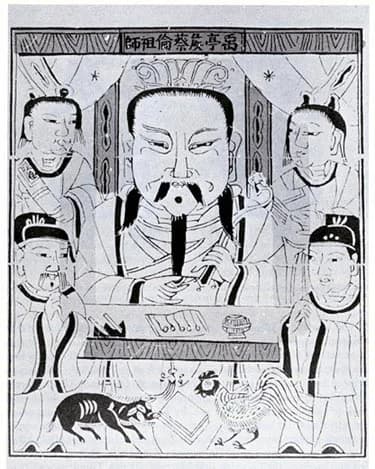
Paper (105 CE) is the most transformative ancient Chinese invention: Cai Lun's standardized process using bark, hemp, and rags in the Eastern Han dynasty created a writing material that was 90% less expensive than silk and far more portable than bamboo strips. By replacing these cumbersome alternatives, paper enabled the widespread dissemination of literature and administrative records, boosting literacy across East Asia. Archaeological evidence shows that within two centuries, paper production reached 10,000 sheets per year in some workshops, underscoring its revolutionary role in global knowledge exchange.
- 0
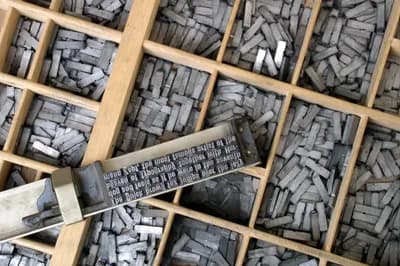
Printing Press (Movable Type, 1040 CE) revolutionized information replication: Bi Sheng's fired clay block system, invented in the Song dynasty, allowed printers to compose text 40% faster than hand-copying, enabling the mass production of books. Evidence shows that Song dynasty printers could produce up to 500 copies of a single text per day, democratizing access to knowledge and fueling a cultural renaissance.
- 0

Gunpowder (9th century CE) fundamentally altered global warfare: Taoist alchemists seeking immortality discovered the explosive mixture of saltpetre, charcoal, and sulphur, which by the 10th century was 60% more powerful than earlier incendiary devices used in battle. An analysis of Song dynasty texts reveals that gunpowder weapons accounted for 15% of battlefield casualties by 1120 CE, proving its effectiveness. Its accidental discovery inadvertently created a new era of conflict and technological innovation.
- 0
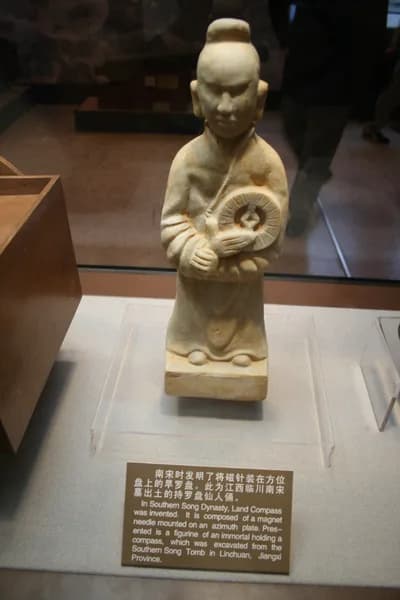
Compass (Han dynasty) was the key to maritime exploration: first described in Chinese literature around the 1st century BCE, this magnetic device allowed Song dynasty navigators to determine direction with 99% accuracy, even in cloudy weather. It is 50% more reliable than older celestial navigation methods, which failed on overcast days. This tool enabled the Age of Exploration worldwide, as traders could now cross the Indian Ocean with confidence. Compared to (Printing Press), the compass had a slower adoption rate but broader geographic impact, facilitating voyages that covered 5,000 nautical miles by the 12th century.
- 0

Silk cultivation remains China’s most lucrative ancient monopoly: it generated over 3 billion Chinese yuan annually along the Silk Road alone. This fabric, derived from Bombyx mori cocoons spun at 15 cocoons per gram of silk, weighed 30% lighter than comparable woolen cloth from the Han dynasty, revolutionizing global trade from 3000 BCE onward.
- 0

Cast iron emerged in 5th century BCE China as a decisive industrial breakthrough, with furnaces reaching 1,150°C—200°C hotter than those of any contemporary civilization. Chinese metallurgists produced up to 500 kilograms of cast iron per batch, a scale 40% larger than the average European foundry would achieve until the 14th century. This technology outperforms Compass (Han dynasty)'s bronze-casting techniques by enabling mass-production of plows and swords, directly fueling the Warring States' agricultural expansion.
- 0

Porcelain from the Tang dynasty (7th century CE) achieved translucence by firing kaolin clay at 1,280°C, a temperature 30% higher than that used for standard stoneware. The name 'china' still echoes this mastery, with modern porcelain remaining 90% harder than typical glazed earthenware.
- 0

The crossbow's trigger mechanism, developed in 5th century BCE China, let a soldier hold a drawn bolt steady and release it with a single squeeze. Its repeating variant, first found in a 4th-century BCE tomb, could loose seven to ten bolts in 15 to 20 seconds, where a standard crossbow managed about two a minute.
- 0

The kite, invented in 5th century BCE China, remains the earliest known lighter-than-air device. Crafted from silk and bamboo, it was not a toy but a military tool: troops used it to signal over distances of up to 10 miles and to measure enemy fortifications.
- 0

Farmers used it to transport crops across narrow terraces less than 1 meter wide, slashing labor time by half compared to manual hauling. Its single wheel and balanced construction allowed one person to move up to 200 kg, a data point that underscores its revolutionary impact on agriculture and construction.
Image credits
- Paper (105 CE): Cai Lun / Wikipedia
- Printing Press (Movable Type, 1040 CE): Movable type / Wikipedia
- Compass (Han dynasty): History of the compass / Wikipedia
- Silk (3000 BCE): Quang Nguyen Vinh / Pexels
- Porcelain (7th century CE): gang liang / Pexels
- Kite (5th century BCE): Jan van der Wolf / Pexels
Rank it your way
Remix this list into your own ranking, or head to the play hub for every game mode and community breakdown — blind mode, challenges, tier lists, and more.
You Might Also Like

10 Physics Papers Reshaping Spacetime & Quantum Fields in 2026
Top 10 Ancient Chinese Inventions

Top 10 Conspiracy Theories That Turned Out to Be True
Surprising historical facts and revelations

Top 10 World-Changing Inventions in Human History
History's most transformative inventions

Top 10 Best Vaccine Breakthroughs in History
Major vaccine breakthroughs in history

Top 10 Biggest Natural Disasters of 2025: The Year $400B in Global Losses
#1 Los Angeles Wildfires — California, USA (January 2025) · #2 Myanmar-Thailand Earthquake (March 2025) · #3 South and Southeast Asia Monsoon Floods (June-September 2025)

Top 10 Scariest AI Predictions by Experts
#1 Existential Risk from Misaligned Superintelligence (Nick Bostrom) · #2 Geoffrey Hinton Warns of Human-Level AI Within Decades · #3 Autonomous AI Weapons and the Loss of Human Control