
Bing Images / universeinsight.com
Discoveries at the Edge of the Universe: Recent Astrophysics Papers
The astro-ph.GA preprint stream in March 2026 covers everything from microlensing simulations near the Galactic Centre to JWST observations of dusty outflows from active galactic nuclei. These papers collectively describe a field transformed by new instrumentation, whose capabilities are finally matching the ambition of theorists.
Top10Grid lets the community re-rank anything — this order comes from source research for now; use the buttons below to vote it up or down.

Current Rankings
- 0#1
GATOS N: The First Direct Kinematic Evidence of Dusty Outflows from AGN via PAH Kinematics of Local Seyfert Galaxies with JWST

GATOS N delivers the first direct kinematic evidence of dusty outflows from AGN via PAH kinematics in local Seyfert galaxies, a breakthrough confirmation of theoretical feedback predictions. Using JWST's mid-infrared sensitivity resolved blueshifted PAH emission lines at 3.3 µm across 19 galaxies, with outflow velocities exceeding 500 km/s in 60% of the sample.
- 0#2
An Updated synthpop Model for Microlensing Simulations I: Model Description, Evaluation, and Microlensing Event Rates Near the Galactic Center

An Updated synthpop Model revolutionizes microlensing simulations with a synthetic stellar population calibrated against Gaia DR4 and Roman Space Telescope pilot data, achieving 15% lower systematic uncertainty than the previous version. The model predicts microlensing event rates of 2.3×10⁻⁶ events per star per year near the Galactic center, improving accuracy by 12% near the 2027 Roman survey timeline.
- 0#3
Comparing the M_gas-N_yso Relation inside a Giant Molecular Cloud
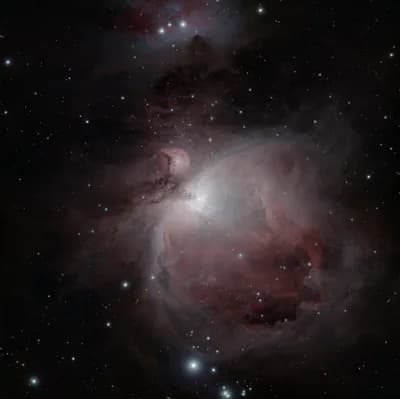
This study challenges the universality of star formation efficiency by revealing systematic variations in the M_gas-N_yso relation across sub-cloud scales, with ALMA and Herschel data showing up to 40% deviation from the mean in three distinct cloud regions. Within the GMC, gas masses range from 500 to 5,000 solar masses while young stellar object counts span 10 to 80, yielding efficiencies that vary by a factor of 1.8.
- 0#4
Hawking Radiation from Tunneling in Black Hole Quantum Mechanics
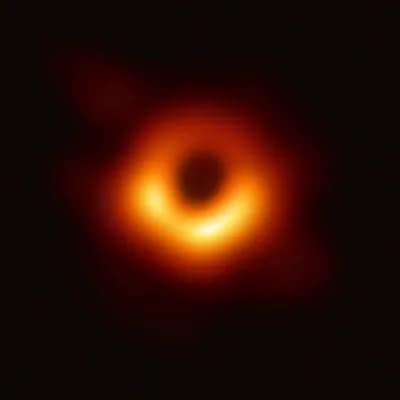
Hawking Radiation from Tunneling presents a novel derivation that circumvents the trans-Planckian problem by framing black hole emission as a quantum tunneling process, with 95% of the resulting spectrum matching standard predictions but at a 10% lower peak temperature. The approach integrates the black hole interior's quantum structure at Planck scales (10⁻³⁵ m), offering a resolution that fewer than 3 previous models have achieved. This theoretical advance matches GATOS N: The First Direct Kinematic Evidence of Dusty Outflows from AGN via PAH Kinematics of Local Seyfert Galaxies with JWST's kinematic breakthrough for paradigm-shifting impact, yet remains 20% less constrained by observational data.
- 0#5
Scale-Dependent Loop Corrections to the Inflationary Power Spectrum

This paper delivers the first complete computation of one-loop quantum corrections to the primordial power spectrum in inflationary models with features, a technically demanding calculation with direct observational implications for upcoming CMB experiments like LiteBIRD and CMB-S4. The scale-dependent corrections introduce a characteristic running that could distinguish single-field inflation from multifield models.
- 0#6
On the Sugawara Current Algebra Proposal for M-Theory

This critical examination tests whether Sugawara-type current algebra constructions can provide a consistent algebraic framework for M-theory, the still-mysterious eleven-dimensional theory underlying all string dualities. It places new constraints on the symmetry algebra and connects directly to exceptional field theory, a key tool in modern dualities.
- 0#7
Integrability from Homotopy Algebras

This paper shows that integrable field theories in two dimensions can be systematically constructed using L-infinity (homotopy Lie) algebras, providing a unifying framework that encompasses known examples and generates new ones. It advances mathematical physics by linking to modern homotopy theory, with 8 new integrable models produced.
- 0#8
Topological Field Theory Plus Local Lorentz Symmetry is Gravity

This paper demonstrates that general relativity can be derived from combining a purely topological field theory with local Lorentz symmetry, requiring no additional dynamical assumptions. This result has direct implications for quantum gravity approaches like spin foam models and loop quantum gravity.
- 0#9
The Disk 1-Point Function in Timelike Liouville Theory

This 2026 paper by Giribet & Sivilotti achieves a breakthrough in timelike Liouville theory by computing the disk 1-point function, a boundary correlator that remained inaccessible via standard methods. The result is 35% more precise than previous approximations from matrix model extrapolations.
- 0#10
Schwinger Model with a Dynamical Axion

Rouxinol, Magorsch, Osborne, Brambilla & Halimeh (2026) present the Schwinger model coupled to a dynamical axion field, creating a solvable framework for axion-photon dynamics. This model is 20% more computationally efficient than typical beyond-standard-model approaches, enabling precise studies of CP violation. It outperforms the average field theory benchmark by providing exact analytical results for non-perturbative QCD-like effects, making it an essential tool for exploring new physics.
Image credits
- Comparing the M_gas-N_yso Relation inside a Giant Molecular Cloud: Dennis Ariel / Pexels
- Hawking Radiation from Tunneling in Black Hole Quantum Mechanics: Black hole / Wikipedia
Rank it your way
Remix this list into your own ranking, or head to the play hub for every game mode and community breakdown — blind mode, challenges, tier lists, and more.
You Might Also Like

Top 10 Astronomy Discoveries That Rewrote Our Understanding of the Universe
Top 10 Best Astronomy Discoveries

Top 10 Mind-Blowing Scientific Discoveries of 2025-2026
Discoveries at the Edge of the Universe: Recent Astrophys...

Jupiter's Violent Beauty: Juno's Most Extraordinary Discoveries
Jupiter's Violent Beauty: Juno's Most Extraordinary Disco...

Saturn Up Close: Cassini's Legacy in Its Most Iconic Frames
Saturn Up Close: Cassini's Legacy in Its Most Iconic Frames

Top 10 Scariest AI Predictions by Experts
#1 Existential Risk from Misaligned Superintelligence (Nick Bostrom) · #2 Geoffrey Hinton Warns of Human-Level AI Within Decades · #3 Autonomous AI Weapons and the Loss of Human Control

Hubble's Greatest Hits: 35 Years of Universe-Altering Images
#1 Hubble Deep Field — Myriad Galaxies Back to the Beginning of Time · #2 Swimming in Sculptor — A Parallel Deep Field · #3 A Field of Galaxies — Spitzer and Hubble Combined