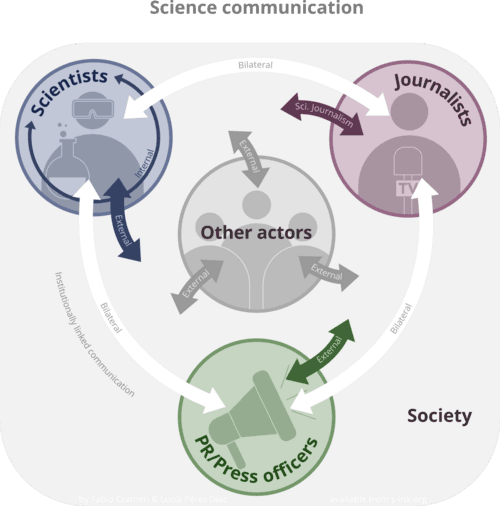
Fabio Crameri / Wikimedia Commons (CC BY-SA 4.0)
Top 10 Science Podcasts That Make You Smarter in 30 Minutes
You don't need a PhD to understand quantum mechanics, evolutionary biology, or climate science — you just need the right storyteller. These science podcasts transform peer-reviewed research into compelling narratives that make complex ideas click. One episode and you'll hold your own at any dinner party.
Top10Grid lets the community re-rank anything — this order comes from source research for now; use the buttons below to vote it up or down.

Current Rankings
- 0#1

Radiolab pioneered the art of sonic storytelling about science. Jad Abumrad and Robert Krulwich built a show where sound design does as much work as the words, layering interviews, music, and effects into an experience that makes abstract concepts visceral. Episodes like "Colors" and "Patient Zero" changed what people thought a science show could sound like. Every narrative science podcast owes its existence to Radiolab.
- 0#2

Alie Ward interviews scientists about their specific "-ology" — from volcanology to thanatology to ferroequinology (the study of trains) — with the enthusiasm of a golden retriever at a science fair. Ward's genuine curiosity and willingness to ask "dumb questions" on behalf of listeners makes complex fields immediately accessible. Ologies has introduced more people to working scientists than any university outreach program.
- 0#3

Neil deGrasse Tyson brings the universe to your earbuds with the same infectious energy that made him the most famous astrophysicist alive. By pairing with comedians as co-hosts, StarTalk ensures that discussions about dark matter, exoplanets, and the multiverse stay entertaining. The show bridges the gap between academic astronomy and pop culture in a way that Carl Sagan would have loved.
- 0

Josh Clark and Chuck Bryant have been explaining how things work since 2008, covering everything from how LSD works to the history of landfills with the conversational ease of two curious friends at a bar. SYSK has over 1,500 episodes and has been downloaded billions of times. The show proves that there is no topic too mundane to be fascinating when explained by people who genuinely care.
- 0

Shankar Vedantam explores the unconscious patterns that drive human behavior, drawing on psychology, neuroscience, and behavioral economics to explain why we do what we do. Episodes on the "scarcity mindset," the psychology of conspiracy theories, and the science of loneliness have changed how millions of listeners understand themselves. Hidden Brain is therapy, science class, and storytelling all at once.
- 0

Wendy Zukerman fact-checks popular beliefs, fads, and hot-button issues using peer-reviewed research with an irreverent Australian wit that makes rigorous methodology genuinely fun. From detoxes to gun control to the G-spot, Science Vs takes on topics most science shows avoid and delivers verdicts backed by actual evidence. The show's commitment to citing every claim with primary sources sets a standard the rest of science media should follow.
- 0

Dr. Steven Novella and his panel of "rogues" have been promoting scientific skepticism and critical thinking since 2005, making it one of the longest-running science podcasts in existence. The weekly format covers news items, debunks pseudoscience, and teaches listeners how to spot logical fallacies. SGU does not just teach science — it teaches how to think scientifically, which is arguably more important.
- 0
Roman Mars reveals the hidden design decisions that shape the built world — from the origins of revolving doors to the reason flags look the way they do. 99% Invisible operates in the space between architecture, urban planning, and psychology, proving that the most interesting stories are embedded in objects and systems we walk past every day without noticing. The show made design thinking mainstream.
- 0

Stephen Dubner applies economic thinking to everything from crime reduction to parenting to the hidden incentives behind daily decisions. Born from the bestselling book, the podcast has evolved into a media empire including "No Stupid Questions" and "People I (Mostly) Admire." Freakonomics made "incentives" a dinner-table word and proved that economics is not about money — it is about human behavior.
- 0#10

NPR's daily science podcast delivers fascinating discoveries in episodes that clock in under 15 minutes — perfect for the listener who wants to feel smarter without committing to a three-hour deep dive. Emily Kwong and the rotating cast of science reporters cover everything from CRISPR breakthroughs to the psychology of deja vu with a pace and clarity that makes complex research feel urgent and relevant.
Image credits
- Radiolab: Radiolab / Wikipedia
- Ologies: Ologies (podcast) / Wikipedia
- Hidden Brain: Hidden Brain / Wikipedia
- 99% Invisible: 99% Invisible logo.svg / Wikimedia Commons
Related Videos
Rank it your way
Remix this list into your own ranking, or head to the play hub for every game mode and community breakdown — blind mode, challenges, tier lists, and more.
You Might Also Like
Top 10 Best Podcasts of All Time
Top 10 Best Podcasts of All Time

Top 10 Best Podcasts of 2026
Top 10 Best Podcasts of 2026

Top 10 Science Experiments That Sound Like Science Fiction
Top 10 Science Experiments That Sound Like Science Fiction

10 Biotech Breakthroughs Reaching Patients by 2030 (CRISPR, mRNA, Organoids & More)
#1 mRNA Therapeutics Beyond Vaccines · #2 CRISPR Base Editing and Prime Editing · #3 CAR-T Cell Therapy for Solid Tumors

Top 10 Conspiracy Theories That Turned Out to Be True
#1 MKUltra — CIA Mind Control Program · #2 NSA Mass Surveillance (PRISM) · #3 Tobacco Industry Cover-Up

Top 10 World-Changing Inventions in Human History
#1 The Printing Press (1440) · #2 The Internet (1969) · #3 The Steam Engine (1712)