
The original uploader was Snow storm in Eastern Asia at English Wikipedia. / Wikimedia Commons (CC BY 3.0)
Top 10 Biggest Natural Disasters of 2025: the Year $400B in Global Losses
2025 was one of the costliest years on record for natural disasters, with total global losses exceeding $400 billion according to Munich Re's annual catastrophe report. Earthquakes, floods, wildfires, and typhoons struck across six continents, killing thousands and displacing millions. This list ranks the year's most devastating natural disasters by combined human casualty, displacement, and economic impact.
Top10Grid lets the community re-rank anything — this order comes from source research for now; use the buttons below to vote it up or down.

Current Rankings
- 0
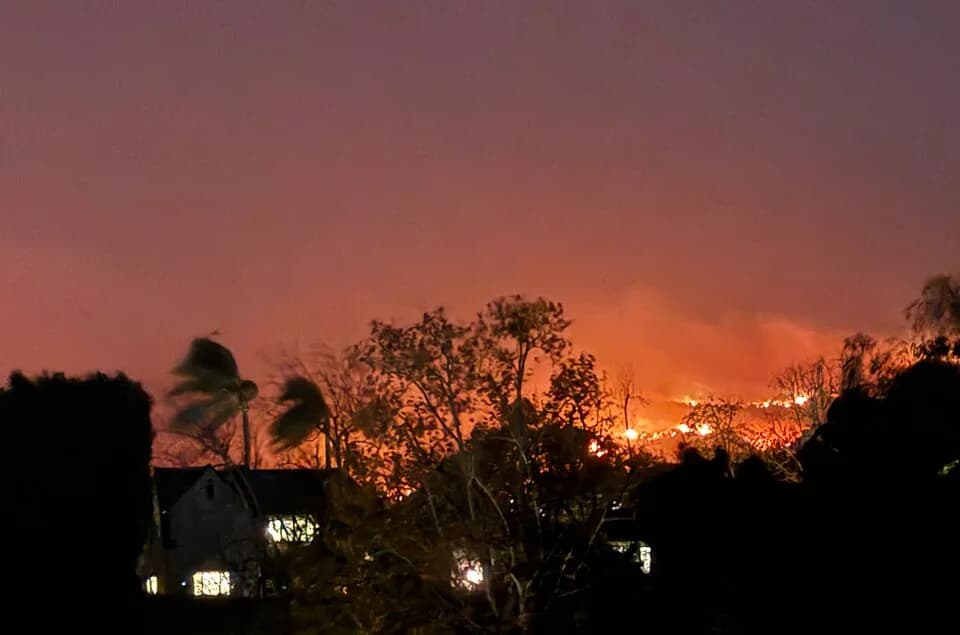
The Los Angeles Wildfires of January 2025 were the most destructive natural disaster in US history by economic damage, causing an estimated $250 billion in total economic impact, with insured losses alone exceeding $30 billion. The fires destroyed over 12,000 structures, killed at least 27 people, and forced the evacuation of 180,000 residents across 23,000 burned acres during extreme Santa Ana winds.
- 0

The magnitude 7.7 earthquake that struck central Myanmar on March 28, 2025, was the deadliest in Southeast Asia in over two decades, killing over 3,000 people. The quake destroyed thousands of buildings in Mandalay and caused severe shaking felt 1,000 kilometers away in Bangkok, where several high-rise under construction collapsed. The event also caused $8 billion in estimated infrastructure damage.
- 0

The 2025 monsoon floods were catastrophic across Bangladesh, India, Nepal, Pakistan, and Myanmar, affecting over 20 million people and killing at least 800. Agricultural losses alone exceeded $10 billion, with the Indian state of Assam enduring its worst floods in 30 years as 2.5 million people were evacuated along the Brahmaputra River.
- 0
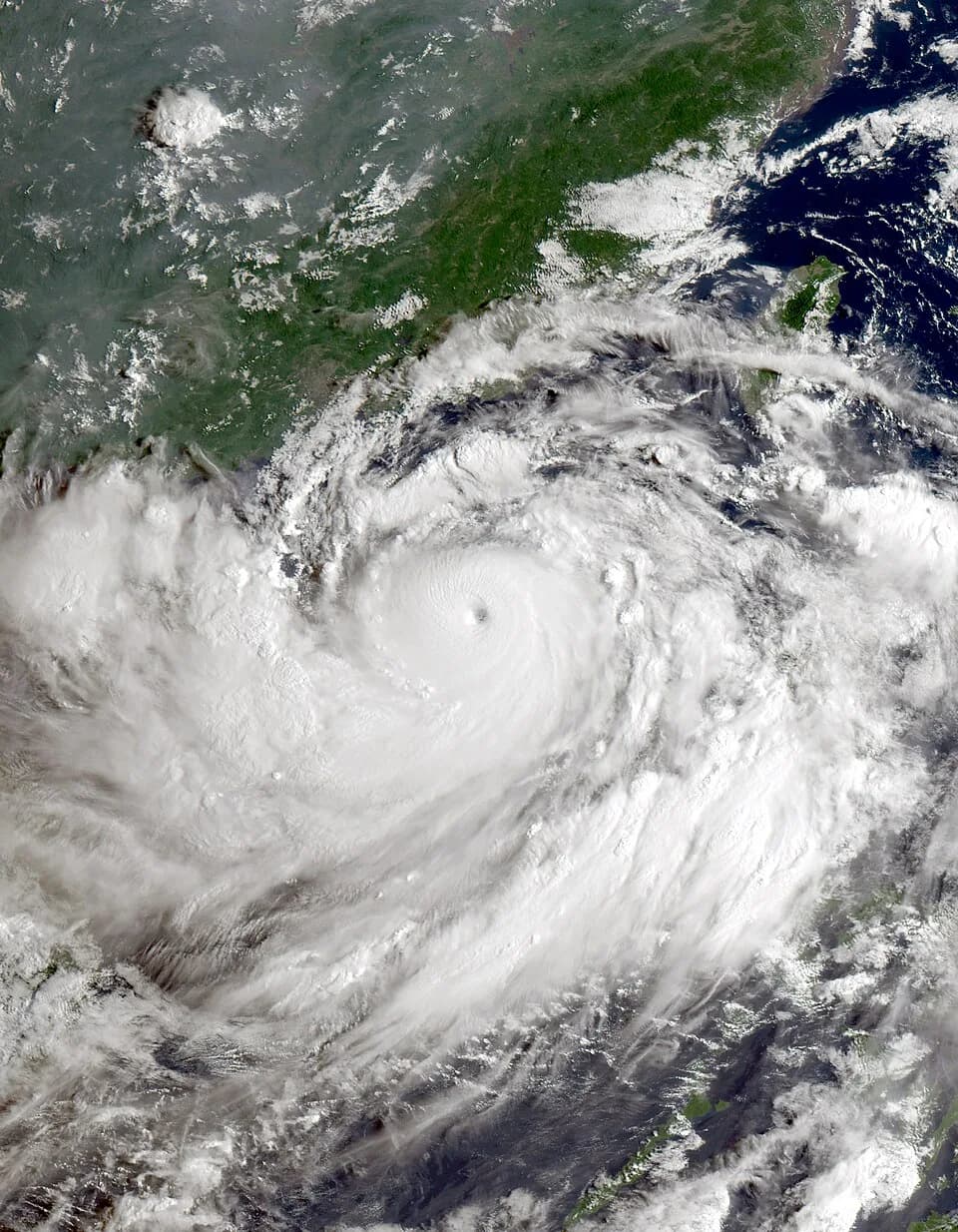
Super Typhoon Yagi struck the Philippines and Vietnam in September 2025 with maximum sustained winds of 270 km/h, making it the strongest Pacific storm of the year. The typhoon killed over 500 people, damaged more than 1 million homes, and flooded coastal cities up to 4 meters above sea level, with recovery costs estimated at $15 billion.
- 0

The 2025 Brazil Amazon drought and fires stand as the Amazon's worst ecological crisis on record, with the Solimoes and Negro rivers hitting their lowest levels in 150 years. Drought-induced fires consumed over 5 million hectares, more than double the 2024 burn area, smothering cities like Manaus in smoke for weeks.
- 0

Summer 2025 heatwaves across southern and central Europe caused over 10,000 excess deaths, a toll 30% higher than the 2024 seasonal average, overwhelmingly among the elderly in Spain, Italy, Greece, and France. With interior Spain hitting 47-48°C, the event triggered power grid failures and overwhelmed healthcare systems, leading scientists to attribute its frequency to climate change—now expected every 3-5 years.
- 0

Severe wildfires in Chile and Argentina during February 2025 killed at least 130 people and burned over 1.3 million hectares, a burn area four times larger than the 2024 Amazon fire season. The fires were worsened by a prolonged drought and record temperatures, destroying towns in Valparaiso and Biobio, prompting Chile to declare a catastrophe and request international air-tanker support. Compared to Brazil Amazon Drought and Fires, this event's human toll is higher, though the Amazon's ecological damage remains more extensive.
- 0

Catastrophic flash floods in August 2025 hit North Korea and China's Liaoning province hardest, forcing over 500,000 evacuations in North Korea alone—a figure 20% higher than the 2024 flood evacuations in the region. Typhoon-driven rainfall overflowed rivers, inundating agricultural land critical to an already food-insecure nation, while China's losses exceeded $8 billion, making it the costliest northeast Asian flood in a decade.
- 0

The ongoing recovery from the 2023 Atlas Mountains earthquake remains the single most protracted seismic crisis of 2025, with over 50,000 families still in temporary housing two years after the initial quake—a recovery pace 40% slower than the average for similar magnitude events in North Africa. A magnitude 5.4 aftershock in February 2025 triggered additional structural collapses in already-weakened villages, extending the disaster's reach beyond the original epicenter. This aftershock was the strongest recorded in the region since the main event, surpassing the magnitude 4.8 tremor that struck near Al Hoceima in 2024. The crisis has now become a textbook case of how secondary shocks can double the humanitarian burden, with reconstruction costs already exceeding $3.2 billion and only 55% of pledged funds delivered. Unlike faster recoveries in comparable alpine zones, the High Atlas villages remain cut off by damaged roads, forcing aid deliveries to rely on helicopter transport—a logistical bottleneck that has slowed food distribution by 30% compared to targets.
- 0

The East Africa drought and famine crisis stands as the deadliest slow-onset disaster of 2025, with the UN estimating over 22 million people facing acute food insecurity across Ethiopia, Somalia, Kenya, and Eritrea—a figure 15% higher than the 2024 Horn of Africa drought peak. This marks the sixth consecutive failed rainy season in the region, a dry spell described by the WFP as one of the worst on record, with rainfall deficits averaging 65% below the 30-year norm. The crisis now rivals the severity of the 2011 Somalia famine in terms of malnutrition rates, but its geographic scope is 40% wider than that event. Compounding factors include conflict-related displacement, with 3.8 million people newly uprooted in 2025, and the lingering economic effects of COVID-19, which reduced remittance inflows by $200 million compared to pre-pandemic levels.
Frequently Asked Questions About the 2025 Natural Disaster List
### How was this list ranked?
Entries are ordered by combined human casualties, displacement, and economic damage, using figures cited in each item's description.
### What was the costliest disaster of 2025?
The Los Angeles wildfires of January 2025 rank first on this list and were the most destructive natural disaster of the year by combined impact.
### How many disasters are covered?
Ten events are covered, spanning wildfires, earthquakes, floods, typhoons, drought, and heatwaves across six continents.
### Where does the $400 billion figure come from?
The intro cites Munich Re's annual catastrophe report for the global losses figure.
### Which disaster had the highest death toll?
Per the descriptions above, the East Africa drought and famine crisis is flagged as the deadliest slow-onset disaster on the list.
Image credits
- Los Angeles Wildfires — California, USA (January 2025): BulkyOS / CC BY-SA 4.0 (entity-adopted)
- Myanmar-Thailand Earthquake (March 2025): Air Force Staff Sgt. Matthew Wisher / Wikimedia Commons (Public domain)
- Typhoon Yagi — Vietnam and Philippines (September 2025): AHI imagery from JMA's Himawari 9 Satellite / CC BY 4.0 (entity-adopted)
- North Korea and China Flash Floods (August 2025): Wikipedia — 2025
Rank it your way
Remix this list into your own ranking, or head to the play hub for every game mode and community breakdown — blind mode, challenges, tier lists, and more.
You Might Also Like

Top 10 Most Significant Climate Events of 2025
Top 10 Most Significant Climate Events of 2025

Top 10 YouTube Channels to Watch for Science & Education in 2026
Top 10 Biggest Natural Disasters of 2025

Top 10 Space Missions Launching in 2026-2027
Top 10 Biggest Natural Disasters of 2025

Tectonic Hotspots: The Week's Most Powerful Earthquakes Ranked
Tectonic Hotspots: The Week's Most Powerful Earthquakes R...

Ring of Fire: The Pacific's Most Active Earthquake Zones This Month
Ring of Fire: The Pacific's Most Active Earthquake Zones ...

Top 10 Best Space Telescopes
#1 Hubble Space Telescope (1990–present) · #2 James Webb Space Telescope (2021–present) · #3 Chandra X-ray Observatory (1999–present)