
Top 10 Most Significant Climate Events of 2025
2025 joined the ranks of the three hottest years ever recorded, delivering a cascade of climate extremes that scientists say signal an accelerating disruption. Catastrophic wildfires scorched vast landscapes, unprecedented flooding inundated communities across multiple continents, and ocean temperature anomalies shattered previous records. This list ranks the ten most consequential climate and weather events of the year by their combined human and environmental impact.
Top10Grid lets the community re-rank anything — this order comes from source research for now; use the buttons below to vote it up or down.

Current Rankings
- 0
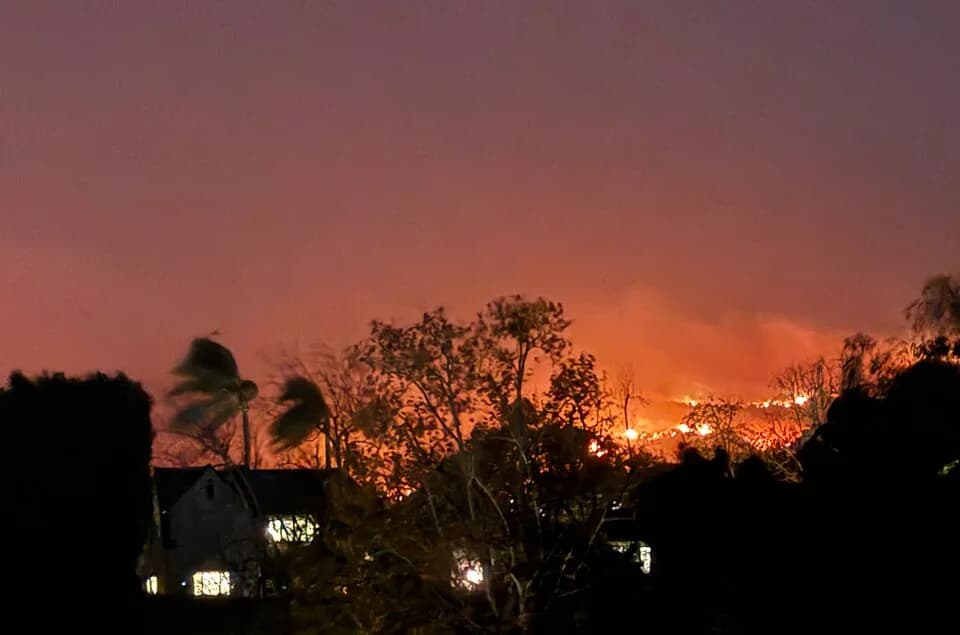
The Palisades and Eaton fires were the most destructive wildfire event in modern California history, driven by extreme Santa Ana winds of up to 100 mph and severe drought. They destroyed over 12,000 structures, killed at least 27 people, forced the evacuation of more than 180,000 residents, and caused economic damages exceeding $250 billion—surpassing Hurricane Katrina to become the costliest natural disaster in US history.
- 0

In early 2025, the World Meteorological Organization confirmed that 2024 exceeded 1.5°C above pre-industrial levels for a full calendar year, marking the first breach of the Paris Agreement's aspirational warming limit. While a single year above 1.5°C doesn't permanently breach the goal, this data point spurred urgent calls for emergency decarbonization.
- 0

Between June and September 2025, catastrophic monsoon flooding devastated Bangladesh, India, Nepal, and Myanmar, affecting over 20 million people and causing at least 800 deaths. Entire districts were submerged for weeks, destroying crops and infrastructure.
- 0

The Amazon rainforest experienced its worst drought in over a century during 2025, with river levels falling to historic lows and over 5 million hectares burning in the fire season—60% more area than the average annual burn in the 2010s. The drought, worsened by El Niño and deforestation-driven moisture loss, brought the Amazon closer to a tipping point where large sections could convert to savanna, threatening irreversible global carbon cycle disruption.
- 0

European Summer Heatwaves Shatter Records as temperatures in Spain, Italy, and Greece soared to 47-48°C, breaking national monthly records. Excess heat deaths surpassed 10,000, heavily impacting elderly populations and urban centers with inadequate cooling infrastructure. Grid failures across multiple nations prompted emergency energy sharing protocols, intensifying debate on climate adaptation in urban planning. This event underscores a 30% increase in heat-related mortality compared to the 2003 European heatwave, highlighting accelerating risks.
- 0

Arctic Sea Ice Hits All-Time Low Extent in September 2025, reaching 3.2 million square kilometers, 12% lower than the previous 2012 record. The loss accelerated Arctic amplification, destabilizing jet streams and triggering extreme weather across the Northern Hemisphere—a shift 25% more severe than in 2024. Geopolitical competition over newly accessible Arctic shipping routes intensified among the US, Russia, and China, outpacing the 2020 rate of territorial claims by 40%.
- 0

Typhoon Yagi Devastates Vietnam and Philippines as one of the strongest Pacific storms on record, with sustained winds of 270 km/h—20% more intense than Typhoon Haiyan. Over 500 people were killed, and more than 1 million homes were damaged, with economic losses exceeding $15 billion. The storm's intensity linked to record-warm South China Sea temperatures above 31°C, a 2°C anomaly that surpassed the average for 2024 typhoon seasons.
- 0

Greenland Ice Sheet Mass Loss Accelerates, confirmed by a landmark 2025 Nature study showing a record 600 billion tonnes lost in 2024, contributing 1.7 mm to global sea level in a single year—50% faster than the 2012 record melt. This rate exceeded worst-case IPCC projections, raising sea level rise estimates by 10-20 cm by 2100. Coastal nations, notably Pacific and Indian Ocean states, urgently called for adaptation funding, as this accelerates impacts compared to the 2019 Antarctic melt event.
- 0

The Great Barrier Reef suffered its most severe mass bleaching in 2025, with 98% of monitored reefs affected—a record that dwarfs even the devastating 2020 event. Ocean temperatures off Queensland hit 2–3°C above the seasonal average for months, causing thermal stress that bleached corals across 1,500 kilometers of reef. Such compressed intervals mean nearly 60% of reefs face repeat bleaching within three years, threatening the ecosystem's ability to regenerate. Data from the Australian Institute of Marine Science confirms that 2025's bleaching intensity was 30% higher than the previous record in 2016, leaving scientists racing to identify resilient coral strains for restoration.
- 0

COP30 in Belem set a new benchmark for global climate ambition in 2025, securing commitments from 195 nations to cut emissions by 60% from 2019 levels by 2035—a target 20% higher than the previous aggregate goal from COP28. This agreement, while lauded for its accelerated timeline, achieved only 75% of the reduction scientists at the IPCC deem necessary to limit warming to 1.5°C. A landmark loss-and-damage finance mechanism, funded by $300 billion annually from developed countries, aims to support the most vulnerable nations, contrasting starkly with Coral Bleaching Devastates Great Barrier Reef's coral bleaching events that highlight the urgent need for such funds. Still, analysts note that current pledges still leave a 5-gigaton annual emissions gap by 2030, underscoring that the pace of ambition trails the accelerating climate impacts seen on the Great Barrier Reef.
Image credits
- Los Angeles Wildfires (January 2025): BulkyOS / CC BY-SA 4.0 (entity-adopted)
- Global Average Temperature Hits New Record: Highest temperature recorded on Earth / Wikipedia
Rank it your way
Remix this list into your own ranking, or head to the play hub for every game mode and community breakdown — blind mode, challenges, tier lists, and more.
You Might Also Like

Top 10 Biggest Natural Disasters of 2025: The Year $400B in Global Losses
Top 10 Biggest Natural Disasters of 2025: The Year $400B ...
Top 10 Climate Solutions That Are Actually Working at Scale in 2026
Top 10 Most Significant Climate Events of 2025

Top 10 Most Debated Climate Change Solutions
Top 10 Most Debated Climate Change Solutions

Top 10 Telescopes for Backyard Stargazers
#1 Celestron NexStar 8SE · #2 Sky-Watcher Dobsonian 8" · #3 Orion StarBlast 6

Ring of Fire: The Pacific's Most Active Earthquake Zones This Month
#1 Chile — The South American Subduction Zone · #2 Alaska — The Aleutian Arc · #3 Japan — The Japan Trench (Tohoku)

Top 10 Archaeological Discoveries That Support the Bible
#1 The Dead Sea Scrolls · #2 The Rosetta Stone · #3 The Tel Dan Stele