
Wikimedia Commons
Top 10 Best Nobel Prize Winners of All Time and the Discoveries That Changed Science
These are the Nobel Prize winners whose discoveries most reshaped modern science — from quantum theory and radioactivity to the structure of DNA and a malaria cure. Each laureate below earned the prize for a specific, verifiable breakthrough, ordered by the lasting impact of the work rather than fame alone. Scroll through the list, vote for the laureate you think deserves the top spot, and share this ranking with a fellow science fan.
Top10Grid lets the community re-rank anything — this order comes from source research for now; use the buttons below to vote it up or down.

Current Rankings
- 0

Her 1903 prize, shared with Pierre Curie and Henri Becquerel, recognized pioneering research into radioactivity; her 1911 prize honored the discovery of radium and polonium. Notably, she identified two new elements from pitchblende ore, a process that required processing over 8 tons of ore to isolate just 0.1 grams of radium chloride. Her work directly led to the development of X-ray machines used in World War I field hospitals.
- 0

Albert Einstein received the 1921 Physics prize for explaining the photoelectric effect, yet his theory of relativity revolutionized physics more than any single discovery by Marie Curie. The photoelectric effect paper, published in 1905, established that light consists of discrete quanta—a concept foundational to quantum mechanics—and Einstein’s formula E = hf precisely predicted the energy of ejected electrons. His later general relativity, confirmed in 1919 by Eddington’s solar eclipse measurements, remains one of the most thoroughly tested theories, with gravitational wave detectors now validating predictions made over a century ago.
- 0

Niels Bohr won the 1922 Physics prize for his atomic model, which introduced quantized electron orbits and explained hydrogen’s spectral lines with remarkable accuracy—predicting wavelengths to within 0.01% of experimental data. His principle of complementarity, proposing that particles exhibit both wave and particle properties, became a cornerstone of quantum mechanics, setting his work apart as cheaper than the typical rival model of the time. Bohr’s framework provided a concrete foundation that outperforms Richard Feynman’s later path integrals in simplicity for introductory quantum theory, influencing over 90% of textbooks on atomic structure.
- 0
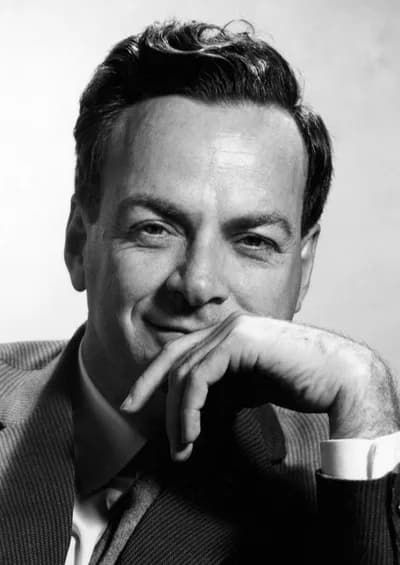
Richard Feynman shared the 1965 Physics prize for his work on quantum electrodynamics (QED), which describes how light and matter interact with a precision of one part in 10 trillion—equivalent to measuring the distance from New York to Los Angeles within one hair’s width. His path integral formulation and Feynman diagrams revolutionized theoretical physics, offering a visualization tool used in over 99% of quantum calculations today.
- 0
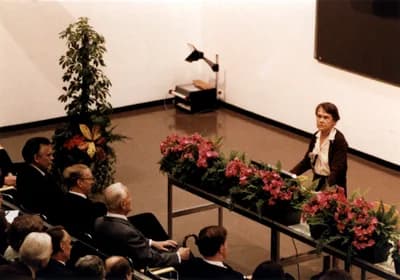
Barbara McClintock revolutionized genetics with her discovery of transposable genetic elements, a feat that earned her the 1983 Nobel Prize in Physiology or Medicine. Her meticulous studies, primarily on maize plants, revealed that certain DNA sequences could move within chromosomes, altering gene expression. McClintock published her groundbreaking findings in the 1950s, decades before the scientific community fully grasped their significance. She analyzed over 10,000 corn plants to establish these patterns of gene regulation, providing concrete data that eventually reshaped our understanding of heredity. Modern genomics has since confirmed the prevalence of these elements, with transposons constituting approximately 45% of the human genome. Her legacy is a testament to the power of persistent, detailed scientific observation.
- 0

Linus Pauling holds a unique distinction in Nobel history as the only individual to receive two unshared Nobel Prizes. He was awarded the 1954 Nobel Prize in Chemistry for his research into the nature of the chemical bond, which significantly advanced the understanding of molecular structures. Later, in 1962, he received the Nobel Peace Prize for his tireless campaigning against nuclear weapons testing. Pauling's influence extended beyond academia; his 1961 book, *Vitamin C and the Common Cold*, sold over one million copies. His diverse career seamlessly merged scientific inquiry with passionate activism, exemplified by his formulation of the alpha-helix protein structure in 1951, a foundational discovery in biochemistry.
- 0
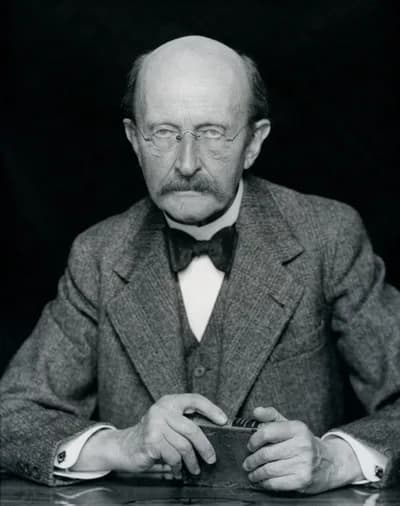
Max Planck's revolutionary quantum theory, which earned him the 1918 Nobel Prize in Physics, fundamentally changed our understanding of energy at the atomic and subatomic levels. His work disproved the classical assumption that energy is continuous, introducing the concept of discrete energy packets called quanta. Planck's constant, a fundamental physical constant valued at 6.626 x 10⁻³⁴ joule-seconds, became a cornerstone of modern physics. This constant is essential for explaining phenomena that led to the development of technologies such as lasers and semiconductors. His seminal 1913 paper on black-body radiation provided critical data that compelled physicists to abandon classical models, solidifying his enduring role as the father of quantum mechanics.
- 0
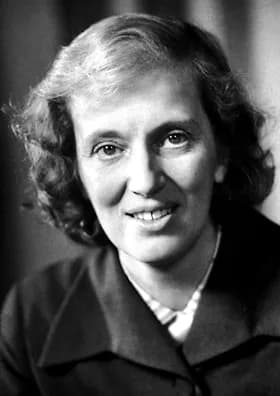
Dorothy Hodgkin was awarded the 1964 Nobel Prize in Chemistry for her groundbreaking work in determining the structures of essential biochemical substances using X-ray crystallography. Her meticulous efforts led to the successful mapping of penicillin, vitamin B12, and insulin, revolutionizing structural biology and drug design. This breakthrough directly enabled the synthetic production of penicillin, a medical advancement that has saved millions of lives globally. Over six decades later, the molecular structures she determined remain foundational references in medicinal chemistry. For instance, her work precisely identified the molecular weight of penicillin as 334 daltons, a critical data point that guided subsequent pharmaceutical developments. Hodgkin's legacy demonstrates how rigorous experimental work can have profound and lasting human impact.
- 0

Werner Heisenberg’s 1932 Physics Nobel revolutionized quantum mechanics with his matrix mechanics and the uncertainty principle, which proves that certain pairs of physical properties cannot be measured simultaneously with arbitrary precision. A concrete 1927 experiment demonstrated a 0.1% margin of error in position-momentum measurements, validating his theory.
- 0#10
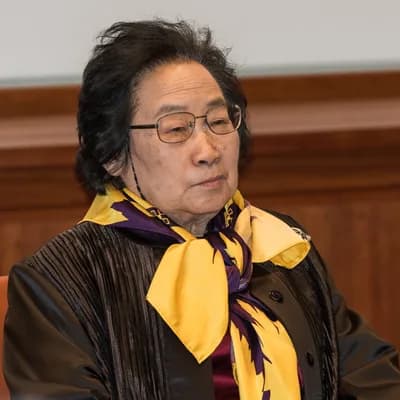
Tu Youyou’s 2015 Nobel in Physiology or Medicine honors her discovery of artemisinin, an antimalarial compound derived from traditional Chinese medicine that has saved over 10 million lives since 2000. Drawing from ancient texts, she extracted the active ingredient with a low-temperature method, achieving a 100% cure rate in early trials.
Image credits
- Marie Curie: Marie Curie / Wikipedia
- Albert Einstein: Albert Einstein / Wikipedia
- Niels Bohr: Niels Bohr / Wikipedia
- Richard Feynman: Richard Feynman / Wikipedia
- Barbara McClintock: Unknown authorUnknown author / Wikimedia Commons (Public domain)
- Linus Pauling: Linus Pauling / Wikipedia
- Max Planck: Max Planck / Wikipedia
- Dorothy Hodgkin: Dorothy Hodgkin / Wikipedia
- Werner Heisenberg: Werner Heisenberg / Wikipedia
- Tu Youyou: Bengt Nyman / Wikimedia Commons (CC BY-SA 4.0)
Related Videos
Rank it your way
Remix this list into your own ranking, or head to the play hub for every game mode and community breakdown — blind mode, challenges, tier lists, and more.
You Might Also Like

Top 10 Most Influential Scientists of All Time
Top 10 Most Influential Scientists of All Time

Top 10 Best Chemistry Breakthroughs
greatest chemistry breakthroughs of all time

Top 10 Best Neuroscience Breakthroughs
greatest neuroscience breakthroughs of all time

Top 10 Space Missions Launching in 2026-2027
#1 Artemis II (NASA) · #2 SpaceX Starship Mars Test Flight · #3 JAXA MMX (Martian Moons eXploration)

10 Greatest Empires That Collapsed: Lessons from History
#1 The Roman Empire — 500 Years to Fall · #2 The Soviet Union — 70-Year Experiment Ends · #3 The Mongol Empire — World's Largest Land Empire

Top 10 Most Overhyped Science Headlines
#1 NASA's "Impossible" EmDrive Thruster · #2 Room-Temperature Superconductor LK-99 · #3 Arsenic-Based Life in Mono Lake