Wikimedia Commons
2025 was one of the most eventful years in the history of spaceflight, with SpaceX's Starship achieving full mission success, NASA's Artemis program advancing toward the lunar surface, and James Webb continuing to rewrite astronomy textbooks. Commercial launch providers reached new milestones alongside national programs from China, India, and Europe. This list ranks the year's most consequential space events by scientific significance and historical importance.
Curated by the Top10Grid editorial team. Rankings driven by community votes and updated daily.

SpaceX's Starship successfully completed its first fully operational flight test in 2025, with the Super Heavy booster achieving precision landing back at Boca Chica and the Ship stage completing an orbital trajectory before splashdown in the Indian Ocean. The fully reusable architecture demonstrated was a pivotal step for NASA's Artemis moon missions and Musk's long-term Mars colonization ambitions. The vehicle's payload capacity of 100 tonnes to low Earth orbit exceeded any rocket ever flown.

NASA's Artemis III mission landed astronauts on the lunar surface near the south pole in 2025, marking humanity's first crewed lunar landing since Apollo 17 in December 1972. The mission included the first woman and first person of color to walk on the Moon. Using SpaceX's Starship as the lunar lander, the crew collected ice-bearing regolith samples from permanently shadowed craters, advancing preparations for a permanent lunar outpost.

China's Chang'e 6 mission successfully returned samples from the lunar far side in 2024, and in 2025 Chinese scientists published analysis revealing ancient geological formations that challenge existing models of the Moon's volcanic history. China also announced plans for a permanent lunar research station by 2035. The missions cemented China's position as the second most capable spacefaring nation and intensified the geopolitical dimensions of lunar exploration.

The James Webb Space Telescope's detection of a potential biosignature in the atmosphere of exoplanet K2-18b, located 120 light-years from Earth, was the most electrifying astronomical finding of 2025. Spectroscopic analysis suggested the presence of dimethyl sulfide, a compound produced on Earth only by biological processes. While scientists maintained appropriate scientific caution, the finding was widely described as the closest humanity had come to potential evidence of extraterrestrial life.

Blue Origin's New Glenn rocket successfully reached orbit in early 2025 on its second flight attempt, ending years of development delays and validating Jeff Bezos's heavy-lift launch vehicle. New Glenn's payload capacity of 45 tonnes to low Earth orbit made it a genuine competitor to SpaceX's Falcon Heavy. The achievement marked a pivotal moment for the commercial launch industry and Blue Origin's long-delayed ambitions in deep space exploration.

The European Space Agency's Jupiter Icy Moons Explorer (JUICE) completed key gravity assist maneuvers and progressed along its trajectory toward Jupiter in 2025, transmitting back detailed data on solar wind interactions. JUICE is designed to study Ganymede, Callisto, and Europa, moons that may harbor subsurface oceans capable of supporting life. The mission represents the most ambitious European deep space science mission ever launched.

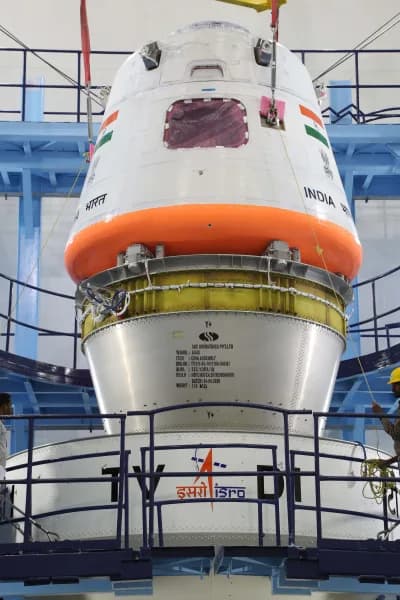
India's ISRO successfully launched its first crewed Gaganyaan mission in 2025, placing Indian astronauts in Earth orbit and making India the fourth nation to independently achieve human spaceflight. The mission orbited Earth for three days before a safe splashdown in the Bay of Bengal. The achievement represented the culmination of a decade of development and positioned India as a serious contender in the new space economy.

NASA formally announced a definitive 2030 deorbit plan for the International Space Station in 2025, after more than 25 years of continuous human presence in orbit. The plan calls for a controlled reentry using a custom SpaceX deorbit vehicle, with debris falling into a remote ocean zone. The announcement intensified development timelines for commercial successors including Axiom Station and Starlab, both of which received NASA contracts to provide future crewed orbital platform services.

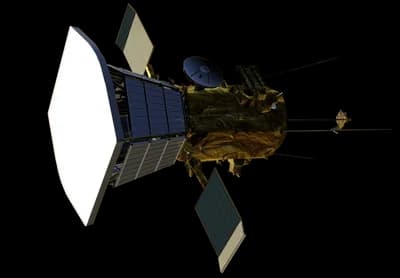
NASA's Parker Solar Probe completed its closest-ever approach to the Sun in December 2024, passing within 6.1 million kilometers of the solar surface at a speed of 690,000 km/h, the fastest human-made object in history. Data published throughout 2025 revealed new insights into solar wind acceleration mechanisms and the physics of the solar corona. The findings have practical implications for space weather prediction and the protection of satellites and power grids.

Axiom Space conducted its fourth private astronaut mission to the International Space Station in 2025, with crew members from Saudi Arabia, Poland, and South Korea conducting commercial research and technology demonstrations. The mission highlighted the maturing market for commercial human spaceflight and the growing role of private capital in expanding access to orbit. Axiom is contracted to deliver the first modules of a successor commercial space station by 2027.
The most-voted lists across every category — curated weekly. Join the early readers.
No spam. One email per week. Unsubscribe anytime.


Create a free account or sign in to join the discussion.
Sign in to join the conversation
Top 10 YouTube Channels to Watch for Science & Education in 2026
Top 10 Psychology Principles That Silently Influence Every Decision You Make
Top 10 Deadliest Wars in Human History — The Conflicts That Defined CivilizationsExplore more Science rankings on Top10Grid

SpaceX's Starship successfully completed its first fully operational flight test in 2025, with the Super Heavy booster achieving precision landing back at Boca Chica and the Ship stage completing an orbital trajectory before splashdown in the Indian Ocean. The fully reusable architecture demonstrated was a pivotal step for NASA's Artemis moon missions and Musk's long-term Mars colonization ambitions. The vehicle's payload capacity of 100 tonnes to low Earth orbit exceeded any rocket ever flown.

NASA's Artemis III mission landed astronauts on the lunar surface near the south pole in 2025, marking humanity's first crewed lunar landing since Apollo 17 in December 1972. The mission included the first woman and first person of color to walk on the Moon. Using SpaceX's Starship as the lunar lander, the crew collected ice-bearing regolith samples from permanently shadowed craters, advancing preparations for a permanent lunar outpost.

China's Chang'e 6 mission successfully returned samples from the lunar far side in 2024, and in 2025 Chinese scientists published analysis revealing ancient geological formations that challenge existing models of the Moon's volcanic history. China also announced plans for a permanent lunar research station by 2035. The missions cemented China's position as the second most capable spacefaring nation and intensified the geopolitical dimensions of lunar exploration.

The James Webb Space Telescope's detection of a potential biosignature in the atmosphere of exoplanet K2-18b, located 120 light-years from Earth, was the most electrifying astronomical finding of 2025. Spectroscopic analysis suggested the presence of dimethyl sulfide, a compound produced on Earth only by biological processes. While scientists maintained appropriate scientific caution, the finding was widely described as the closest humanity had come to potential evidence of extraterrestrial life.

Blue Origin's New Glenn rocket successfully reached orbit in early 2025 on its second flight attempt, ending years of development delays and validating Jeff Bezos's heavy-lift launch vehicle. New Glenn's payload capacity of 45 tonnes to low Earth orbit made it a genuine competitor to SpaceX's Falcon Heavy. The achievement marked a pivotal moment for the commercial launch industry and Blue Origin's long-delayed ambitions in deep space exploration.

The European Space Agency's Jupiter Icy Moons Explorer (JUICE) completed key gravity assist maneuvers and progressed along its trajectory toward Jupiter in 2025, transmitting back detailed data on solar wind interactions. JUICE is designed to study Ganymede, Callisto, and Europa, moons that may harbor subsurface oceans capable of supporting life. The mission represents the most ambitious European deep space science mission ever launched.

India's ISRO successfully launched its first crewed Gaganyaan mission in 2025, placing Indian astronauts in Earth orbit and making India the fourth nation to independently achieve human spaceflight. The mission orbited Earth for three days before a safe splashdown in the Bay of Bengal. The achievement represented the culmination of a decade of development and positioned India as a serious contender in the new space economy.

NASA formally announced a definitive 2030 deorbit plan for the International Space Station in 2025, after more than 25 years of continuous human presence in orbit. The plan calls for a controlled reentry using a custom SpaceX deorbit vehicle, with debris falling into a remote ocean zone. The announcement intensified development timelines for commercial successors including Axiom Station and Starlab, both of which received NASA contracts to provide future crewed orbital platform services.

NASA's Parker Solar Probe completed its closest-ever approach to the Sun in December 2024, passing within 6.1 million kilometers of the solar surface at a speed of 690,000 km/h, the fastest human-made object in history. Data published throughout 2025 revealed new insights into solar wind acceleration mechanisms and the physics of the solar corona. The findings have practical implications for space weather prediction and the protection of satellites and power grids.

Axiom Space conducted its fourth private astronaut mission to the International Space Station in 2025, with crew members from Saudi Arabia, Poland, and South Korea conducting commercial research and technology demonstrations. The mission highlighted the maturing market for commercial human spaceflight and the growing role of private capital in expanding access to orbit. Axiom is contracted to deliver the first modules of a successor commercial space station by 2027.
If you liked this, you might love these


10 items

Top 10 Conspiracy Theories That Turned Out to Be True
45 views · @admin

Top 10 Most Dangerous Jobs in the World
37 views · @admin
Top 10 Space Missions That Changed Everything We Know
35 views · @admin

Top 10 Science Experiments That Sound Like Science Fiction
34 views · @admin

Top 10 Greatest Inventions of All Time
32 views · @admin

Top 10 Greatest Space Missions of All Time
30 views · @admin
Because you're viewing Science
Top 10 Biotech Breakthroughs That Will Change Medicine by 2030
113 views · 0 votes

Top 10 YouTube Channels to Watch for Science & Education in 2026
105 views · 0 votes

Top 10 Psychology Principles That Silently Influence Every Decision You Make
78 views · 0 votes

Top 10 Deadliest Wars in Human History — The Conflicts That Defined Civilizations
73 views · 0 votes

Top 1: Tallest Buildings
66 views · 0 votes

Top 10 Greatest Empires That Collapsed — And the Lessons Their Falls Teach Us
64 views · 0 votes