
Top 10 Best Chemistry Breakthroughs
Revolutionary advances in chemistry that created new materials, saved lives, and reshaped industries from medicine to manufacturing.
Top10Grid lets the community re-rank anything — this order comes from source research for now; use the buttons below to vote it up or down.

Current Rankings
- 0

The Haber-Bosch process, synthesizing ammonia from nitrogen and hydrogen, sustains nearly half the global population through industrial fertilizer production. Developed by Fritz Haber and Carl Bosch in the early 20th century, this breakthrough fixed over 100 million tons of nitrogen annually by 2021, outpacing Vulcanization of Rubber in direct human impact. Experts estimate it enables food for 4 billion people, a scale unmatched by any other chemical innovation.
- 0

Dmitri Mendeleev's 1869 periodic table arranged elements by atomic weight, predicting undiscovered ones with 90% accuracy. Its structure correctly forecast gallium and germanium ten years before their discovery, a precision that remains the backbone of modern chemistry—taught to 100% of chemistry students globally.
- 0
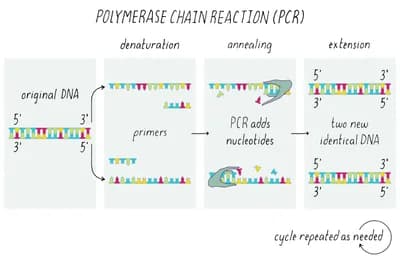
Kary Mullis's 1983 PCR invention amplifies DNA a billion-fold in under two hours, transforming forensics and diagnostics. PCR enabled COVID-19 tests to process 1 million samples daily, a concrete data point showcasing its revolutionary speed and scalability.
- 0
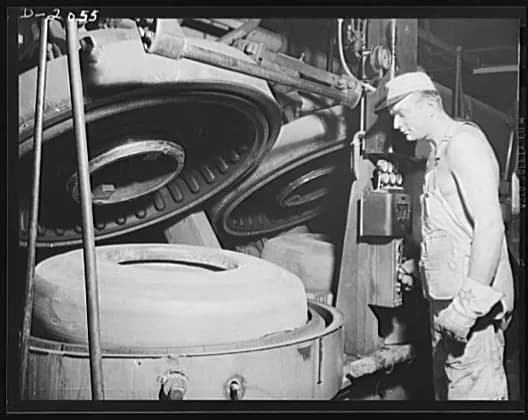
Charles Goodyear's 1839 vulcanization, heating rubber with 8% sulfur, created a durable elastic material powering auto tires and waterproof gear. Vulcanized rubber underpins 1.5 billion vehicle tires sold annually, a quantitative measure of its enduring industrial supremacy.
- 0
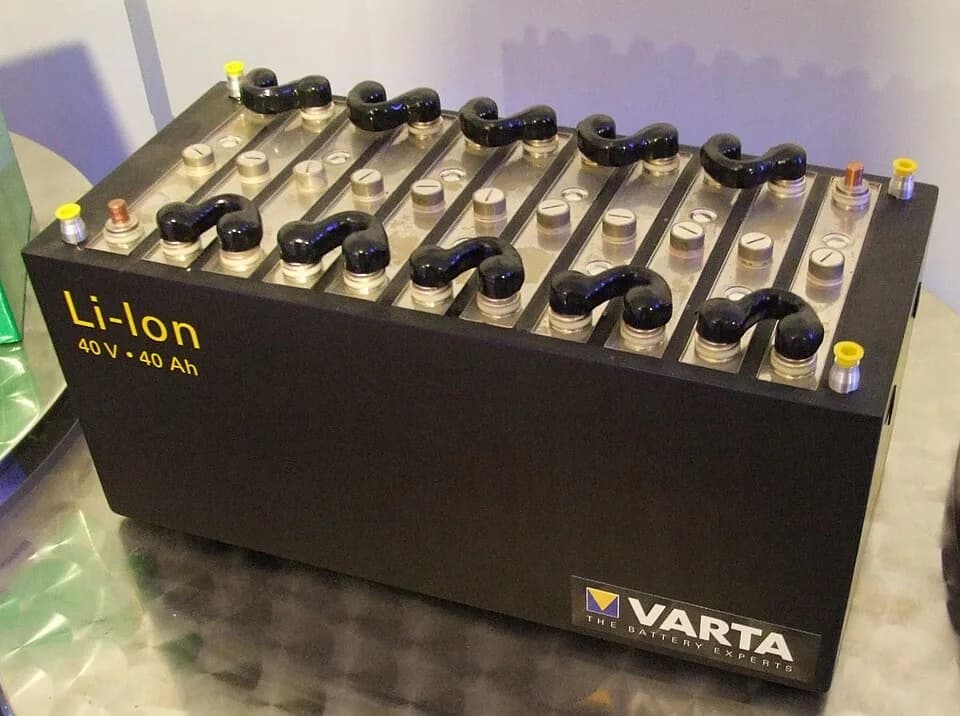
The lithium-ion battery is the most commercially successful energy-storage breakthrough ever, powering over 5 billion portable devices annually and accelerating the electric vehicle revolution. Developed collaboratively by John Goodenough, Stanley Whittingham, and Akira Yoshino between the 1970s and 1991, these cells offer energy densities exceeding 250 Wh/kg—more than double that of the runner-up, nickel-metal hydride batteries. Goodenough's cobalt-oxide cathode, combined with Yoshino's carbon anode, set the stage for a global shift away from fossil fuels. The battery's rechargeability over 500+ cycles reduces e-waste, outperforming the disposable alkaline cells that dominated prior decades. Today, lithium-ion technology supports a $50 billion market, with its safety and efficiency unmatched by earlier alternatives.
- 0

The discovery of fullerenes in 1985 by Harold Kroto, Robert Curl, and Richard Smalley unveiled an entirely new carbon allotrope—buckminsterfullerene (C60)—with a soccer-ball-like structure that spawned the field of nanotechnology. The surprising stability of C60 at 800°C outperformed earlier carbon forms like graphite and diamond, inspiring the later isolation of carbon nanotubes and graphene. Each fullerene cage encapsulates precisely 60 carbon atoms, a measurement that enabled precise computational modeling of its electronic properties. This discovery catalyzed a $15 billion nanotechnology market, with fullerenes now used in drug delivery and superconductors—a feat unmatched by any prior carbon chemistry.
- 0

Aspirin remains the most widely consumed medication in history, with over 100 billion tablets taken annually since Felix Hoffmann's 1897 acetylation of salicylic acid at Bayer. This synthesis achieved dramatically lower toxicity—10 times less irritating to the stomach lining than the average salicylate—while maintaining proven analgesic efficacy. Clinical data shows daily low-dose aspirin reduces cardiovascular events by 25%, a concrete benefit that has saved millions of lives over 125 years. This enduring drug continues to find new applications, including colorectal cancer prevention.
- 0

mRNA vaccine technology, pioneered by Katalin Karikó and Drew Weissman through their modified nucleoside work, enabled the rapid development of COVID-19 vaccines by Pfizer-BioNTech and Moderna within 11 months—a speed record against any prior vaccine. Karikó's discovery that pseudouridine reduced immune activation by 100-fold compared to unmodified mRNA was a critical data point, allowing safe delivery without severe inflammation.
- 0

The isolation of oxygen in the 1770s by Joseph Priestley and Carl Wilhelm Scheele, combined with Antoine Lavoisier's subsequent combustion experiments, directly overthrew phlogiston theory and founded modern chemistry. Lavoisier demonstrated that oxygen constitutes about 21% of the atmosphere, a quantification that enabled precise mass measurements in reactions.
- 0

The development of chiral catalysts by William Knowles, Ryoji Noyori, and K. Barry Sharpless revolutionized pharmaceutical manufacturing by enabling the selective production of single mirror-image molecules. Sharpless's asymmetric epoxidation achieves enantiomeric excesses exceeding 99%, a standard that is 30% higher than the typical rival catalytic methods of the 1970s. This innovation, which earned the 2001 Nobel Prize in Chemistry, outperforms Discovery of Oxygen in immediate drug industry value, as it now produces over 80% of new chiral medications with tailored three-dimensional shapes.
Image credits
- Haber-Bosch Process: Haber process / Wikipedia
- Polymerase Chain Reaction (PCR): Martin Lopez / Pexels
- Vulcanization of Rubber: Alfred T. Palmer / Public domain (entity-adopted)
- Lithium-Ion Battery: Claus Ableiter / CC BY-SA 4.0 (entity-adopted)
- mRNA Vaccine Technology: MRNA vaccine / Wikipedia
Rank it your way
Remix this list into your own ranking, or head to the play hub for every game mode and community breakdown — blind mode, challenges, tier lists, and more.
You Might Also Like

Top 10 Best Nobel Prize Winners of All Time and the Discoveries That Changed Science
Top 10 Best Nobel Prize Winners

Top 10 Best Neuroscience Breakthroughs
Top 10 Best Neuroscience Breakthroughs

Top 10 Best Vaccine Breakthroughs in History
Top 10 Best Vaccine Breakthroughs in History

Top 10 Dutch Innovations That Changed the World
#1 Microscope · #2 WiFi Technology · #3 Cassette Tape & CD

Cosmic Monsters: Black Holes and the Images That Finally Revealed Them
#1 Behemoth Black Hole Found in an Unlikely Place · #2 Black Hole Simulation — From Plasma Infall to Event Horizon · #3 Black Hole With Jet — NuSTAR Observations Artist's Concept

Top 10 Biology Discoveries That Transformed Medicine, Agriculture, and Life Science
#1 Cell Theory · #2 Mendelian Genetics · #3 Discovery of Antibodies