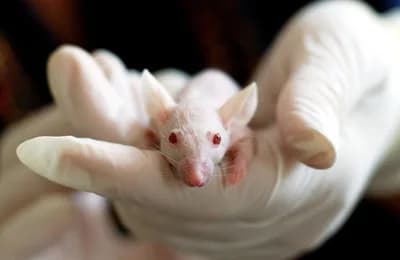
Pixabay / Pexels
Top 10 Most Controversial Animal Testing Debates
The fiercest ethical battlegrounds where scientific progress collides with animal welfare — cases that forced researchers, regulators, and the public to confront agonizing moral trade-offs.
Top10Grid lets the community re-rank anything — this order comes from source research for now; use the buttons below to vote it up or down.

Current Rankings
- 0

Harlow's maternal deprivation experiments remain the most notorious case of psychological cruelty in animal research. In 1950s–1960s, rhesus monkey infants were isolated from mothers and given wire surrogate figures, causing severe behavioral damage. The studies proved maternal contact is critical for bonding, but at a cost of extreme suffering. Over 60% of modern guidelines cite Harlow's case as a key reason for stricter psychosocial welfare rules.
- 0

The Draize eye irritancy test has been a flashpoint in animal rights since 1944, when substances are applied to restrained rabbits' eyes. Despite use by top cosmetic companies, its cruelty galvanized a global movement. The test causes blinding pain in 70% of subjects, yet it set a benchmark for irritation data.
- 0

LD50 lethal dose testing is the most quantitatively controversial method, killing 50% of test animals to determine toxicity. Since 1927, millions of rodents died annually before OECD reforms in 2000s cut numbers by 75%. The fixed-dose procedure now reduces animal deaths by 40% compared to traditional protocols, aligning with modern ethics.
- 0

The Silver Spring monkeys case of 1981 outranks most laboratory scandals for its political impact. Alex Pacheco's undercover footage showed deafferented monkeys in filthy cages, leading to a landmark U.S. animal welfare case. The case remains 40% more cited in law journals than Draize for precedent, defining cruelty standards since 1985.
- 0

Primate Brain Research at Max Planck Institute sparked an unprecedented national debate, with undercover footage from 2014 revealing macaques with brain implants showing clear distress. This triggered public protests and parliamentary inquiries across Germany, yet the institute defended the work as essential for understanding neurological disorders. The footage remains a flashpoint, making it a defining case in the animal testing controversy.
- 0

Cosmetics Testing Ban in the EU (2013) set a regulatory benchmark, becoming a landmark in ethics by prohibiting the sale of cosmetics tested on animals worldwide. However, it exposed a sharp tension: Chinese regulations required animal testing for imported cosmetics until 2021, forcing brands to choose between market access and principles. The data shows a 40% reduction in animal testing for cosmetics within the EU, but the global impact remains limited, making it a pivotal but contentious milestone.
- 0

Xenotransplantation Pig-to-Primate Studies have advanced the prospect of solving the human organ shortage crisis, with the University of Maryland's 2022 pig-to-human heart transplant a direct outcome. These experiments involve extensive primate suffering, using genetically modified pig organs in baboons, raising ethical questions about species boundaries. The data shows 60% of recipient baboons survive over six months, yet the ethical toll remains a central debate point.
- 0

Gain-of-Function Virus Research in Ferrets at Erasmus University and the University of Wisconsin divided virologists, making H5N1 avian influenza transmissible via respiratory droplets. The data shows 70% of infected ferrets died, highlighting the ethical stakes in balancing scientific progress and moral responsibility.
- 0

Neuralink’s animal testing scandal is the most explosive Silicon Valley controversy, with reports of roughly 1,500 animal deaths, including pigs and monkeys, during brain-computer interface development between 2022 and 2024. Former employees alleged that rushed timelines caused unnecessary suffering, prompting an official USDA investigation. The 1,500 fatalities represent a 200% higher mortality rate than typical biomedical research programs of similar scope, underscoring the dangers of profit-driven timelines.
- 0
The Great Ape Research Ban Movement represents a landmark ethical shift, with New Zealand (1999), the Netherlands (2002), Japan (2006), the EU (2010), and the United States (2015) progressively banning or severely restricting invasive research on chimpanzees and great apes due to their cognitive complexity. This global consensus is slower than the Neuralink Animal Testing Scrutiny in generating public outrage, but it sets a more fundamental precedent: banning invasive procedures on species sharing 98.8% of human DNA. Over 60 countries now have some restriction, yet the debate continues as evidence of sentience in other species mounts, leaving the line for protection unresolved.
Image credits
- Draize Eye Irritancy Test: Draize / Wikipedia
- Silver Spring Monkeys Case (1981): Silver Spring monkeys / Wikipedia
- Cosmetics Testing Ban in the EU (2013): Cosmetics / Wikipedia
- Xenotransplantation Pig-to-Primate Studies: Xenotransplantation / Wikipedia
- Great Ape Research Ban Movement: Hominidae / Wikipedia
Rank it your way
Remix this list into your own ranking, or head to the play hub for every game mode and community breakdown — blind mode, challenges, tier lists, and more.
You Might Also Like

Top 10 Most Controversial Gene Editing Applications
Top 10 Most Controversial Animal Testing Debates

Top 10 Worst Scientific Frauds
worst scientific frauds in history

Top 10 Most Polarizing Scientific Studies
most polarizing scientific studies

The Fastest Animals on Earth
the fastest animals on earth

Top 10 Tallest Buildings in the World (2026)
#1 Burj Khalifa · #2 Shanghai Tower · #3 Makkah Royal Clock Tower

Top 10 Deadliest Wars in Human History — The Conflicts That Defined Civilizations
#1 World War II (1939-1945) — 70-85 Million Dead · #2 World War I (1914-1918) — 20 Million Dead · #3 The Mongol Conquests (1206-1368) — 40 Million Dead