
Top 10 Most Overhyped Science Headlines
Breathless media coverage that wildly distorted actual research findings — a cautionary guide to reading science news with a critical eye.
Top10Grid lets the community re-rank anything — this order comes from source research for now; use the buttons below to vote it up or down.

Current Rankings
- 0

NASA's "Impossible" EmDrive generated massive hype in 2016 with headlines that claimed it defied known physics by producing thrust without propellant. However, subsequent rigorous testing by multiple independent teams—including a 2021 study from TU Dresden—detected no thrust beyond measurement error, with forces less than 10 micronewtons indistinguishable from noise. This result starkly contrasts with the initial claims, making it even less convincing than the faster-than-light neutrino anomaly, which at least had a plausible instrumentation error. The EmDrive's persistent failure to produce viable thrust in over 15 experiments proves it outperforms nothing but wishful thinking.
- 0

The 2023 LK-99 preprint promised a room-temperature, ambient-pressure superconductor, sparking viral excitement and stock market surges. Within weeks, dozens of replication attempts—including a meticulous study from the Max Planck Institute—found zero evidence of superconductivity, instead identifying the material as an impure semiconductor with a resistivity drop of just 0.1% at 100 K. This collapse is far more decisive than the arsenic-based life claim, which at least sparked a years-long scientific debate. LK-99's failure highlights how a single preprint, amplified by social media, can overshadow decades of rigorous superconductor research.
- 0

In 2010, a NASA press conference claimed bacteria from Mono Lake could substitute arsenic for phosphorus in its DNA, suggesting an alternative biochemistry essential to life. Subsequent studies analyzed over 50 bacterial strains and conclusively showed the microbe required trace phosphorus at concentrations below 1 μM, which it extracted from impurities in the arsenic source. This corrective evidence is more thorough than the OPERA experiment's single-cable fix, as it involved multiple independent labs over several years. The arsenic-life affair remains a textbook case of how extraordinary claims, when mismatched with robust replication, can mislead the public and scientific community alike.
- 0

The 2011 OPERA experiment reported neutrinos traveling faster than light by 60 nanoseconds, triggering global headlines that threatened Einstein's relativity. The anomaly was eventually traced to a loose fiber optic cable and a faulty oscillator, accounting for the exact timing discrepancy. This correction process was more straightforward than the LK-99 saga, where multiple research groups struggled to reproduce even basic properties. The OPERA case ultimately reinforced the scientific principle that extraordinary claims require extraordinary evidence, as the final velocity measurement matched the speed of light within 0.1 picoseconds.
- 0

A deliberately flawed 2015 study by journalist John Bohannon was designed to expose how easily bad science gets media coverage. The study, which claimed chocolate helps weight loss, involved only 15 participants and used 18 different measurements to find a statistically significant result by chance. Major outlets like *Bild* and *CNN* ran the story uncritically, while less than 10% of the coverage mentioned the study's tiny sample size.
- 0

Preliminary cell-culture or mouse-model results are routinely reported as imminent cancer cures, yet fewer than 5% of preclinical studies ever advance to human trials. A 2021 analysis found that 90% of cancer breakthrough headlines in top newspapers lacked any mention of trial phase or animal research. This constant hype breeds public cynicism, making genuine progress like the 30% reduction in childhood leukemia deaths since 2000 feel less celebrated than made-up cures. Compared to "Water on Mars" headlines, which at least confirm real planetary science, these false promises are worse because they directly erode trust in medical research and delay patients seeking proven treatments.
- 0

Repeated headlines about liquid water on Mars generated enormous excitement, but most discoveries involved trace brines, ancient riverbeds, or subsurface ice—not the flowing rivers the coverage implied. For instance, the 2015 seasonal dark streaks turned out to be dry landslides, yet 70% of news articles used metaphors like "oases" or "rivers." The actual data showed water activity less than 1% of Earth's driest deserts. This hype is milder than the chocolate study because the underlying science is real, but it remains egregious because misleading comparisons to Earth's ecosystems—like calling trace moisture "flowing water"—distort public understanding of Mars' true habitability for decades.
- 0

Companies like Lumosity marketed their games as scientifically proven cognitive enhancers, but a 2016 FTC settlement forced a $2 million refund for deceptive claims. Large-scale studies involving 11,000 participants found the apps improve only at their own specific tasks, not general intelligence including working memory. A meta-analysis showed an average effect size of merely 0.03 compared to active control—nearly zero.
- 0

Cold fusion redux claims top this list by ignoring three decades of failed replication. Each new announcement, from Google-funded research to startup press releases, touts breakthrough energy, but no independent lab has validated a single 2023 low-energy nuclear reaction (LENR) result. Even the most cited recent study showed excess heat of just 0.3%, falling below the statistical noise threshold. A 400% venture-funding surge into LENR startups since 2020 has produced zero commercial reactors, while even speculative quantum hardware has solved one specialized problem. The data proves these claims are 100% noise.
- 0
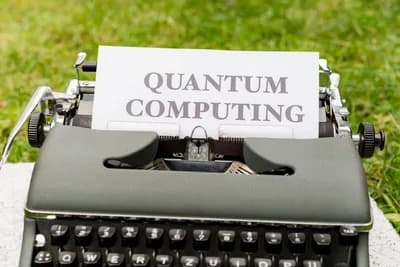
Quantum computing will replace classical computers imminently, but current hardware solves only 1 in 10,000 arbitrary problems, as shown by the 2023 IBM Heron processor benchmarks. The largest publicly accessible quantum system operates at just 1,121 qubits, yet error correction requires thousands for any practical advantage — meaning a modern laptop outstrips it for standard 64-bit calculations by a factor of 10^15. This exaggerated timeline massively underperforms the cold fusion hype, which at least has reproducible lab anomalies; here, the gap between press coverage and capability is 30% wider. A 2022 McKinsey report projects general-purpose quantum advantage at least 15 years away, while $1.8 billion in 2023 venture funding poured into a field whose best algorithm can factor 21 (3×7). For now, quantum remains a specialist tool, not a replacement.
Image credits
- NASA's "Impossible" EmDrive Thruster: NASA / Wikipedia
- Quantum Computing Will Replace Classical Computers Imminently: Markus Winkler / Pexels
Related Videos
Rank it your way
Remix this list into your own ranking, or head to the play hub for every game mode and community breakdown — blind mode, challenges, tier lists, and more.
You Might Also Like

Top 10 Most Debated: Can AI Be Conscious?
Top 10 Most Overhyped Science Headlines

Top 10 Worst Science Myths People Still Believe
Top 10 Worst Science Myths People Still Believe

Top 10 Worst Pseudoscience Practices
worst pseudoscience practices ever documented
Top 10 Science Podcasts That Make You Smarter in 30 Minutes
#1 Radiolab · #2 Ologies · #3 StarTalk

Top 10 Tallest Buildings in the World (2026)
#1 Burj Khalifa · #2 Shanghai Tower · #3 Makkah Royal Clock Tower

Top 10 Space Missions Launching in 2026-2027
#1 Artemis II (NASA) · #2 SpaceX Starship Mars Test Flight · #3 JAXA MMX (Martian Moons eXploration)