
Wikimedia Commons
Top 10 Science Fiction Predictions That Came Terrifyingly True
George Orwell's telescreens in Nineteen Eighty-Four now read as a rough sketch of China's Social Credit System, which draws on roughly 700 million CCTV cameras and AI facial recognition. Arthur C. Clarke described a tablet-like newspad in 2001: A Space Odyssey 42 years before the iPad arrived, and Ray Bradbury's Fahrenheit 451 imagined Seashell Radio earbuds decades before AirPods reached 300 million wearers. This list tracks ten such predictions, from Gibson's cyberspace to Asimov's self-driving cars, that moved from fiction into fact.
Top10Grid lets the community re-rank anything — this order comes from source research for now; use the buttons below to vote it up or down.

Current Rankings
- 0#1
1984's Surveillance State — George Orwell (1949)

Orwell's "Nineteen Eighty-Four" described a state of total surveillance where every citizen's activities, communications, and even thoughts were monitored by telescreens. Today's reality: China's Social Credit System uses 700 million CCTV cameras (the world's most extensive surveillance network), AI facial recognition, and behavioral data to score citizens. In 2022, Edward Snowden's revelations confirmed Western intelligence's equivalent mass data collection programs.
- 0#2
Social Credit and Reputation Scores — Various dystopias

Multiple sci-fi works including Black Mirror's "Nosedive" depicted societies where social reputation scores control access to services, housing, and opportunities. Reality in 2026: China's Social Credit System restricts travel for low-scorers; Uber and Airbnb use two-way reputation ratings to control platform access; algorithmic credit scoring denies loans based on social graph data. The architecture of reputation-based control has arrived, differing only in implementation.
- 0#3
Tablet Computers — Arthur C. Clarke (1968)

In "2001: A Space Odyssey," Clarke described "newspad" devices — thin, portable screens that astronauts use to read digital newspapers and watch video content. The description of the device, its usage patterns, and its cultural role as a content consumption device predates the iPad by 42 years with remarkable accuracy. When Apple introduced the iPad in 2010, multiple tech journalists noted Clarke's description as essentially a product spec.
- 0#4
Earbuds and Always-On Audio — Ray Bradbury (1953)

In "Fahrenheit 451," Bradbury's dystopian society features "Seashell Radio" — tiny wireless earbuds that deliver continuous entertainment directly to wearers' ears, distracting them from critical thought. The technology arrived exactly as Bradbury envisioned: AirPods, launched in 2016 and now used by 300+ million people. Bradbury's prescience extended to the social function — he worried the technology would fragment attention and reduce collective experience.
- 0#5
AI That Writes and Creates — Philip K. Dick and others

Numerous sci-fi works described AI capable of creative production — writing, art, music — that was indistinguishable from human output. ChatGPT, Midjourney, Claude, and similar systems have arrived within the last 3 years, generating text, code, images, and music at human-expert quality. Philip K. Dick's "Do Androids Dream of Electric Sheep?" asked whether synthetic intelligence could be meaningfully distinguished from authentic human cognition — a question now confronted in copyright courts globally.
- 0#6
Video Calling — Hugo Gernsback (1911)

Hugo Gernsback described "telephots" — video telephone devices — in his 1911 novel "Ralph 124C 41+" which depicted an inventor who solves global problems through a futuristic device with many predicted technologies. Video calling remained a futuristic concept in science fiction for 50+ years before becoming commonplace in the 2010s. COVID-19 converted video calling from occasional to default in under 6 months — a behavioral shift that will likely be permanent.
- 0#7
Self-Driving Vehicles — Isaac Asimov (1953)

Asimov's "Sally" (1953) described a world where automobiles drive themselves, refuse to harm humans, and develop personalities through their AI systems. Tesla's Full Self-Driving, Waymo's robotaxi fleet, and 35 million semi-autonomous vehicles already on the road in 2026 are the direct realization of Asimov's vision — albeit with more liability disputes and regulatory fights than he imagined. Waymo vehicles complete 100,000+ fully autonomous rides monthly.
- 0#8
The Internet — William Gibson's Cyberspace (1984)
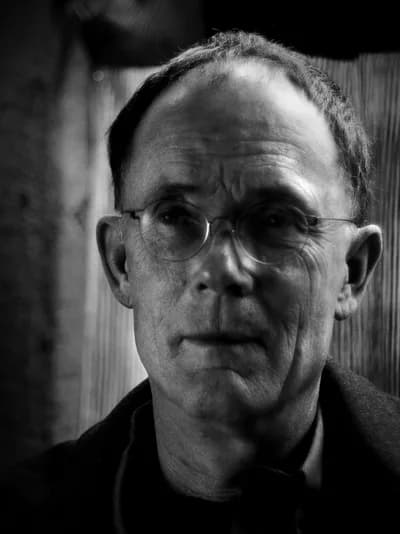
William Gibson coined the word "cyberspace" in 1982 and fully described it in "Neuromancer" (1984) — a global information network accessed through neural interfaces, containing its own geography, economy, and social structures. The internet arrived within 10 years of Gibson's description, with social networks, virtual economies, and digital identities following precisely his architecture. Gibson himself said he was extrapolating from what he observed happening, not imagining the future.
- 0#9
Genetic Engineering — Aldous Huxley's "Brave New World" (1932)

"Brave New World" depicted a society where humans are genetically engineered and conditioned from conception to fill predetermined social roles — a form of biological social engineering. CRISPR gene editing, approved for therapeutic use in 2023. The ethical debates about germline editing, designer children, and genetic inequality that Huxley foresaw in 1932 are now active legislative and bioethics controversies in every major country.
- 0#10
Space Tourism — Arthur C. Clarke and Robert Heinlein

Both Clarke and Heinlein described commercial space tourism as an obvious development of the space age — civilians purchasing seats on orbital flights as a luxury experience. SpaceX has carried private passengers to the ISS; Virgin Galactic has flown customers to the edge of space; Blue Origin's New Shepard has made dozens of crewed flights. The price ($250,000-$55 million per seat) is exactly the "expensive luxury accessible to the wealthy" both authors described as space tourism's first phase.
Frequently Asked Questions About Sci-Fi Predictions That Came True
### Are sci-fi predictions usually accurate? Most are speculative, but a small number land remarkably close to real technology or social trends decades later.
### Which sci-fi author made the most accurate predictions? Readers most often cite Arthur C. Clarke for communications satellites and tablets, and George Orwell for surveillance technology.
### Why do sci-fi predictions sometimes come true? Because authors extrapolate from current scientific and social trends, so the most grounded forecasts tend to age well.
### What was the earliest sci-fi prediction on this list? Hugo Gernsback's 1911 description of video calling is the earliest item featured here.
Image credits
- 1984's Surveillance State — George Orwell (1949): Wikimedia Commons
- Social Credit and Reputation Scores — Various dystopias: Wikimedia Commons
- Tablet Computers — Arthur C. Clarke (1968): Wikimedia Commons
- Earbuds and Always-On Audio — Ray Bradbury (1953): Wikimedia Commons
- AI That Writes and Creates — Philip K. Dick and others: List of fictional computers / Wikipedia
- Video Calling — Hugo Gernsback (1911): Wikimedia Commons
- Self-Driving Vehicles — Isaac Asimov (1953): Waymo self-driving car in San Francisco / Wikimedia Commons (CC BY 2.0)
- The Internet — William Gibson's Cyberspace (1984): William Gibson / Wikipedia
- Genetic Engineering — Aldous Huxley's "Brave New World" (1932): Wikimedia Commons
- Space Tourism — Arthur C. Clarke and Robert Heinlein: Soyuz MS-20 space tourists / Wikimedia Commons (CC BY-SA 4.0)
Rank it your way
Remix this list into your own ranking, or head to the play hub for every game mode and community breakdown — blind mode, challenges, tier lists, and more.
You Might Also Like

Top 10 World-Changing Inventions in Human History
Top 10 World-Changing Inventions in Human History

Top 10 Greatest Inventions of All Time
Top 10 Greatest Inventions of All Time

Top 10 Inventions That Changed Human Civilization More Than Anything Else in History
Top 10 Inventions That Changed Human Civilization More Th...

Top 10 Archaeological Discoveries That Support the Bible
#1 The Dead Sea Scrolls · #2 The Rosetta Stone · #3 The Tel Dan Stele

Top 10 Worst Nuclear Incidents
#1 Chernobyl Disaster, Soviet Union (1986) · #2 Fukushima Daiichi, Japan (2011) · #3 Kyshtym Disaster, Soviet Union (1957)

Top 10 Robotics & AI Breakthroughs of 2024–2025
#1 AlphaFold 3 · #2 Figure 02 Humanoid Robot · #3 Sora Text-to-Video Model