
Wikipedia
Top 10 Single Decisions That Permanently Changed the Course of History
What single decision altered the trajectory of humanity the most? From Johannes Gutenberg’s invention of the movable‑type press around 1440, which democratized knowledge, to Tim Berners‑Lee’s 1993 choice to release the World Wide Web’s code royalty‑free, sparking the open internet, these ten pivotal choices reshaped societies, launched industries, toppled regimes, and unlocked futures once unimaginable. Explore each decision and vote for the moment you believe had the greatest impact—be the first to cast your vote!
Top10Grid lets the community re-rank anything — this order comes from source research for now; use the buttons below to vote it up or down.

Current Rankings
- 0#1
Gutenberg's Decision to Print the Bible (1450)

Johannes Gutenberg's decision to adapt winepress technology into a movable type printing press and print 180 copies of the Bible in 1450 remains the single most impactful technological choice in the last 1,000 years. This innovation ended the Church's centuries-old monopoly on knowledge, enabling the Protestant Reformation, Scientific Revolution, and Enlightenment within just 150 years.
- 0#2
Fleming Deciding Not to Discard a Contaminated Petri Dish (1928)

Alexander Fleming's decision to examine a contaminated petri dish in 1928 rather than discard it led to the discovery of penicillin, saving an estimated 200 million lives.
- 0#3
Vasili Arkhipov Refusing to Launch Nuclear Torpedoes (1962)

Vasili Arkhipov's refusal to launch a nuclear torpedo during the Cuban Missile Crisis in October 1962 averted a full-scale nuclear war that could have killed over 100 million people. As the sole dissenter among three officers on submarine B-59, he blocked the captain's order when the crew mistakenly believed war had begun.
- 0#4
Apple Deciding to License Steve Jobs' Return in 1997

Apple's board decision to acquire NeXT Computer for $429 million in 1996, bringing Steve Jobs back as CEO in 1997 when Apple was 90 days from bankruptcy, initiated the most successful corporate turnaround in history. This single choice transformed a $3 stock into a $182 share and built a $3 trillion company through the iPod, iPhone, and App Store.
- 0#5
Churchill's Decision to Fight On (May 1940)
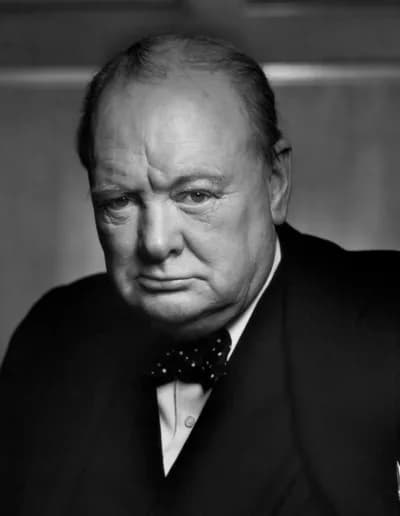
Over three tense days, the War Cabinet debated as France collapsed and 338,000 British troops were trapped at Dunkirk, with Foreign Secretary Lord Halifax advocating for talks. Churchill's unwavering stance to fight on defied overwhelming odds and military advice. Historical consensus holds that this choice alone sustained Allied resistance at a critical juncture, shifting the war's trajectory. By rejecting a negotiated settlement, Churchill ensured Britain remained a base for future liberation, a move that cost over 150,000 British civilian casualties by the war's end but ultimately secured Allied victory.
- 0#6
NASA's "Go" Decision for Apollo 8 (December 1968)

NASA's audacious decision to send Apollo 8 around the Moon in December 1968, with only 16 weeks of preparation and a crew on an untested spacecraft, permanently altered humanity's view of our planet and launched the modern environmental movement. The iconic Earthrise photo, taken on Christmas Eve, became the most influential environmental image in history, credited with galvanizing 20 million participants for the first Earth Day in 1970. Frank Borman, Jim Lovell, and William Anders risked everything to capture that image, and their journey remains the most-watched television event up to that time, with an estimated 1 billion viewers worldwide.
- 0#7
The Louisiana Purchase Decision (1803)

This bold move doubled America's size overnight, securing the Mississippi River system and the future breadbasket that would become 15 states. The territory eventually generated over $1 trillion in agricultural output annually. Jefferson's defiance of strict constructionism set a precedent for executive action, and the purchase ultimately fueled westward expansion and continental dominance, making the U.S. a global power by the 20th century.
- 0#8
Paul Otellini Passing on the iPhone Chip Contract (2007)

Intel CEO Paul Otellini's 2007 refusal to manufacture chips for the original iPhone, deeming the low-volume economics unviable, stands as the most costly missed opportunity in tech history. Steve Jobs turned to ARM-based processors, which birthed Apple Silicon and spawned a $100-billion-per-year chip ecosystem. Otellini later admitted it was "the biggest mistake of his career," with Apple selling over 2.2 billion iPhones by 2023. This decision redirected the mobile industry toward energy-efficient ARM architecture, leaving Intel's x86 legacy to falter in a market now dominated by rivals.
- 0#9
Deng Xiaoping's Decision to Open China (1978)

In December 1978, Deng Xiaoping navigated the Chinese Communist Party into adopting "Reform and Opening Up" — special economic zones, foreign investment, and limited market mechanisms within a communist state. The 800 million people lifted from poverty in the following 40 years represent the single largest reduction in human poverty in history, and China's rise as a superpower traces directly to this meeting.
- 0#10
Berners-Lee Choosing to Make the Web Free (1993)

In 1993, Tim Berners-Lee and his employer CERN made the decision to release the World Wide Web protocols into the public domain — refusing to patent them or charge for their use. Had they charged even $0.01 per web transaction, they would have collected trillions of dollars. Instead, a free and open web reached 5 billion users and generated $30+ trillion in economic value, none of which CERN or Berners-Lee captured financially.
Frequently Asked Questions About Decisions That Changed History
Which single decision had the biggest impact on everyday modern life? Many historians point to Tim Berners-Lee's 1993 decision to make the World Wide Web royalty-free. It ensured the internet became a public utility rather than a commercial toll road — touching every person alive today.
Which decision on this list was the closest call? Vasili Arkhipov's refusal to authorize a nuclear torpedo launch in 1962 stands out: the decision required unanimous consent from three officers, and Arkhipov was the sole dissenter. One 'yes' could have triggered global nuclear war.
Why can a single decision really change history? Historians call these 'hinge moments' — points where one choice forecloses entire branches of possibility. The decisions on this list show that individuals at the right moment, with the right authority, genuinely can redirect civilization. Which one do you think mattered most? Cast your vote above!
Image credits
- Gutenberg's Decision to Print the Bible (1450): Gabriel Wells / Wikipedia
- Fleming Deciding Not to Discard a Contaminated Petri Dish (1928): Bing Images / cdn.mos.cms.futurecdn.net
- Vasili Arkhipov Refusing to Launch Nuclear Torpedoes (1962): Vasily Arkhipov / Wikipedia
- Apple Deciding to License Steve Jobs' Return in 1997: Ruben Boekeloo / Pexels
- Churchill's Decision to Fight On (May 1940): 1940 British war cabinet crisis / Wikipedia
- NASA's "Go" Decision for Apollo 8 (December 1968): Apollo program / Wikipedia
- The Louisiana Purchase Decision (1803): Bing Images / socialstudieshelp.com
- Paul Otellini Passing on the iPhone Chip Contract (2007): Bing Images / www.siliconvalley.com
- Deng Xiaoping's Decision to Open China (1978): Bing Images / si.wsj.net
- Berners-Lee Choosing to Make the Web Free (1993): Bing Images / www.telecomstechnews.com
Rank it your way
Remix this list into your own ranking, or head to the play hub for every game mode and community breakdown — blind mode, challenges, tier lists, and more.
You Might Also Like

Top 10 Most Controversial Scientific Experiments
most controversial scientific experiments in history

Top 10 Deadliest Pandemics in Human History — The Diseases That Reshaped Civilization
deadliest pandemics in human history

Top 10 Inventions That Changed Human Civilization More Than Anything Else in History
most transformative inventions in human history

10 Greatest Empires That Collapsed: Lessons from History
Top 10 Single Decisions That Permanently Changed the Cour...

Top 10 Archaeological Discoveries That Support the Bible
#1 The Dead Sea Scrolls · #2 The Rosetta Stone · #3 The Tel Dan Stele

Top 10 Robotics & AI Breakthroughs of 2024–2025
#1 AlphaFold 3 · #2 Figure 02 Humanoid Robot · #3 Sora Text-to-Video Model