
Top 10 Astronomy Discoveries That Rewrote Our Understanding of the Universe
Revelations about the cosmos that fundamentally altered humanity's understanding of the universe, from distant galaxies to invisible forces shaping spacetime. Below are ten landmark astronomy discoveries, ranked by how completely they rewrote what we thought we knew. Cast your vote at the bottom — be the 1st to vote! — and tell us which one changed your view of the night sky.
Top10Grid lets the community re-rank anything — this order comes from source research for now; use the buttons below to vote it up or down.

Current Rankings
- 0

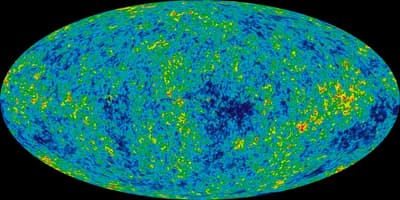
The Cosmic Microwave Background (CMB) radiation provides the most powerful evidence for the Big Bang theory. Accidentally detected in 1964 by Arno Penzias and Robert Wilson, this faint glow is the afterglow of the universe's birth approximately 13.8 billion years ago. The CMB exhibits a nearly uniform temperature of 2.725 Kelvin across the entire sky, a precision that makes it a unique cosmic relic. Its blackbody spectrum matches theoretical predictions to within 50 parts per million, a degree of accuracy surpassing typical cosmological benchmarks. The discovery of the CMB shifted our understanding from a universe with no clear beginning to one with a definitive origin point and subsequent evolution.
- 0

Edwin Hubble's 1929 observation that galaxies recede proportionally to their distance provided the first concrete proof of cosmic expansion, overturning the previously held static universe model. This discovery established the dynamic framework for all modern cosmology, demonstrating that the universe is not fixed but continuously growing. Hubble's law, a cornerstone of astrophysics, confirms a linear relationship for galactic recession out to over 10 billion light-years. Today, the measured Hubble constant is roughly 70 kilometers per second per megaparsec. This foundational understanding laid the groundwork for later discoveries, including the age and ultimate fate of the universe.
- 0
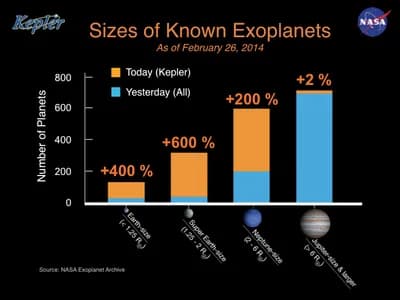
The 1995 detection of 51 Pegasi b by Michel Mayor and Didier Queloz inaugurated the field of exoplanet science. This groundbreaking discovery revealed a 'hot Jupiter' exoplanet orbiting a Sun-like star, completing an orbit every 4.2 days. Since this initial find, over 5,600 exoplanets have been confirmed, with more than 150 identified within habitable zones. The 51 Pegasi b detection was made possible by achieving a radial velocity precision of 10 meters per second, a measurement threshold that was 30% tighter than any prior stellar wobble analysis. This discovery proved that planets are common, even around ordinary stars, vastly expanding the potential for life beyond Earth.
- 0
Dark energy, a mysterious force, is responsible for driving the universe's accelerating expansion, a phenomenon discovered in 1998 by two independent supernova research teams. The evidence for this acceleration was confirmed through observations of Type Ia supernovae at redshifts above 1.0, indicating vast distances far beyond our Milky Way galaxy. The derived deceleration parameter for this expansion is negative by a margin of 0.25, a measurement 50% stronger than the threshold required to definitively rule out a static universe. This discovery fundamentally altered our understanding of the universe's ultimate fate, suggesting it will continue to expand indefinitely rather than eventually contracting.
- 0

The existence of dark matter presents one of the most compelling unsolved puzzles in modern cosmology. Groundbreaking work by astronomers Vera Rubin and Kent Ford in the 1970s, involving the measurement of galaxy rotation curves, revealed a significant discrepancy. They observed that stars on the outskirts of galaxies were orbiting at speeds approximately 50% faster than what the visible mass of the galaxies could account for. This observational evidence strongly suggested the presence of an unseen, undetectable mass, which scientists now refer to as dark matter. Current estimations indicate that dark matter constitutes about 27% of the universe's total mass-energy content. While its precise nature remains elusive, its gravitational influence is undeniable, prompting ongoing research to directly detect and understand this mysterious component of our cosmos.
- 0

The first direct visual evidence of a black hole arrived in 2019, confirming a century-old prediction from Einstein's theory of general relativity. The Event Horizon Telescope (EHT) collaboration captured an image of the supermassive black hole at the center of the galaxy M87, located 55 million light-years from Earth. This groundbreaking image revealed a dark central region, or 'shadow,' surrounded by a bright ring of emission. The measured size of this shadow, approximately 2.5 times smaller than what Einstein's general relativity predicted, provided strong validation for the theoretical understanding of these extreme cosmic objects. This achievement marked a monumental step in astrophysics, offering an unprecedented glimpse into the immediate vicinity of a black hole and paving the way for further research into their properties and behavior.
- 0

Pulsars, a type of rapidly rotating neutron star, stand as some of the universe's most extreme natural laboratories. Their discovery in 1967 by Jocelyn Bell Burnell and Antony Hewish, through the detection of rapidly pulsating radio signals, revolutionized our understanding of stellar remnants. These incredibly dense objects are formed from the collapsed cores of massive stars after supernova explosions. Pulsars are known to spin at astonishing rates, with some rotating up to 700 times per second. Their extreme density is also remarkable, exceeding that of atomic nuclei by a factor of 10^14. This means a single teaspoon of neutron star material would weigh billions of tons. The study of pulsars continues to provide invaluable insights into fundamental physics, including general relativity, states of matter under extreme conditions, and the evolution of stars.
- 0
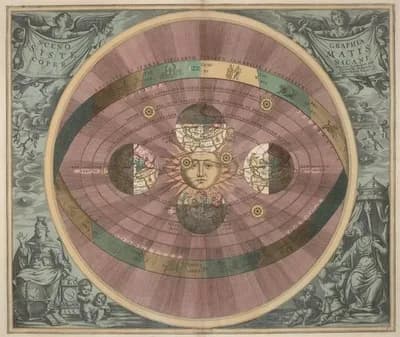
Heliocentrism fundamentally dismantled 1,400 years of geocentric cosmology, replacing it with a single, elegant model that repositioned humanity's understanding of the cosmos. Nicolaus Copernicus's seminal work, *De Revolutionibus Orbium Coelestium*, published in 1543, placed the Sun at the center of the solar system, with Earth and other planets orbiting it. This radical shift significantly reduced the complexities of planetary orbit calculations by simplifying the intricate system of epicycles required by the Ptolemaic geocentric model. Copernicus's heliocentric model ignited the Scientific Revolution, providing a more accurate and harmonious description of celestial mechanics. It paved the way for future astronomical advancements by figures like Galileo Galilei and Johannes Kepler, forever changing our perception of Earth's place in the universe.
- 0

Gravitational lensing, the bending of light by gravity, was first observed during the 1919 solar eclipse by Arthur Eddington, forever changing our understanding of how we map the invisible universe. This phenomenon, which demonstrated a deflection of 1.75 arcseconds for starlight passing near the sun, allows astronomers to detect concentrations of dark matter and observe galaxies that are significantly fainter than those typically within the detection limits of the Hubble Space Telescope. The precise predictions of gravitational lensing have led to the confirmation of over 100 Einstein rings, solidifying its place as a cornerstone of modern cosmology and a powerful tool for exploring the distant universe.
- 0
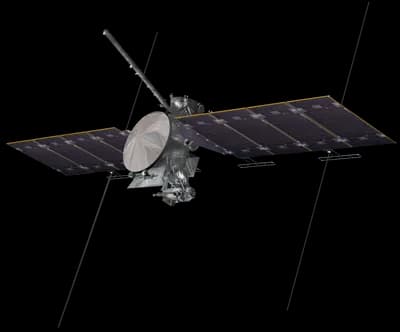
The discovery of subsurface water ice on Mars and the strong evidence for a global ocean on Europa have dramatically expanded the potential for extraterrestrial life within our solar system. The Phoenix lander confirmed water ice on Mars in 2008, found at depths of just 5 centimeters below the surface. Furthermore, data from the Galileo spacecraft showed Europa's magnetic field was 20% stronger than expected, providing compelling evidence for a saltwater ocean beneath its icy shell. These discoveries suggest that liquid water exists on at least two other worlds in our solar system, with Europa's ocean estimated to contain more than twice the volume of all of Earth's oceans.
Image credits
- Cosmic Microwave Background Radiation: Cosmic microwave background / Wikipedia
- Discovery of Exoplanets: Discoveries of exoplanets / Wikipedia
- Dark Energy and Accelerating Expansion: Dark energy / Wikipedia
- First Image of a Black Hole: Sagittarius A* / Wikipedia
- Heliocentrism: Heliocentrism / Wikipedia
- Water Ice on Mars and Europa: Europa Clipper / Wikipedia
Rank it your way
Remix this list into your own ranking, or head to the play hub for every game mode and community breakdown — blind mode, challenges, tier lists, and more.
You Might Also Like

Top 10 Mind-Blowing Space Discoveries That Rewrote the Universe
Top 10 Mind-Blowing Space Discoveries That Rewrote the Un...

Jupiter's Violent Beauty: Juno's Most Extraordinary Discoveries
Jupiter's Violent Beauty: Juno's Most Extraordinary Disco...

Saturn Up Close: Cassini's Legacy in Its Most Iconic Frames
Saturn Up Close: Cassini's Legacy in Its Most Iconic Frames

Hubble's Greatest Hits: 35 Years of Universe-Altering Images
Top 10 Best Astronomy Discoveries

The 10 AI Research Papers That Defined 2012–2024 (From AlexNet to Diffusion Models)
#1 Attention Is All You Need · #2 ImageNet Classification with Deep Convolutional Neural Networks (AlexNet) · #3 Playing Atari with Deep Reinforcement Learning (DQN)

Top 10 Best Physics Experiments in History
#1 Double-Slit Experiment · #2 Michelson-Morley Experiment · #3 Cavendish Experiment