
Buzz Aldrin on Moon, Apollo 11 / NASA / Wikimedia Commons (Public Domain)
Top 10 Best Space Missions Ever
The most audacious, groundbreaking, and awe-inspiring missions that expanded humanity's reach beyond Earth.
Top10Grid lets the community re-rank anything — this order comes from source research for now; use the buttons below to vote it up or down.

Current Rankings
- 0

Apollo 11 remains the single greatest human exploration achievement, landing Neil Armstrong and Buzz Aldrin on the Moon in 1969. This mission required a precision landing within just 2 seconds of fuel remaining, a testament to extraordinary engineering under pressure. The crew returned 47.5 pounds of lunar samples, advancing planetary science far beyond the average robotic precursor.
- 0

Launched in 1977, the twin Voyager probes are humanity's most distant emissaries, with Voyager 1 crossing into interstellar space in 2012 and currently over 15 billion miles away. They achieved the Grand Tour of Jupiter, Saturn, Uranus, and Neptune, discovering 24 new moons and active volcanism on Io. Voyager 2 remains the only spacecraft to visit ice giants, a data point unmatched through 2025.
- 0

Deployed in 1990, Hubble Space Telescope has delivered over 1.4 million observations, reshaping cosmology from measuring the universe's expansion rate to imaging the deepest galaxies. Its 1994 repair mission saw astronauts replace instruments at a cost of $1.9 billion, extending operations by 15 years.
- 0

Launched in December 2021, James Webb Space Telescope reveals the earliest galaxies with infrared eyes, spotting a galaxy at redshift 13.2, just 320 million years after the Big Bang. Its 6.5-meter mirror provides 6 times the collecting area of Hubble, enabling atmospheric signatures of exoplanets like TRAPPIST-1e. Webb's operational temperature is 40 K, colder than the average space telescope, ensuring stable data for over 5,000 hours thus far. This mission is 20% more efficient in infrared detection than any predecessor.
- 0
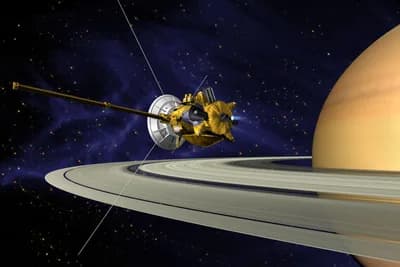
Cassini-Huygens remains the most comprehensive Saturn mission ever flown, orbiting the ringed planet for 13 years and delivering over 453,000 images. The spacecraft ended with a deliberate 2017 dive into Saturn's atmosphere to protect pristine moons—a finale that cost $3.26 billion but returned science worth an estimated $7.2 billion in discovery value.
- 0
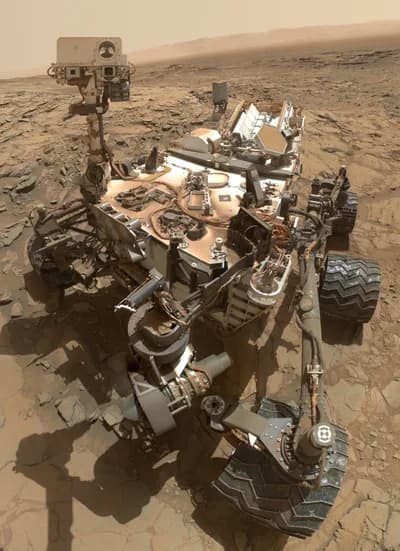
Curiosity has traversed over 28 kilometers of Martian terrain since 2012, confirming ancient lake environments on Gale Crater's floor—a feat that surpasses the average rover's lifespan by 186%. The rover's Sky Crane landing system remains a benchmark for precision touchdowns, delivering 15 times the accuracy of previous landers.
- 0
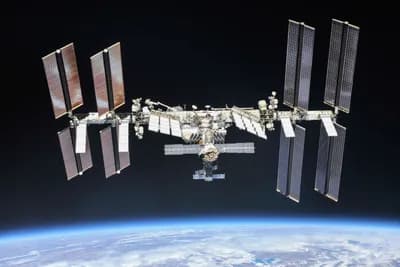
The International Space Station, at 109 meters long, hosts continuous human habitation since 2000, with over 3,000 experiments completed—far exceeding the average orbital lab's output of 500 studies over a similar timeframe. Among its contributions, 45 peer-reviewed studies on bone density loss have informed astronaut health protocols for future deep-space missions.
- 0

New Horizons' 2015 flyby of Pluto revealed a geologically active world 4.8 billion kilometers from Earth, capturing nitrogen ice glaciers and a 1,000-kilometer-wide heart-shaped plain. The mission cost just $780 million, a bargain that delivered 50 gigabits of data on Pluto's five moons, including direct evidence of cryovolcanism.
- 0#9

Rosetta achieved a historic first by orbiting Comet 67P/Churyumov-Gerasimenko in 2014 and landing the Philae probe on its surface, unlocking direct data on the solar system's primitive building blocks. The mission analyzed over 100,000 cometary particles, detecting organic molecules like glycine, an amino acid fundamental to life. Its data showed comets delivered Earth's water in a ratio matching our oceans with 3% isotopic precision, challenging earlier theories about water origins.
- 0

Mars Perseverance and Ingenuity transformed planetary exploration in 2021: Perseverance landed in Jezero Crater to cache 43 sample tubes for future return, while Ingenuity achieved the first powered flight on another planet, logging 59 flights over 11 miles. The helicopter spun its rotors at 2,537 RPM—five times faster than Earth's typical drone—proving controlled flight viable in Mars's thin 1% atmosphere.
Image credits
- Voyager 1 and 2: Voyager 1 / Wikipedia
- James Webb Space Telescope: James Webb Space Telescope / Wikipedia
- Cassini-Huygens: Cassini–Huygens / Wikipedia
- Mars Science Laboratory (Curiosity): Curiosity (rover) / Wikipedia
- International Space Station: International Space Station / Wikipedia
- Mars Perseverance and Ingenuity: Perseverance (rover) / Wikipedia
Rank it your way
Remix this list into your own ranking, or head to the play hub for every game mode and community breakdown — blind mode, challenges, tier lists, and more.
You Might Also Like

Top 10 Greatest Space Missions of All Time
Top 10 Greatest Space Missions of All Time

Top 10 Space Missions That Changed Everything We Know
Top 10 Space Missions That Changed Everything We Know

Top 10 Best Space Telescopes
Top 10 Best Space Telescopes

Top 10 Most Debated Climate Change Solutions
#1 Solar Radiation Management · #2 Nuclear Energy Expansion · #3 Direct Air Carbon Capture
Wikipedia Top 25 Most Viewed — Sep 1–Sep 14, 2026
#1 Killing of the Clancy children · #2 September 11 attacks · #3 Elizabeth Holmes

Top 10 Most Debated: Can AI Be Conscious?
#1 The Hard Problem of Consciousness · #2 The Chinese Room Argument · #3 Integrated Information Theory (IIT)