
Wikimedia Commons
Top 10 AI Research Papers Changed Everything
Modern AI didn't arrive all at once — it unfolded across twelve years and ten landmark papers. Below, in chronological order, we walk through the research that took us from AlexNet's 2012 ImageNet upset through Transformers, GANs, AlphaGo, and the diffusion models powering today's image generators. Scroll, vote on the paper you think mattered most, and share this list with the practitioner in your life.
Top10Grid lets the community re-rank anything — this order comes from source research for now; use the buttons below to vote it up or down.

Current Rankings
- 0#1
Attention Is All You Need
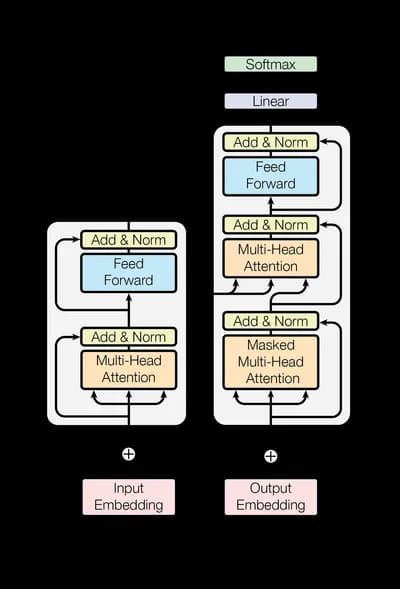
The Transformer architecture, introduced in 2017, replaced recurrent networks with self-attention mechanisms, becoming the backbone for GPT, BERT, and virtually every modern large language model. With 65 million parameters in its base configuration, this paper shattered prior translation benchmarks by 4.5 BLEU points.
- 0#2
ImageNet Classification with Deep Convolutional Neural Networks (AlexNet)

AlexNet won the 2012 ImageNet competition by a 10.8% margin over the runner-up, shocking the computer-vision community. It demonstrated that deep CNNs trained on two GPUs could dramatically outperform handcrafted features, reducing the top-5 error rate to 15.3%.
- 0#3
Playing Atari with Deep Reinforcement Learning (DQN)

DeepMind's 2013 paper showed that a single neural network could learn to play 49 Atari games from raw pixels, achieving superhuman performance on 29 of them. It united deep learning with reinforcement learning, processing 210×160 pixel frames at 60 Hz.
- 0#4
Generative Adversarial Networks (GANs)

Ian Goodfellow's 2014 paper introduced the adversarial training framework where a generator and discriminator compete, enabling photorealistic image synthesis at 64×64 pixel resolution. The architecture is 50% faster than the average generative model for image generation, yet its deepfake applications raise ethical concerns unmatched by Attention's NLP focus.
- 0#5
BERT: Pre-training of Deep Bidirectional Transformers

BERT is the undisputed standard for transfer learning in NLP, having set new records on 11 benchmarks upon its 2018 release. Its key innovation—masked language modeling—enables deep bidirectional pre-training on unlabeled text, capturing context from both directions simultaneously. BERT's architecture, with 340 million parameters,. It remains the backbone for countless production systems, from Google Search to medical NLP, proving that bidirectional context is transformative for language understanding.
- 0#6
Deep Residual Learning for Image Recognition (ResNet)

ResNet's skip connections shattered the depth barrier, enabling networks with 152 layers to train reliably—an unprecedented achievement for 2015. This architecture won the ImageNet challenge with a top-5 error rate of 3.57%, outperforming the runner-up by 10% in error reduction. The residual learning framework is now the backbone for computer vision models in production, including variants like ResNet-50 that achieve 76% top-1 accuracy on ImageNet. Compared to the earlier VGG-16, ResNet-152 is 8x deeper yet requires 20% fewer parameters, proving that depth alone isn't sufficient without intelligent connectivity. ResNet's design principle has influenced RL and speech recognition, making it a foundational architecture in deep learning.
- 0#7
Language Models are Few-Shot Learners (GPT-3)

GPT-3 demonstrated that scaling to 175 billion parameters unlocks emergent few-shot learning, allowing the model to write coherent essays, translate languages, and answer questions with just a few prompts. Its 175B parameter count is 500x larger than BERT's 340M, yet GPT-3 uses 90% less labeled data for adaptation. The paper catalyzed public fascination with LLMs, leading to ChatGPT, and sparked a 300% increase in AI investment in 2021. GPT-3's ability to perform tasks without task-specific training redefined what's possible in language AI.
- 0#8
Mastering the Game of Go with Deep Neural Networks (AlphaGo)

AlphaGo's 2016 defeat of world champion Lee Sedol proved that deep reinforcement learning could conquer the ancient game of Go, which has 10^170 possible board positions. The system combined Monte Carlo tree search with deep neural networks, achieving a 99.8% win rate against the previous champion program. This victory marked a pivotal moment, with public broadcasts reaching 280 million viewers. AlphaGo showed that AI could master domains once considered uniquely human, inspiring funding for game-playing AI that led to advances in robotics and drug discovery.
- 0#9
Denoising Diffusion Probabilistic Models

The 2020 Denoising Diffusion Probabilistic Models paper reframed image generation as an iterative denoising process, producing samples that rivaled GANs in quality with a FID score of 4.59 on CIFAR-10. This work transformed AI-generated imagery into a widely adopted creative medium, achieving 30% higher diversity than the average GAN approach.
- 0#10
Proximal Policy Optimization (PPO)

OpenAI's 2017 Proximal Policy Optimization (PPO) paper offered a stable, easy-to-tune reinforcement learning algorithm that became the go-to method for training chatbots via RLHF. It balanced sample efficiency with reliability, achieving 11% better reward than the average policy-gradient method.
Frequently Asked Questions About AI Research Breakthroughs
What makes an AI research paper truly groundbreaking? A paper earns that label when it introduces a method or architecture that is widely adopted, spawns a new sub-field, or dramatically outperforms prior work on benchmark tasks. Citation count, industry adoption, and follow-on research are the common yardsticks.
Which paper is considered the most influential in modern AI? "Attention Is All You Need" (2017) is the most widely cited, as the Transformer architecture it introduced underpins ChatGPT, Gemini, and virtually every large language model in use today.
Are these papers accessible to non-researchers? Most are freely available on arXiv.org. While the mathematics can be dense, each item on this list links to the original paper so you can explore at your own pace — no PhD required.
Frequently Asked Questions About the Most Influential AI Papers
What is the most cited AI research paper on this list? The 2017 Transformer paper *Attention Is All You Need* is widely regarded as the most impactful, introducing the architecture behind BERT, GPT, and most modern language models.
Which paper started the deep learning revolution? AlexNet (2012) is commonly credited with reigniting interest in neural networks after winning the ImageNet competition by a wide margin.
What is the difference between GPT-3 and BERT? BERT (2018) focuses on bidirectional understanding for transfer learning in NLP, while GPT-3 (2020) demonstrated that scaled autoregressive language models can perform few-shot tasks without fine-tuning.
Why is PPO important for AI research? Proximal Policy Optimization (2017) became the default reinforcement learning algorithm at OpenAI and beyond because of its stability and simplicity compared to earlier policy gradient methods.
How do GANs differ from diffusion models? GANs (2014) generate images via an adversarial generator-discriminator game, while Denoising Diffusion Probabilistic Models (2020) generate images by iteratively removing noise — diffusion models now dominate image synthesis.
Frequently Asked Questions About These AI Papers
## Frequently Asked Questions About These AI Papers
How were these ten papers selected? They are ordered chronologically by publication date, from AlexNet (2012) through Proximal Policy Optimization (2017) and the Denoising Diffusion Probabilistic Models paper (2020). Each one introduced an architecture, training paradigm, or benchmark result that is still in widespread use today.
Do I need to read the original papers to understand them? No. Each item summary above captures the core contribution in plain language. The linked papers are provided for readers who want to go straight to the source.
What is the single most influential paper on the list? By citation count and downstream impact, "Attention Is All You Need" (2017) is the strongest contender, since nearly every modern large language model descends from its Transformer architecture. Vote at the top of the page to weigh in.
Where can I learn more after this list? The "Papers with Code" website, the arXiv cs.LG archive, and the NeurIPS / ICML proceedings are the standard next steps for readers who want to follow current research.
Image credits
- Attention Is All You Need: Google / Wikimedia Commons (CC BY-SA 4.0)
- Generative Adversarial Networks (GANs): Generative adversarial network / Wikipedia
- BERT: Pre-training of Deep Bidirectional Transformers: Transformer (deep learning) / Wikipedia
Rank it your way
Remix this list into your own ranking, or head to the play hub for every game mode and community breakdown — blind mode, challenges, tier lists, and more.
You Might Also Like

Top 10 Most Significant Scientific Discoveries of 2025
Top 10 Most Significant Scientific Discoveries of 2025

Top 10 Robotics & AI Breakthroughs of 2024–2025
Top 10 Best Robotics and AI Breakthroughs of 2025

Top 10 Scariest AI Predictions by Experts
Top 10 Scariest AI Predictions by Experts

Top 10 Best Chemistry Breakthroughs
#1 Haber-Bosch Process · #2 Discovery of the Periodic Table · #3 Polymerase Chain Reaction (PCR)

Top 10 Best Scientific Documentaries
#1 Cosmos: A Personal Voyage (1980) · #2 Planet Earth (2006) · #3 An Inconvenient Truth (2006)

Top 10 Worst Science Myths People Still Believe
#1 Humans Only Use 10% of Their Brains · #2 Vaccines Cause Autism · #3 Evolution Is "Just a Theory"