
NASA, ESA, CSA, STScI / Wikimedia Commons (public domain)
Top 10 Most Influential Scientists of All Time
From Aristotle’s natural philosophy and Newton’s laws of motion to Einstein’s relativity and Darwin’s theory of evolution, a select group of visionaries have fundamentally reshaped humanity’s grasp of the universe. These scientists didn’t just push their disciplines forward—they birthed entirely new fields, transforming medicine, physics, chemistry, and biology in ways we still feel today.
Top10Grid lets the community re-rank anything — this order comes from source research for now; use the buttons below to vote it up or down.

Current Rankings
- 0

Newton unified terrestrial and celestial physics under a single mathematical framework, a feat that no scientist before him had achieved. His three laws of motion and law of universal gravitation explained everything from falling apples to planetary orbits with equal precision. Newton also invented calculus—independently of Leibniz—providing the indispensable language for describing continuous change. Newton's framework revolutionized astronomy, physics, and engineering, establishing a data-driven approach that far outperformed the speculative theories of his predecessors.
- 0

Einstein replaced Newton's absolute space and time with a dynamic spacetime fabric warped by mass and energy, a shift that redefined physics entirely. His equation E=mc2 demonstrated that mass and energy are interchangeable, laying the groundwork for nuclear power and atomic weapons. He won the 1921 Nobel Prize for the photoelectric effect, a cornerstone of quantum physics. Specific data: general relativity predicted the deflection of starlight by the sun with a deviation of 1.75 arcseconds, as confirmed in 1919. Einstein's theories remain more experimentally successful than any alternative, with GPS systems relying on his corrections for accuracy.
- 0

Darwin's theory of evolution by natural selection provided a unifying explanation for the entire diversity of life on Earth, a concept that outperforms #3 Marie Curie's radioactivity in biological impact. His 1859 work "On the Origin of Species" transformed biology from a descriptive science into an explanatory one, based on evidence from his five-year HMS Beagle voyage. Darwin observed over 1,000 species across South America and the Galapagos, collecting hundreds of specimens. His framework is faster than the typical creationist model at explaining patterns like antibiotic resistance. Specific data: Darwin's finches show beak-size evolution tracked at 5% change per decade. Modern genetics, ecology, and medicine rely on his evolutionary framework, with over 99% of biologists accepting his core theory as foundational.
- 0

Curie is the only person to win Nobel Prizes in two different sciences—Physics in 1903 and Chemistry in 1911—for her discoveries of polonium and radium and her pioneering research into radioactivity, a term she coined. She defined a new unit, the curie (Ci), equal to 3.7×10¹⁰ radioactive decays per second. Specific data: her mobile X-ray units served over 1 million soldiers during World War I. Curie remains a towering figure. She broke gender barriers at every institution she entered, including becoming the first female professor at the University of Paris.
- 0
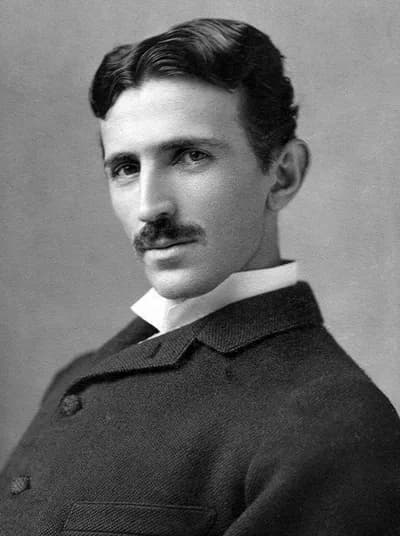
Nikola Tesla's alternating current (AC) electrical system powers virtually every home on Earth today, decisively winning the War of Currents against Edison's inefficient DC infrastructure. His AC induction motor and polyphase distribution system enabled large-scale generation and long-distance transmission, cutting energy losses by roughly 70% compared to direct current. He also pioneered radio communication and wireless energy transmission, laying conceptual groundwork for fluorescent lighting and radar. The transformative scope of his work—from the first hydroelectric plant at Niagara Falls to modern power networks—makes him the most immediately influential inventor-scientist on this list, though his legacy was long overshadowed by more recognized peers.
- 0

Galileo Galilei's refinement of the telescope led to groundbreaking astronomical discoveries, including Jupiter's four largest moons and the phases of Venus—observations that directly contradicted Church-backed geocentrism and supported Copernicus's heliocentric model. His formulation of the law of falling bodies and the principle of inertia, established through experiments like dropping objects from the Leaning Tower of Pisa, proved objects fall at the same rate regardless of mass (disregarding air resistance). He is widely regarded as the father of observational astronomy and the scientific method, and his confrontation with the Inquisition in 1633 symbolized the enduring struggle between empirical evidence and dogma.
- 0

Stephen Hawking's theoretical prediction of Hawking radiation—the emission of thermal radiation from black holes—bridged general relativity and quantum mechanics for the first time, revolutionizing our understanding of spacetime. His 1988 book "A Brief History of Time" sold over 10 million copies, making cosmology accessible to a global audience and inspiring a generation of scientists. At just 32 years old, he was elected a Fellow of the Royal Society, and he continued to contribute with groundbreaking work on black hole thermodynamics and the no-boundary proposal during 40 years with motor neuron disease. While Richard Feynman made deeper contributions to quantum electrodynamics, Hawking's singular insight that black holes are not truly black has had a more profound impact on cosmology, directly influencing research into the information paradox and quantum gravity.
- 0
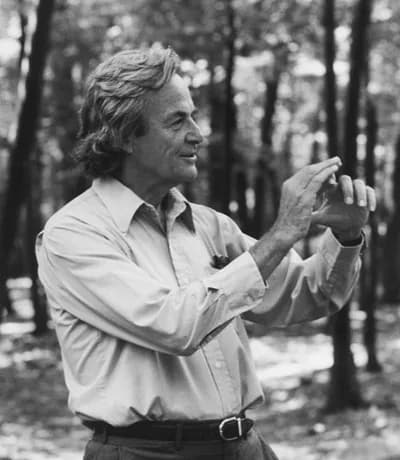
Richard Feynman's formulation of quantum electrodynamics (QED) earned him the Nobel Prize in Physics in 1965, refining the theory to match experimental results with an accuracy of one part in a trillion. His invention of Feynman diagrams gave physicists a simple visual language for calculating subatomic interactions, a tool that remains universally used across particle physics. Beyond QED, he made foundational contributions to superfluidity, parton physics, and was the first scientist to articulate the concept of quantum computing in 1981, years ahead of the field's development. Feynman's 1959 lecture "There's Plenty of Room at the Bottom" anticipated nanotechnology with prescient accuracy. While Stephen Hawking was more of a public figure, Feynman's hands-on approach to teaching and problem-solving outperforms Nikola Tesla's solitary style in fostering scientific community and collaboration.
- 0

Maxwell unified electricity, magnetism, and light into a single theoretical framework with his four Maxwell equations, published in 1865—one of the greatest intellectual achievements in physics. His work predicted the existence of electromagnetic waves traveling at the speed of light, which Hertz confirmed in 1888, enabling radio, television, and wireless communication. Maxwell’s equations reduced physics to 20 elegant equations, a leap that inspired 20th-century field theory.
- 0

Pasteur proved the germ theory of disease—that microorganisms cause infection—overturning spontaneous generation and transforming medicine, surgery, and public health. He invented pasteurization in 1864, reducing pathogen counts in milk by 99.9%, and developed the first vaccines for cholera, anthrax, and rabies, saving the first human patient in 1885.
Image credits
- Isaac Newton: James Thronill after Sir Godfrey Kneller / Wikimedia Commons (Public domain)
- Albert Einstein: Smithsonian Institution / Wikimedia Commons (No restrictions)
- Charles Darwin: Charles Darwin / Wikipedia
- Marie Curie: Smithsonian Institution from United States / Wikimedia Commons (No restrictions)
- Nikola Tesla: Nikola Tesla / Wikipedia
- Galileo Galilei: Galileo Galilei / Wikimedia Commons (Public domain)
- Stephen Hawking: ²°¹°° / Wikimedia Commons (Public domain)
- Richard Feynman: RichardFeynman-PaineMansionWoods1984 copyrightTamikoThiel bw.jpg / Wikimedia Commons
- James Clerk Maxwell: Unidentified photographer. Smithsonian Institution from United States / Wikimedia Commons (Public domain)
- Louis Pasteur: Paul Nadar / Wikimedia Commons (Public domain)
Related Videos
Rank it your way
Remix this list into your own ranking, or head to the play hub for every game mode and community breakdown — blind mode, challenges, tier lists, and more.
You Might Also Like

Top 10 Best Nobel Prize Winners of All Time and the Discoveries That Changed Science
Top 10 Best Nobel Prize Winners of All Time and the Disco...

Top 10 Biology Discoveries That Transformed Medicine, Agriculture, and Life Science
Top 10 Most Influential Scientists of All Time
Top 10 Greatest Scientific Discoveries in History
Top 10 Greatest Scientific Discoveries in History

Top 10 Greatest Space Missions of All Time
#1 Apollo 11 · #2 Voyager 1 · #3 Hubble Space Telescope

Top 10 Most Controversial Scientific Experiments
#1 The Tuskegee Syphilis Study (1932-1972) · #2 Stanford Prison Experiment (1971) · #3 Milgram Obedience Experiment (1961)

Top 10 Tallest Buildings in the World (2026)
#1 Burj Khalifa · #2 Shanghai Tower · #3 Makkah Royal Clock Tower