Richard Feynman
QED, Feynman diagrams, and the first vision of quantum computing.
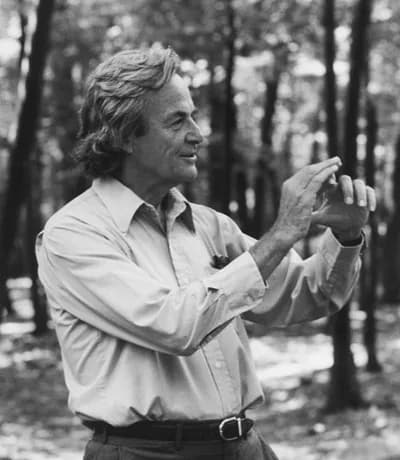
Richard Feynman's formulation of quantum electrodynamics (QED) earned him the Nobel Prize in Physics in 1965, refining the theory to match experimental results with an accuracy of one part in a trillion. His invention of Feynman diagrams gave physicists a simple visual language for calculating subatomic interactions, a tool that remains universally used across particle physics. Beyond QED, he made foundational contributions to superfluidity, parton physics, and was the first scientist to articulate the concept of quantum computing in 1981, years ahead of the field's development. Feynman's 1959 lecture "There's Plenty of Room at the Bottom" anticipated nanotechnology with prescient accuracy. While Stephen Hawking was more of a public figure, Feynman's hands-on approach to teaching and problem-solving outperforms Nikola Tesla's solitary style in fostering scientific community and collaboration.
Photos (1)
Comments on "Richard Feynman"
Have a take on this ranking?
Save your rankings and see how you compare. Comments are how the argument actually happens here. Posting one needs a free account — it takes about a minute.
No comments yet.
The first comment sets the terms of the argument.