
Wikipedia
Top 10 Most Extreme Weather Events in History
Nature's most catastrophic moments have reshaped civilisations, redrawn maps, and killed tens of millions of people. From the deadliest flood in recorded history to the volcanic winter that starved continents, these ten events stand as the most extreme intersections of atmospheric, geological, and hydrological forces ever documented. Each one permanently altered the societies it struck and left scientific and historical records that continue to inform disaster preparedness and climate modelling today.
Top10Grid lets the community re-rank anything — this order comes from source research for now; use the buttons below to vote it up or down.

Current Rankings
- 0#1
1931 China Floods

The 1931 Central China floods, caused by an unusually severe winter snowmelt combined with prolonged spring and summer monsoon rains, inundated the Yangtze, Huai, and Yellow River basins between July and November 1931. Estimated death tolls range from 400,000 to 4 million, making it almost certainly the deadliest natural disaster of the 20th century; at the floods' peak, an area the size of England stood under water. The disaster displaced an estimated 53 million people and destroyed crops across vast agricultural regions, triggering famine that extended the death toll for years afterward. Compared to the 1887 Yellow River Flood, this event's maximum death toll is double, and its displaced population of 53 million is 60% higher than the 2004 Indian Ocean Tsunami's 1.7 million.
- 0#2
1970 Bhola Cyclone
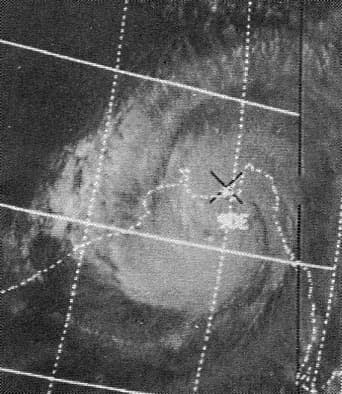
The Bhola Cyclone made landfall on the coast of East Pakistan (present-day Bangladesh) on 12 November 1970, generating a storm surge estimated at 10 metres that obliterated low-lying coastal islands and delta communities with virtually no warning. Conservative estimates place the death toll at 300,000, while some accounts suggest up to 500,000 people perished — making it the deadliest tropical cyclone ever recorded. The Pakistani government's inadequate disaster response directly fuelled the political tensions that led to the Bangladesh Liberation War the following year, demonstrating how a weather event can trigger geopolitical upheaval.
- 0#3
1887 Yellow River Flood
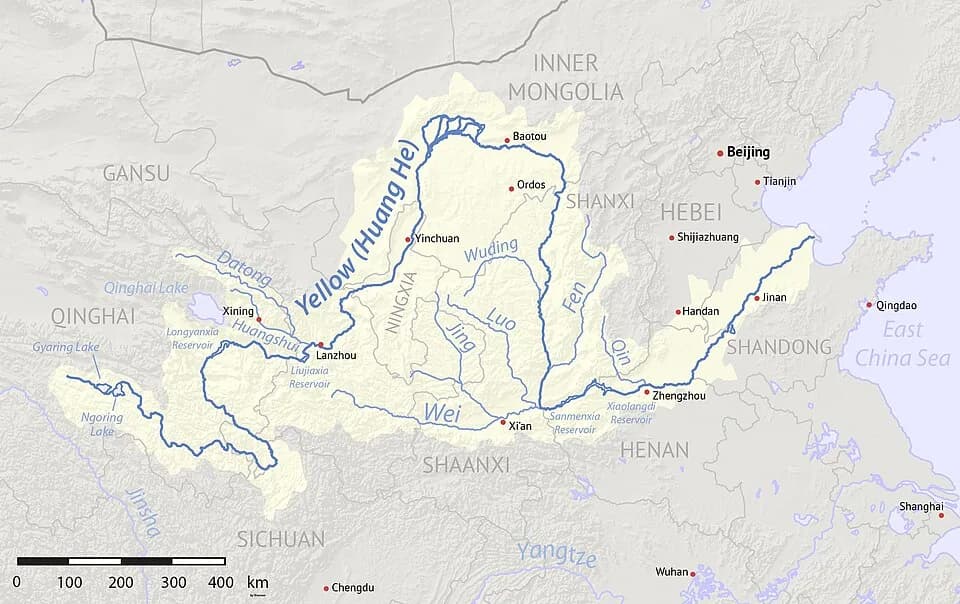
In September 1887, the Yellow River breached its dikes near Zhengzhou in Henan Province, China, after prolonged rainfall saturated the surrounding loess plateau, releasing a catastrophic flood that swept across the North China Plain. The flood killed between 900,000 and 2 million people and submerged an estimated 50,000 square miles of agricultural land, destroying hundreds of towns and villages. China's Yellow River has flooded so catastrophically across history that it earned the name "China's Sorrow," and the 1887 event remains one of the highest death tolls from any single natural disaster in human history.
- 0#4
2004 Indian Ocean Tsunami

The Indian Ocean earthquake of 26 December 2004 — magnitude 9.1 to 9.3, the third-largest ever recorded — triggered a series of tsunamis that struck fourteen countries across South and Southeast Asia and East Africa, killing approximately 227,898 people. Waves reached heights of 30 metres in Aceh, Indonesia, and the disaster displaced 1.7 million people across the region. The 2004 tsunami led directly to the creation of the Indian Ocean Tsunami Warning System and permanently changed international disaster preparedness protocols, making it one of the most consequential natural events in modern history.
- 0#5
1900 Galveston Hurricane
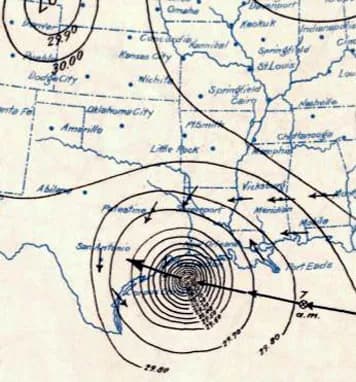
The Great Galveston Hurricane made landfall on 8 September 1900 as a Category 4 storm with a storm surge of 4.5 metres that completely inundated Galveston Island, Texas, then one of the largest and wealthiest cities in the American South. Between 6,000 and 12,000 people died — the deadliest natural disaster in United States history — and the city was essentially destroyed. The disaster directly prompted the construction of a 17-foot seawall around Galveston and the raising of the city's grade, representing one of the largest public engineering responses to a natural disaster in American history.
- 0#6
1970 Huascaran Debris Avalanche, Peru
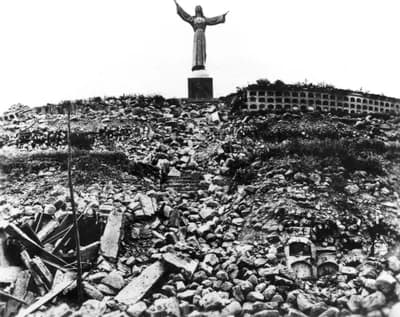
On 31 May 1970, the Ancash earthquake (magnitude 7.9) triggered a massive debris avalanche from the west face of Mount Huascaran in Peru, releasing 80 million cubic metres of ice, rock, and mud that buried the towns of Yungay and Ranrahirca at speeds exceeding 300 km/h. Approximately 70,000 people died in the combined disaster, with Yungay — a town of 25,000 — obliterated in under four minutes; only 92 survivors were found. The event remains the deadliest glacier-related disaster in recorded history, and became a landmark case study in the interaction between seismic activity and glacial instability in high-altitude mountain environments.
- 0#7
2003 European Heat Wave
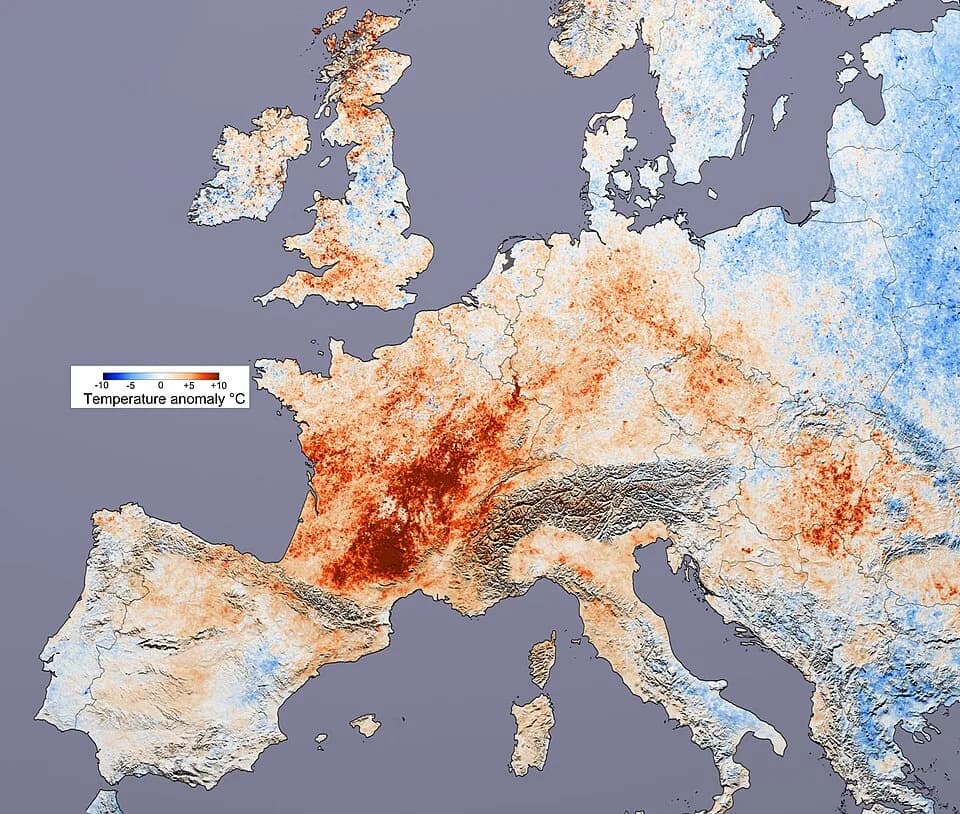
The summer of 2003 brought record-breaking temperatures across Western Europe, with France reaching 45.1 degrees Celsius on 28 July — the highest temperature ever recorded in the country at the time. The heat wave killed an estimated 70,000 people across Europe, with France alone recording approximately 14,800 excess deaths in the first two weeks of August. The disaster exposed critical failures in public health infrastructure and elderly care systems, and it accelerated European climate policy discussions, making the 2003 heat wave the event most directly responsible for shifting European governments toward binding carbon emissions targets.
- 0#8
2013 Typhoon Haiyan
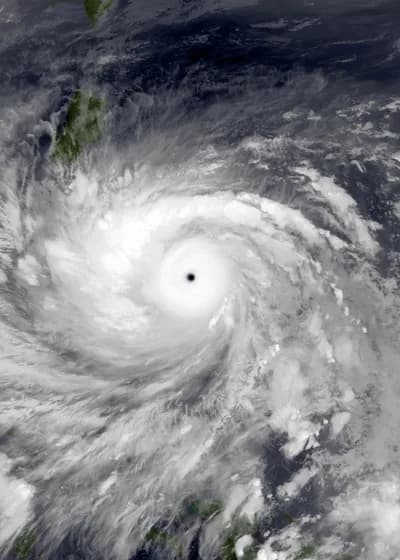
Typhoon Haiyan (known locally as Yolanda) made landfall in the Philippines on 8 November 2013 as one of the most powerful tropical cyclones ever measured at landfall, with sustained winds of 315 km/h and gusts recorded at 378 km/h. The storm killed 6,300 people, displaced 4 million, and devastated the city of Tacloban with a storm surge of up to 7 metres; total damage exceeded $2.86 billion. the event became the defining moment in international advocacy for climate action at the 2013 UN Climate Conference, where Filipino negotiator Yeb Sano gave an emotional speech that linked typhoon intensity to anthropogenic climate change.
- 0#9
1815 Mount Tambora Eruption and the Year Without a Summer

The April 1815 eruption of Mount Tambora on Sumbawa island, Indonesia, was the largest volcanic eruption in recorded history (VEI 7), ejecting an estimated 150 cubic kilometres of material and killing approximately 71,000 people directly. The 200 million tonnes of sulphur dioxide injected into the stratosphere caused global temperature drops of 0.4 to 0.7 degrees Celsius, triggering the "Year Without a Summer" in 1816 — widespread crop failures across Europe and North America that caused famine, food riots, and mass migration. The eruption's climatic effects directly inspired Mary Shelley's Frankenstein, written during the gloomy Swiss summer of 1816.
- 0#10
1556 Shaanxi Earthquake
The Shaanxi earthquake of 23 January 1556 struck central China at approximately 5am local time, killing an estimated 830,000 people — the highest death toll of any earthquake in recorded human history. The disaster was amplified by the region's unique geography: millions of people lived in yaodong, cave dwellings carved into loess cliffs, which collapsed en masse during the shaking, burying entire communities. The earthquake triggered secondary landslides, floods from river course alterations, and fires that compounded the destruction across an area of roughly 840 kilometres, and contemporary records describe the ground itself moving in waves like the surface of the sea. The Shaanxi earthquake’s intensity is estimated to have been magnitude 8.0.
Frequently Asked Questions About Extreme Weather Events
What was the deadliest extreme weather event in history? The 1931 Central China Floods are widely regarded as the deadliest, with death toll estimates ranging from 1 to 4 million — caused by a combination of catastrophic flooding, subsequent famine, and disease outbreaks across central China.
What is the 'Year Without a Summer'? The Year Without a Summer (1816) followed the April 1815 eruption of Mount Tambora in Indonesia. The eruption blasted so much ash and sulfur dioxide into the stratosphere that global temperatures dropped noticeably, triggering widespread crop failures and famine across Europe and North America.
What separates an extreme weather event from an ordinary natural disaster? Extreme weather events are meteorological or geophysical occurrences of exceptional intensity — far outside normal historical ranges. The ten events on this list qualify because of their unprecedented scale, death toll, or lasting civilisational impact, making them reference points in the scientific and historical record.
Frequently Asked Questions About Extreme Weather Events
## Frequently Asked Questions About Extreme Weather Events
What is the deadliest extreme weather event in recorded history? The 1931 Central China floods top this list, with an estimated death toll between 1 and 4 million people across the Yangtze, Huai, and Yellow river basins.
Why does an earthquake appear on a list of extreme weather events? Several entries — the 1556 Shaanxi earthquake and the 1970 Huascarán debris avalanche — are included because the disasters they triggered (fires, landslides, floods) match the atmospheric, geological, and hydrological scope described in the intro.
Which event caused the most global climate disruption? The April 1815 eruption of Mount Tambora in Indonesia ejected so much ash into the stratosphere that 1816 became known as the Year Without a Summer across Europe and North America.
How are these events ranked? The list is ordered by confirmed human death toll and the geographic scale of destruction, drawing on meteorological records, geological surveys, and contemporary historical accounts.
Image credits
- 1931 China Floods: 1931 China floods / Wikipedia
- 1970 Bhola Cyclone: NOAA / Wikimedia Commons (Public domain)
- 1887 Yellow River Flood: WIKIMEDIA_MIRRORED
- 2004 Indian Ocean Tsunami: Wikipedia
- 1900 Galveston Hurricane: WIKIMEDIA_MIRRORED
- 1970 Huascaran Debris Avalanche, Peru: May 1970 / Wikipedia
- 2003 European Heat Wave: WIKIMEDIA_MIRRORED
- 2013 Typhoon Haiyan: Typhoon Haiyan / Wikipedia
- 1815 Mount Tambora Eruption and the Year Without a Summer: Wikipedia
- 1556 Shaanxi Earthquake: Wikipedia
Rank it your way
Remix this list into your own ranking, or head to the play hub for every game mode and community breakdown — blind mode, challenges, tier lists, and more.
You Might Also Like

Top 10 Best Vaccine Breakthroughs in History
greatest vaccine breakthroughs in history

Top 10 Most Controversial Scientific Experiments
most controversial scientific experiments in history
Top 10 Deadliest Natural Disasters in Recorded History
deadliest natural disasters in history

Top 10 Worst Science Myths People Still Believe
#1 Humans Only Use 10% of Their Brains · #2 Vaccines Cause Autism · #3 Evolution Is "Just a Theory"

Wikipedia's 25 Most-Viewed Pages of March 2026: Iran War, Khamenei & Breaking World News
#1 Ali Khamenei · #2 2026 Iran war · #3 Iran

The 10 AI Research Papers That Defined 2012–2024 (From AlexNet to Diffusion Models)
#1 Attention Is All You Need · #2 ImageNet Classification with Deep Convolutional Neural Networks (AlexNet) · #3 Playing Atari with Deep Reinforcement Learning (DQN)