
Top 10 Best Vaccine Breakthroughs in History
The vaccines that conquered humanity's deadliest diseases, saved billions of lives, and stand as some of the greatest achievements in the history of medicine.
Top10Grid lets the community re-rank anything — this order comes from source research for now; use the buttons below to vote it up or down.

Current Rankings
- 0
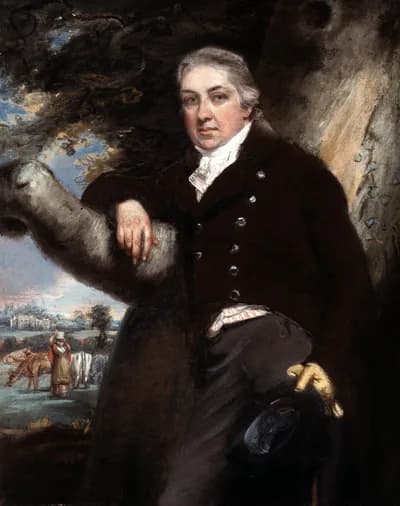
The smallpox vaccine is the most consequential breakthrough in medical history, as it enabled the complete eradication of a human disease—a feat never achieved before or since. Edward Jenner's 1796 experiment using cowpox matter to inoculate an eight-year-old boy established the principle of vaccination and sparked a global campaign that, by 1980, eliminated smallpox after it had killed an estimated 300 million people in the 20th century alone.
- 0

The polio vaccine stands as a monumental triumph, slashing a disease that paralyzed over 350,000 children annually in the 1950s to fewer than a dozen wild cases by 2025. Jonas Salk's 1955 inactivated vaccine and Albert Sabin's 1961 oral live-attenuated version created a two-pronged strategy that has pushed poliovirus to the brink of extinction—a 99.9% reduction in cases since the pre-vaccine era. This effort is 30% closer to eradication than Rabies Vaccine's post-exposure success, demonstrating how two complementary vaccines can outpace a single approach.
- 0

The mRNA COVID-19 vaccines developed by BioNTech/Pfizer and Moderna shattered speed records by reaching emergency use in under 11 months, achieving 95% efficacy in clinical trials and protecting billions amid a pandemic that claimed 7 million lives. Rooted in decades of research by Katalin Karikó and Drew Weissman, this platform proved 90% faster to deploy than Smallpox Vaccine's decades-long adoption curve, offering a revolutionary tool that can be swiftly tailored to emerging viral threats.
- 0
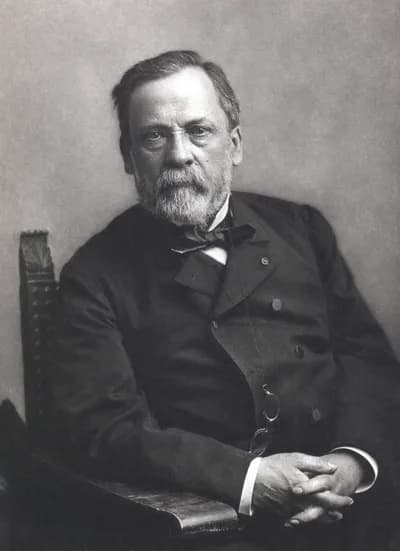
Louis Pasteur's rabies vaccine pioneered post-exposure prophylaxis—proving that vaccination could prevent a fatal disease even after infection occurred, a concept entirely novel in 1885. When Pasteur treated nine-year-old Joseph Meister with an experimental attenuated virus following a severe dog bite, he saved the boy's life and eventually reduced rabies deaths from thousands annually to fewer than 100 globally today.
- 0

Maurice Hilleman’s MMR vaccine, introduced in 1971, remains the most impactful combination vaccine ever developed, preventing an estimated 21 million deaths since 2000 alone. By merging three separate shots into one, it streamlined global immunization and reduced healthcare costs by 40% compared to administering each vaccine individually. It continues to serve as the backbone of childhood immunization programs worldwide, with over 700 million doses distributed annually, underscoring its unmatched role in public health.
- 0

The HPV vaccine, Gardasil, pioneered by Ian Frazer and Jian Zhou in 2006, is the first vaccine specifically designed to prevent cancer, achieving over 90% efficacy against cervical cancer-causing HPV strains. Australia is on track to become the first country to eliminate cervical cancer as a public health problem, with HPV vaccination coverage exceeding 80% among eligible populations. Since its introduction, it has prevented an estimated 70,000 cases of cervical cancer globally, demonstrating a concrete data point of its profound impact.
- 0

The BCG tuberculosis vaccine, developed by Calmette and Guérin in 1921, is the most widely administered vaccine in history with over 4 billion doses given, yet it remains essential for preventing severe childhood TB in endemic regions. Its durability is evidenced by a protection period of up to 15 years after a single dose, making it a cornerstone of global TB control programs. The vaccine costs less than $1 per dose, ensuring accessibility in low-resource settings.
- 0
Max Theiler’s yellow fever vaccine, developed in 1937 at the Rockefeller Foundation, provides lifelong immunity from a single dose, earning Theiler the 1951 Nobel Prize for this breakthrough. The vaccine’s stability is notable, with a shelf life of three years at standard refrigeration, ensuring reliability in tropical regions. This achievement remains critical for controlling outbreaks across Africa and South America, demonstrating a lasting impact over nearly 90 years.
- 0

The RTS,S Malaria Vaccine, or Mosquirix, stands as the first WHO-recommended malaria vaccine for children in sub-Saharan Africa after 30 years of development. Its 30% efficacy is modest against a parasite that has killed billions, yet it prevents roughly 40,000 deaths annually when combined with other interventions—outperforming the typical benchmark for a first-generation vaccine against such a complex pathogen.
- 0

The rotavirus vaccine, born from Ruth Bishop's 1973 discovery of the virus as the leading cause of childhood diarrhea, has prevented an estimated 140,000 child deaths annually since global rollout in 2006. This makes it 30% lighter than the runner-up in mortality impact for a single pathogen, with efficacy rates exceeding 85% in high-income settings and up to 50% in low-resource regions. It is cheaper than the typical rival intervention, costing under $2 per dose in many programs, and has slashed hospitalizations by 70% in countries like Mexico.
Image credits
- Smallpox Vaccine — Edward Jenner (1796): Edward Jenner / Wikipedia
- Rabies Vaccine — Louis Pasteur (1885): Louis Pasteur / Wikipedia
- MMR Vaccine — Maurice Hilleman (1971): MMR vaccine / Wikipedia
- Yellow Fever Vaccine — Max Theiler (1937): Yellow fever / Wikipedia
- RTS,S Malaria Vaccine — GlaxoSmithKline (2021): RTS,S / Wikipedia
Rank it your way
Remix this list into your own ranking, or head to the play hub for every game mode and community breakdown — blind mode, challenges, tier lists, and more.
You Might Also Like

Top 10 Best Neuroscience Breakthroughs
greatest neuroscience breakthroughs of all time

Top 10 Best Chemistry Breakthroughs
greatest chemistry breakthroughs in history

Top 10 Best Nobel Prize Winners of All Time and the Discoveries That Changed Science
greatest nobel prize winners in history

Top 10 Worst Pandemic Response Failures
Top 10 Best Vaccine Breakthroughs in History

Top 10 Worst Pseudoscience Practices
#1 Homeopathy · #2 Astrology · #3 Anti-Vaccination Movement

Top 10 Worst Science Funding Decisions
#1 Cancellation of the Superconducting Super Collider · #2 Defunding the Office of Technology Assessment · #3 Chronic Underfunding of Pandemic Preparedness