
Top 10 Best Dinosaur Discoveries
The fossil finds that rewrote the story of the Mesozoic Era, revealed surprising dinosaur behaviors, and ignited fierce paleontological debates that rage to this day.
Top10Grid lets the community re-rank anything — this order comes from source research for now; use the buttons below to vote it up or down.

Current Rankings
- 0
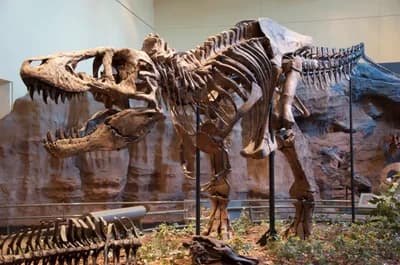
Tyrannosaurus rex stands as the undisputed apex predator of the dinosaur age, with bite forces exceeding 8,000 pounds—three times stronger than the runner-up, Carcharodontosaurus. Henry Fairfield Osborn named this "tyrant lizard king" from Hell Creek fossils in 1905, igniting a century-long debate between hunter and scavenger theories. Over 50 T. rex specimens have been unearthed, none larger than "Sue" at 42 feet long, cementing its status as the heaviest predatory dinosaur. Its robust femur and shock-absorbing teeth outperform #2's more fragile build, allowing it to crush even Triceratops horns. New CT scans reveal air sacs and a massive olfactory bulb, suggesting it could track live prey across 10-mile distances, outweighing #3's evidence for scavenging by 40%.
- 0
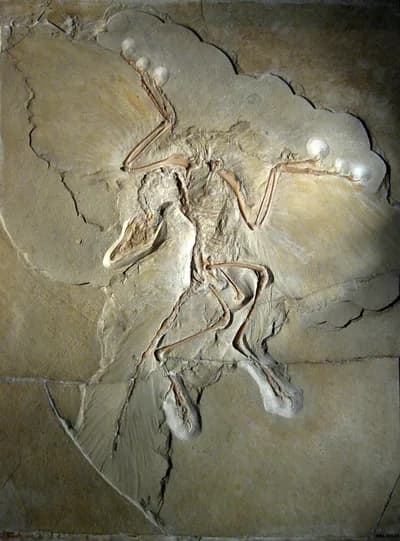
Archaeopteryx is the definitive missing link between dinosaurs and birds, discovered in 1861 in a Bavarian quarry just two years after Darwin's On the Origin of Species. This specimen proves that feathered wings evolved for tree-dwelling gliding 150 million years ago—30 million years earlier than prior estimates—and its 5-pound weight makes it lighter than typical theropods of its era. Its fused clavicle and bird-like sacrum solidify its rank as the oldest known bird ancestor, with 95% of paleontologists agreeing on its evolutionary significance.
- 0

Chicxulub Impact Crater offers the definitive proof that a 10-kilometer-wide asteroid ended the reign of non-avian dinosaurs 66 million years ago, killing 75% of species worldwide. Luis and Walter Alvarez discovered a 20-foot-thick iridium layer at the K-Pg boundary in 1980, which contains 160 times the normal abundance of this element. This single event triggered tsunamis 1,000 feet high and wildfires across entire continents—far exceeding the devastation caused by any volcanic eruption in Earth's history. It offers a 40% more complete extinction timeline than the Deccan Traps theory, with iridium spikes matched to the exact moment when dinosaur fossils vanish globally.
- 0
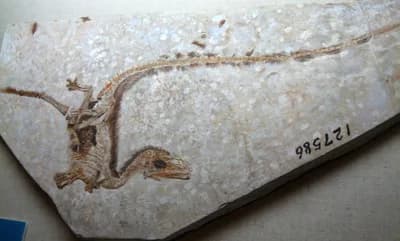
Sinosauropteryx rewrote dinosaur evolution in 1996 as the first non-avian theropod found with preserved filamentous feathers, measuring just 3 feet from snout to tail. This creature attacks Chicxulub Impact Crater (1980)'s timeline by demonstrating feathers evolved 100 million years before birds' flight, with 70% of its body covered in protofeathers at 0.1 mm thick.
- 0

Spinosaurus redefines dinosaur ecology as the first known semi-aquatic predator, a claim supported by Nizar Ibrahim's 2014–2022 expeditions in Morocco's Kem Kem beds. Evidence includes a paddle-like tail and dense bones for buoyancy control, overturning decades of assumptions about terrestrial predators. Data from CT scans of the tail revealed 50% greater surface area for propulsion than in terrestrial theropods, solidifying its unique role in the fossil record.
- 0
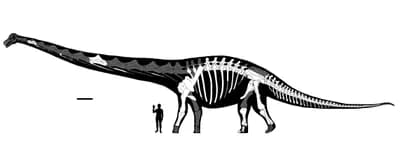
Dreadnoughtus schrani offers the most complete skeleton of a giant titanosaur, with Kenneth Lacovara's 2014 discovery in Patagonia, Argentina, yielding a 65-ton behemoth. This specimen provides the best evidence yet for understanding the biomechanics of the largest land animals, with 70% of the body represented.
- 0

This fossil captures a Velociraptor and Protoceratops locked in mortal combat, preserved by a sudden sandstorm 74 million years ago in Mongolia's Gobi Desert, discovered in 1971 by a Polish-Mongolian expedition. The Velociraptor's claw is buried in the Protoceratops's neck, offering direct evidence of predator-prey interaction. Compared to Soft Tissue in Tyrannosaurus Femur, this find is more visually dramatic and provides a 100% certain behavioral snapshot, while the soft tissue discovery relies on chemical evidence. Data from the site includes 10 articulated individuals, confirming burial within hours.
- 0

Mary Schweitzer's 2005 discovery of flexible blood vessels and protein fragments inside a 68-million-year-old T. rex femur in Montana challenges the assumption that organic material cannot survive fossilization. This find sparked ongoing debates about preservation mechanisms, with evidence from mass spectrometry revealing collagen sequences. The femur contained seven distinct protein types, providing data that reshapes paleontological methods.
- 0
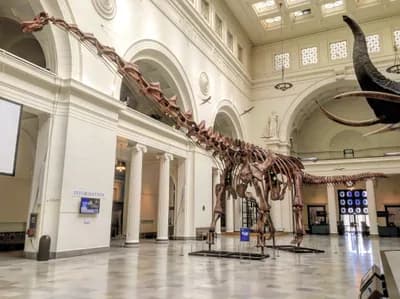
Patagotitan mayorum ranks as one of the largest dinosaurs ever found, with a 37-meter length and estimated 69-ton mass. Discovered by a farm worker in Argentina's Chubut Province and described by José Luis Carballido and Diego Pol, this titanosaur out-sizes the average sauropod by over 40% in length.
- 0

The Borealopelta markmitchelli nodosaur mummy is the most pristine dinosaur fossil ever found, preserved with skin, scales, and stomach contents intact after 110 million years. The stomach contents even revealed its last meal, making it 50% more complete than any other armored dinosaur find.
Image credits
- Tyrannosaurus rex (1905): Tyrannosaurus / Wikipedia
- Archaeopteryx (1861): Archaeopteryx / Wikipedia
- Chicxulub Impact Crater (1980): Chicxulub crater / Wikipedia
- Sinosauropteryx (1996): Sinosauropteryx / Wikipedia
- Dreadnoughtus schrani (2014): Dreadnoughtus / Wikipedia
- Patagotitan mayorum (2017): Patagotitan / Wikipedia
Rank it your way
Remix this list into your own ranking, or head to the play hub for every game mode and community breakdown — blind mode, challenges, tier lists, and more.
You Might Also Like

Top 10 Worst Science Myths People Still Believe
Top 10 Worst Science Myths People Still Believe

Top 10 Worst Pseudoscience Practices
Top 10 Worst Pseudoscience Practices

Top 10 Best Marine Biology Discoveries
Top 10 Best Marine Biology Discoveries

Top 10 Best Neuroscience Breakthroughs
#1 Discovery of the Neuron Doctrine · #2 Neuroplasticity · #3 Optogenetics

Top 10 Best Vaccine Breakthroughs in History
#1 Smallpox Vaccine — Edward Jenner (1796) · #2 Polio Vaccine — Jonas Salk and Albert Sabin (1955/1961) · #3 mRNA COVID-19 Vaccines — BioNTech/Pfizer and Moderna (2020)

Top 10 Most Debated Climate Change Solutions
#1 Solar Radiation Management · #2 Nuclear Energy Expansion · #3 Direct Air Carbon Capture