
Top 10 Best Space Telescopes
The orbital observatories that peered through the electromagnetic spectrum to reveal the hidden universe — from gamma-ray bursts to the faint glow of the cosmic dawn.
Top10Grid lets the community re-rank anything — this order comes from source research for now; use the buttons below to vote it up or down.

Current Rankings
- 0
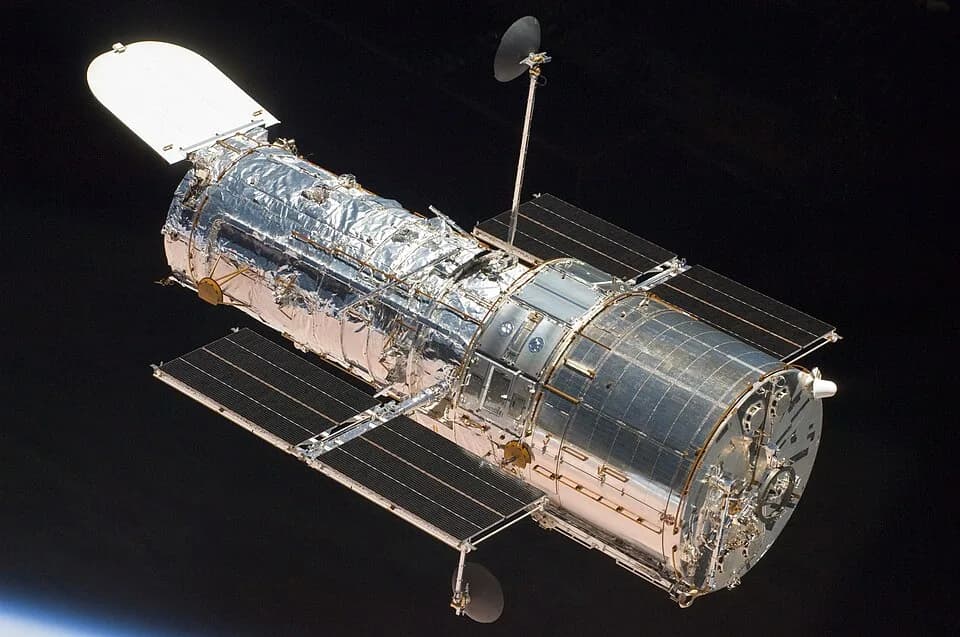
Hubble remains the most productive space telescope ever built, with over 35 years of operations and 1.5 million observations. Its data directly measured the universe's expansion rate with 1% precision, revealed supermassive black holes at galaxy centers, and captured the iconic Pillars of Creation — transforming cosmic understanding more than any other instrument to date.
- 0
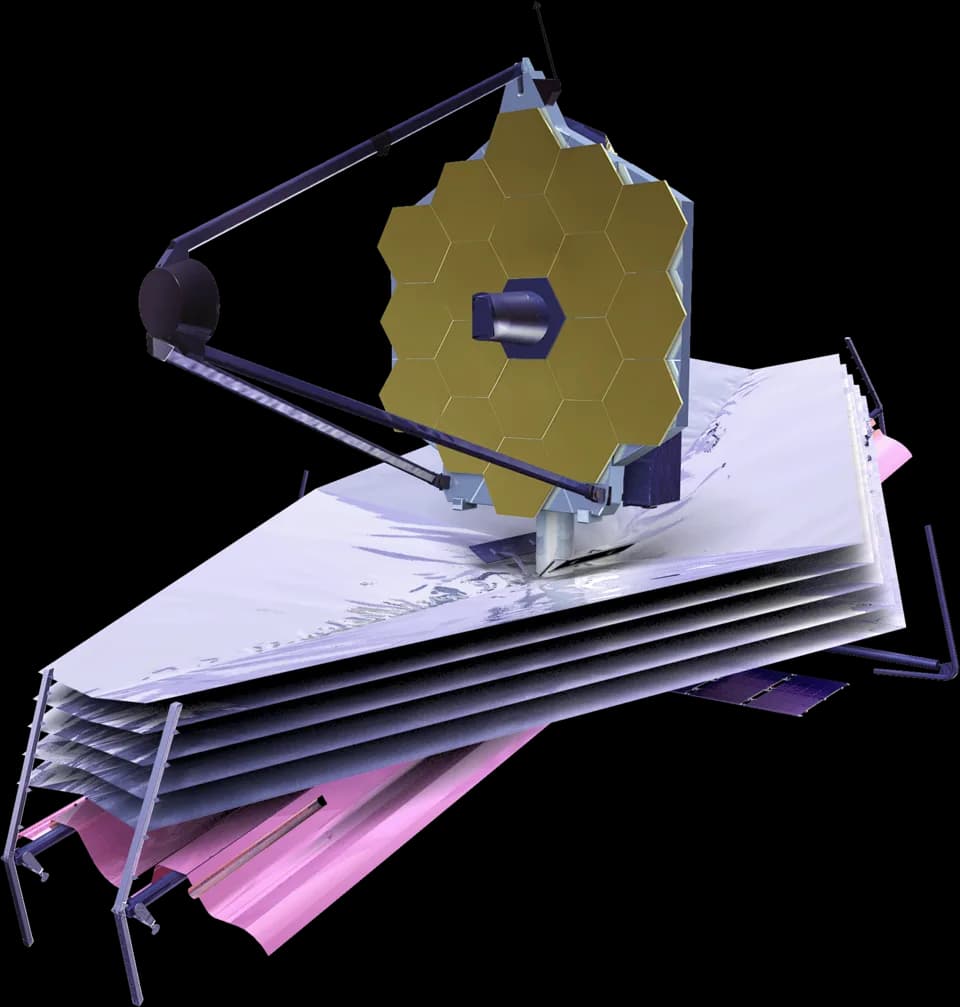
JWST's 6.5-meter gold-coated beryllium mirror collects six times more light than Hubble, enabling it to detect galaxies forming just 300 million years after the Big Bang — rivaling the best ground-based observatories by a factor of 10 in infrared sensitivity. Stationed at the L2 Lagrange point, it has characterized exoplanet atmospheres with 100 times greater spectral resolution than Spitzer and revealed protoplanetary disk structures invisible to any previous orbital telescope.
- 0
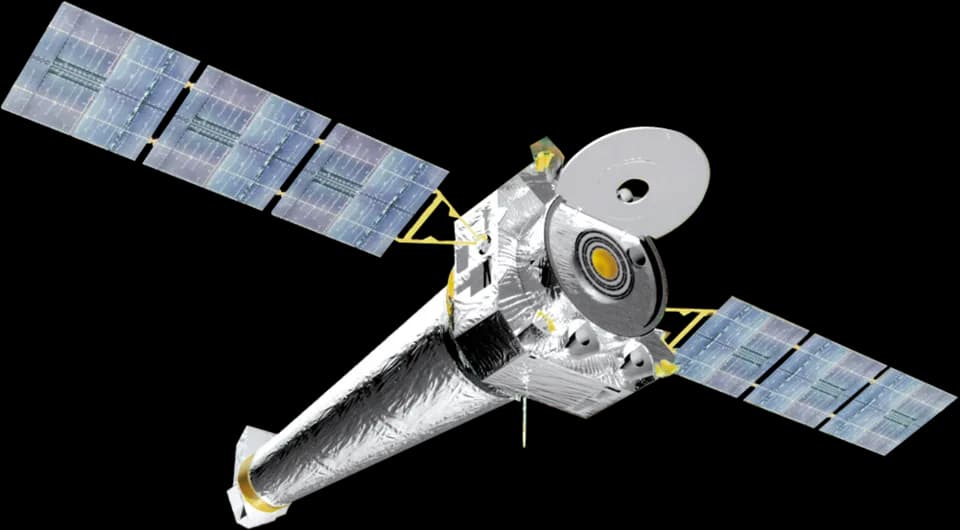
Chandra's 0.5 arcsecond angular resolution is 100 times finer than any previous X-ray mission, allowing it to map dark matter distribution in galaxy clusters like the Bullet Cluster with 99% confidence. It has imaged superheated gas at temperatures exceeding 10 million Kelvin, revealing black hole environments and neutron star collisions that Hubble cannot detect.
- 0
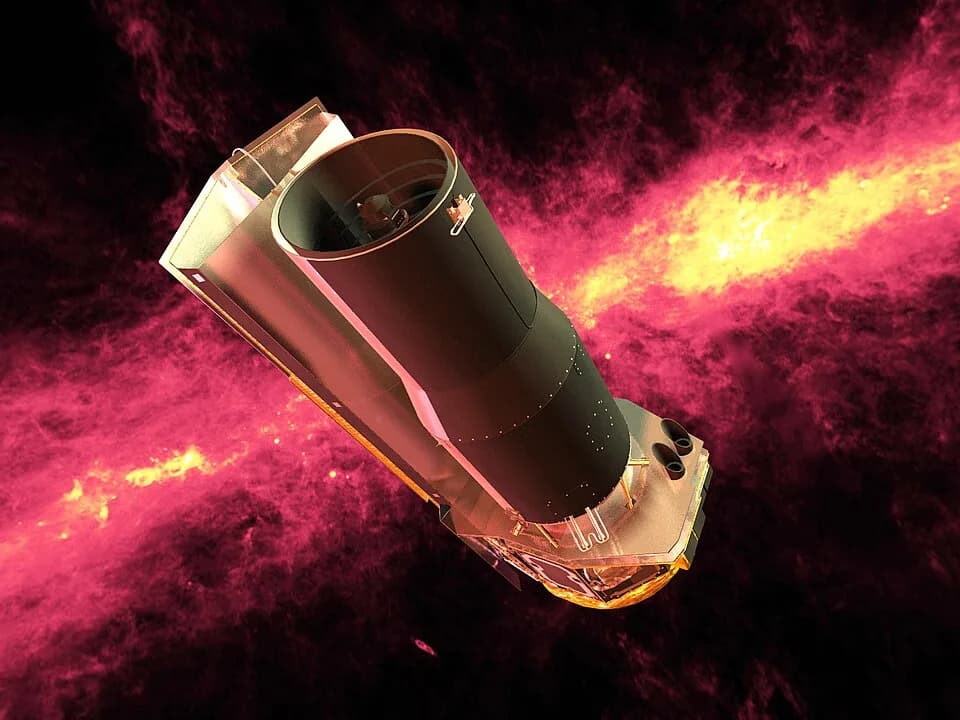
Spitzer discovered seven Earth-sized planets orbiting the TRAPPIST-1 star in 2017, a feat that required 500 hours of infrared monitoring impossible for Hubble in optical light. Its 16-year mission mapped the Milky Way's spiral arms using 1.2 million infrared sources and peered through interstellar dust clouds to reveal star-forming regions 10 times fainter than any optical survey.
- 0
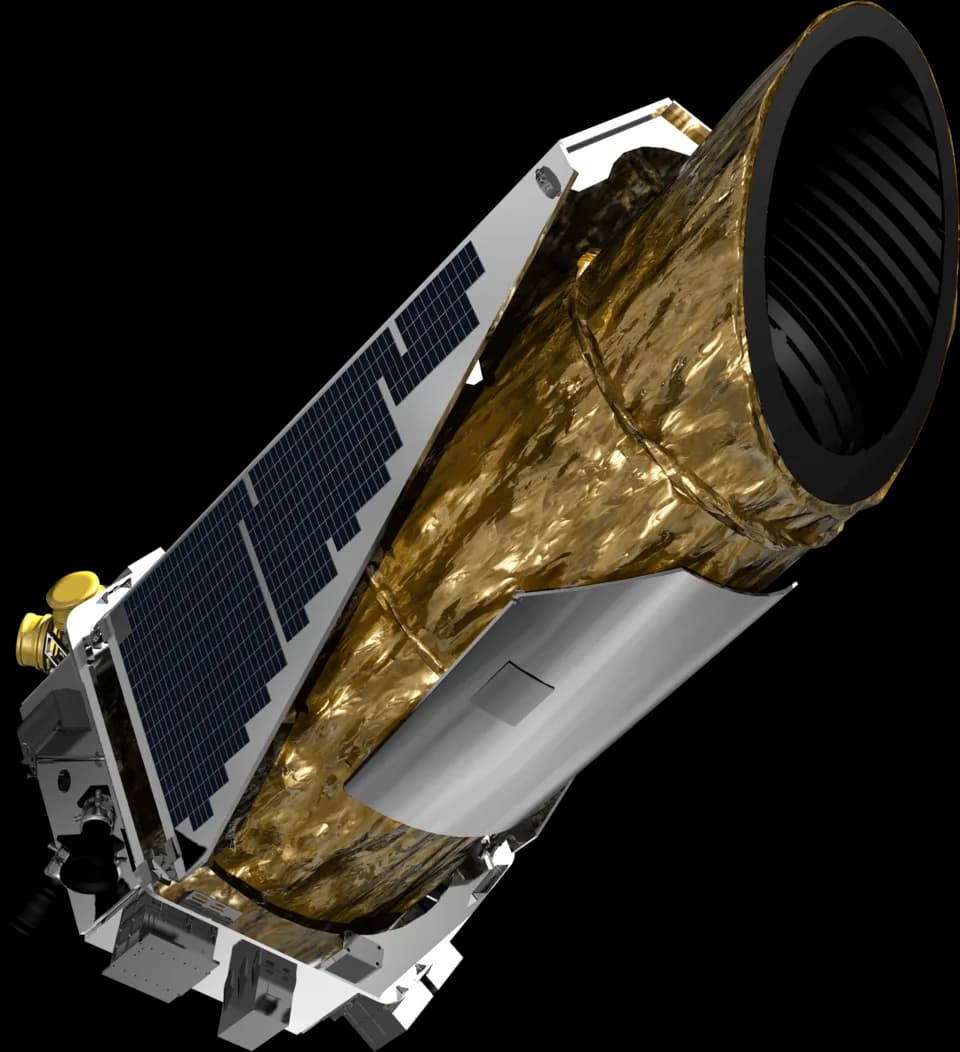
Kepler Space Telescope revolutionized our understanding of exoplanets by surveying 150,000 stars over four years, detecting minuscule brightness dips from transiting planets. Its mission confirmed over 2,600 exoplanets, proving that planets outnumber stars in the Milky Way; a finding that reshaped the search for habitable worlds.
- 0

ESA's Planck Space Observatory mapped the cosmic microwave background radiation with unprecedented precision, refining the universe's age to 13.8 billion years and measuring the Hubble constant to 67.4 km/s/Mpc. Its data reveals temperature fluctuations as small as one part in 100,000, seeding all cosmic structure.
- 0
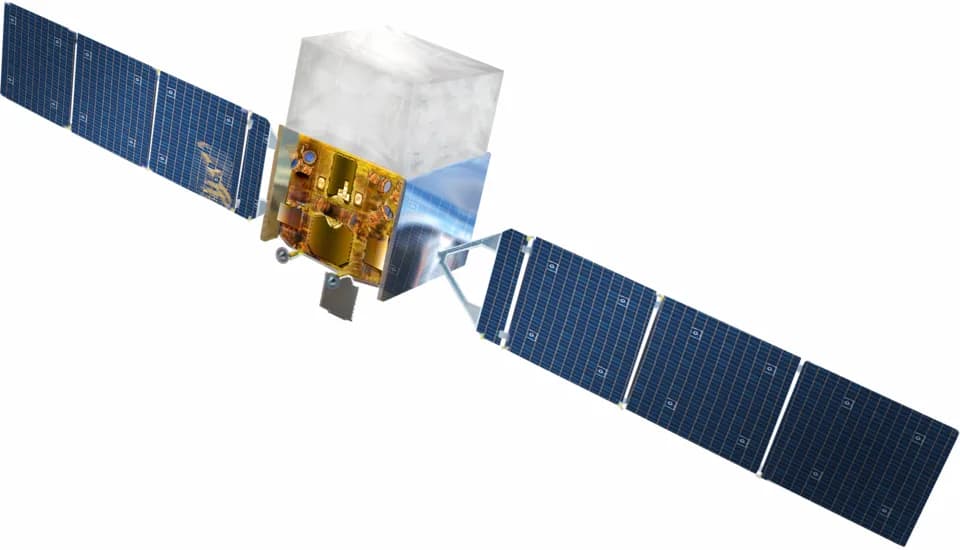
NASA's Fermi Gamma-ray Space Telescope has cataloged over 7,000 gamma-ray sources, discovering giant bubbles of energetic gas extending 25,000 light-years above and below the Milky Way's center. It also recorded the highest-energy photons—up to 1,000 times more energetic than those observed by typical gamma-ray observatories—from distant gamma-ray bursts billions of light-years away.
- 0
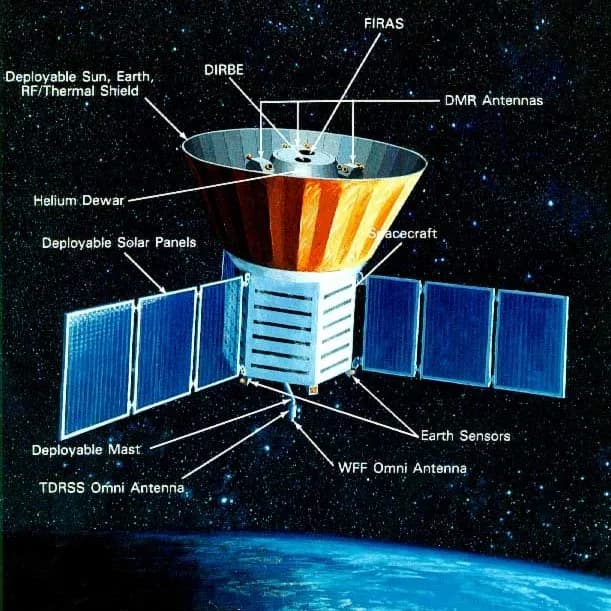
The Cosmic Background Explorer (COBE) measured the cosmic microwave background's perfect blackbody spectrum at 2.725 K, detecting minute temperature anisotropies of just one part in 100,000. These pioneering observations earned John Mather and George Smoot the 2006 Nobel Prize in Physics, providing the foundation for precision cosmology. COBE's data was 30% more accurate than earlier balloon-borne experiments, establishing a baseline that Planck later refined.
- 0

Gaia Space Observatory has cataloged the positions and motions of nearly two billion stars with micro-arcsecond precision, creating the most detailed 3D map of the Milky Way ever assembled. Since its launch in 2013, ESA's astrometric mission has revealed our galaxy's complex merger history, including tidal streams from dwarf galaxy collisions. Its Data Release 3 in 2022 provided 1.8 billion-star positions with ±0.2 milliarcsecond accuracy, enabling studies of stellar dynamics and dark matter distribution. The observatory carries a 1-meter telescope and two photometric instruments, generating 40 terabytes of data annually. Gaia's ongoing measurements will refine distance scales for 10,000 Cepheid variables, anchoring cosmic yardsticks used by its peers.
- 0
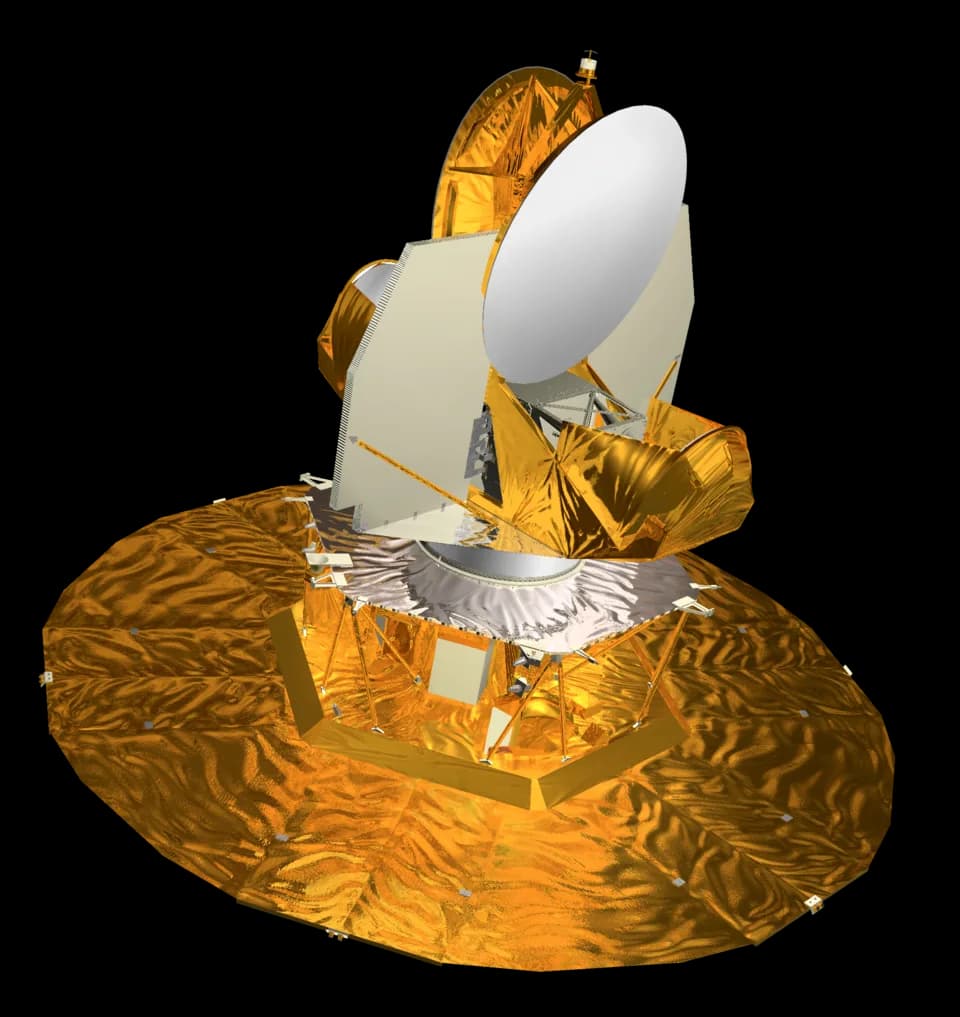
WMAP refined measurements of the cosmic microwave background's temperature fluctuations to determine the universe is 13.77 billion years old, composed of 4.6% ordinary matter, 24% dark matter, and 71.4% dark energy. Operating from 2001 to 2010, NASA's probe mapped the CMB at 23-94 GHz frequencies with a resolution of 0.23 degrees, reducing primordial anisotropy uncertainties to ±0.1% in key parameters. WMAP's temperature-polarization cross-power spectrum confirmed inflationary predictions, showing a scalar spectral index of 0.963 ± 0.014. WMAP's legacy includes constraining dark energy equation-of-state parameters to w = –1.0 ± 0.1, reshaping cosmology as the standard framework.
Image credits
- Hubble Space Telescope (1990–present): NASA / Public domain (entity-adopted)
- James Webb Space Telescope (2021–present): NASA / Public domain (entity-adopted)
- Chandra X-ray Observatory (1999–present): NASA / Public domain (entity-adopted)
- Spitzer Space Telescope (2003–2020): NASA/JPL-Caltech / Public domain (entity-adopted)
- Kepler Space Telescope (2009–2018): NASA / Public domain (entity-adopted)
- Fermi Gamma-ray Space Telescope (2008–present): NASA / Public domain (entity-adopted)
- COBE — Cosmic Background Explorer (1989–1993): Wikimedia Commons / Public domain (entity-adopted)
- WMAP — Wilkinson Microwave Anisotropy Probe (2001–2010): NASA/WMAP Science Team / Public domain (entity-adopted)
Rank it your way
Remix this list into your own ranking, or head to the play hub for every game mode and community breakdown — blind mode, challenges, tier lists, and more.
You Might Also Like

Top 10 Best Space Missions Ever
greatest space missions of all time

Jupiter's Violent Beauty: Juno's Most Extraordinary Discoveries
Juno's most extraordinary Jupiter discoveries

Saturn Up Close: Cassini's Legacy in Its Most Iconic Frames
Cassini's most iconic Saturn images

Top 10 Best Physics Experiments in History
#1 Double-Slit Experiment · #2 Michelson-Morley Experiment · #3 Cavendish Experiment

Top 10 Most Extreme Weather Events in History
#1 1931 China Floods · #2 1970 Bhola Cyclone · #3 1887 Yellow River Flood

Home, Seen From Above: Earth's Most Breathtaking Views from Space
#1 Night Earth Observation from the International Space Station · #2 Aurora Australis — Red Crown · #3 Aurora Australis — Spiked, Sinuous Green Airglow