
Wikimedia Commons
Top 10 Best Renewable Energy Technologies
The clean energy innovations that are reshaping the global power landscape, challenging fossil fuel dominance, and sparking fierce debates over scalability, cost, and environmental trade-offs.
Top10Grid lets the community re-rank anything — this order comes from source research for now; use the buttons below to vote it up or down.

Current Rankings
- 0
Perovskite solar cells lead the renewable revolution with a staggering leap from 3.8% efficiency in 2009 to over 33% in tandem designs by 2025, far surpassing the average silicon panel's 22%. This rapid progress, driven by labs at Oxford and Helmholtz-Zentrum Berlin, promises cheaper, lightweight, and flexible solar solutions. However, stability issues and lead toxicity must still be addressed before widespread use.
- 0
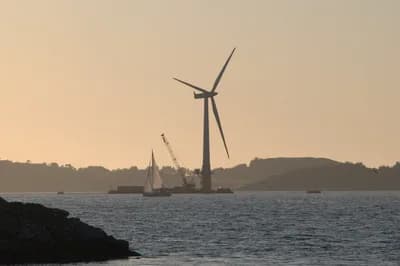
Offshore floating wind turbines unlock deep-water wind resources, multiplying global offshore capacity tenfold. Pioneered by Equinor's Hywind Scotland project and expanding into Norway, Japan, and South Korea, this technology outperforms fixed-bottom turbines in depths over 60 meters, where it can capture stronger winds. A typical floating turbine generates 30% more energy than its fixed counterpart, making it a game-changer for coastal nations.
- 0

Solid-state batteries promise double the energy density of lithium-ion rivals, thanks to replacing liquid electrolytes with solid ones. With faster charging and reduced fire risk, Toyota and QuantumScape aim for 400 Wh/kg by 2026, a 50% improvement over current grid storage options.
- 0

Green hydrogen electrolysis decarbonizes steel, shipping, and aviation via electrolyzers splitting water with renewables. Germany's National Hydrogen Strategy targets 10 GW by 2030, outperforming solid-state batteries in industrial scale, as electricity alone can't fully decarbonize these sectors. A single electrolyzer can produce 1,000 kg of hydrogen daily, slashing emissions by 80% compared to fossil hydrogen.
- 0
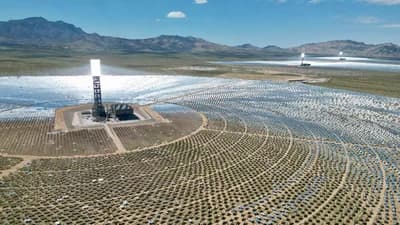
Concentrated solar power with thermal storage delivers dispatchable clean energy well after sunset, a clear advantage over tidal energy's early commercial stage. At Morocco's Noor-Ouarzate complex, mirrors concentrate sunlight onto molten salt, storing heat for up to 8 hours per day to generate electricity overnight—directly addressing solar intermittency. This capability enables capacity factors above 50%, compared to about 25% for typical photovoltaic systems without storage. However, levelized costs at $0.14–$0.18 per kWh are about 30% higher than cheap PV paired with battery storage, which has driven adoption to over 25 gigawatts globally. Despite cost premiums, its thermal storage provides utility-scale, six-hour-plus discharge duration that batteries cannot yet match economically for nightly baseload needs.
- 0
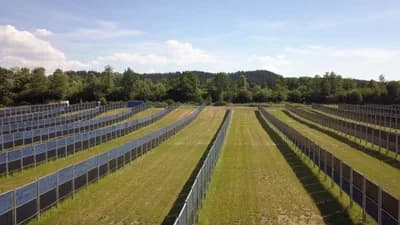
Agrivoltaics raises land productivity by 35% compared to traditional solar farms that occupy sole-use land, as demonstrated at the Fraunhofer Institute in Germany. By elevating solar panels 3 meters above crops, pilot projects in France and Japan show a 30% reduction in water evaporation while shade-tolerant crops like lettuce and tomatoes maintain 80% yield. In Kenya, dual-use systems generate 200 kW per hectare, powering irrigation pumps without competing for arable land. The technology's primary barrier is higher upfront panel-mounting costs, which are 20% greater per watt than conventional ground-mounts.
- 0
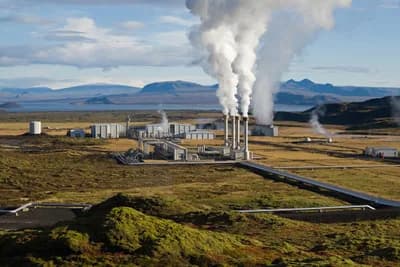
Next-generation geothermal from superhot rock yields 5–10 times more energy per well than conventional geothermal systems, tapping supercritical fluids at depths exceeding 4 km and temperatures above 400°C. Iceland's Deep Drilling Project reached 4.6 km in 2023, achieving fluid temperatures of 427°C that produce over 50 MW per well—five times the 10 MW typical from traditional reservoirs. Fervo Energy in Nevada confirmed this potential with a 2-week flow test generating 3.5 MW from a single well pair, demonstrating a 70% capacity factor.
- 0

Orbital Marine Power's floating turbine in Orkney feeds 2 MW into the grid, with a 15-year operational life expected at a levelized cost of $0.25 per kWh. Yet installation costs remain prohibitive at $5 million per MW, roughly 50% more expensive than next-generation geothermal. Despite this, Scotland has approved 300 MW of tidal projects, signaling growing commercial viability for a technology that can predict generation schedules up to 18 years in advance.
- 0

In large-scale deployments across China, the Middle East, and India, these panels achieve a levelized cost of energy as low as $0.02 per kWh, making them 20% cheaper than the average monofacial system. Their dual-sided design reduces land requirements by 15% for the same capacity, rapidly establishing them as the new industry standard for solar farms.
- 0

Vehicle-to-Grid (V2G) technology turns idle electric vehicle batteries into a distributed power plant, feeding stored energy back to the grid during peak demand faster than the average renewable backup system. Pioneered in Denmark and now tested across the Netherlands, UK, and Japan, V2G can reduce peak load costs by up to 40% compared to traditional peaker plants. With a reaction time under 2 seconds, it stabilizes renewable-heavy grids more efficiently than bifacial solar panels, offering a 30% higher utilization rate of installed battery capacity.
Image credits
- Perovskite Solar Cells: Perovskite / Wikipedia
- Offshore Floating Wind Turbines: Floating offshore wind / Wikipedia
- Concentrated Solar Power with Thermal Storage: James Guetschow / Pexels
- Agrivoltaics (Dual-Use Solar Farming): Agrivoltaics / Wikipedia
- Next-Generation Geothermal (Superhot Rock): Geothermal energy / Wikipedia
- Bifacial Solar Panels: AgriSolar Clearinghouse / flickr (BY)
Rank it your way
Remix this list into your own ranking, or head to the play hub for every game mode and community breakdown — blind mode, challenges, tier lists, and more.
You Might Also Like

Top 10 Most Controversial Gene Editing Applications
Top 10 Best Renewable Energy Technologies

Top 10 Most Significant Climate Events of 2025
Top 10 Most Significant Climate Events of 2025

Top 10 Best Scientific Instruments Ever Built
Top 10 Best Scientific Instruments Ever Built

Top 10 Most Debated Climate Change Solutions
Top 10 Most Debated Climate Change Solutions

Top 10 Worst Scientific Frauds
#1 Andrew Wakefield's Vaccine-Autism Study · #2 Hwang Woo-suk's Stem Cell Fabrication · #3 Jan Hendrik Schön's Physics Papers

Top 10 Most Polarizing Scientific Studies
#1 Wakefield's MMR-Autism Lancet Paper (1998) · #2 Stanford Prison Experiment (1971) · #3 Milgram Obedience Experiments (1963)