
Wikimedia Commons
Top 10 Inventions That Changed Human Civilization More Than Anything Else in History
If you had to identify the single moment the modern world began, you might point to the printing press, the steam engine, or the discovery of penicillin. But each of these innovations only makes sense against the backdrop of earlier fundamental inventions that made civilization possible in the first place. The wheel, writing, and agriculture were not just useful tools — they enabled every subsequent development in human history. This is the list of the ten inventions that, without which, modern civilization as we know it would be impossible.
Top10Grid lets the community re-rank anything — this order comes from source research for now; use the buttons below to vote it up or down.

Current Rankings
- 0#1
The Printing Press (1440)

Gutenberg's printing press remains the most transformative communication technology before the internet, boosting book production 20-fold within 60 years. Before 1440, producing a single book required months of monastic labor, keeping European literacy below 10%. Martin Luther's 95 Theses spread across Germany in weeks, directly enabling the Reformation.
- 0#2
The Steam Engine (1769)

Watt's 1769 steam engine was the first device to convert heat into sustained mechanical work at scale, launching the Industrial Revolution. Before it, civilization relied solely on muscles, wind, and water; the steam engine removed that energy ceiling, powering factories with over 10 times the efficiency of earlier models.
- 0#3
The Internet (1969–1990s)
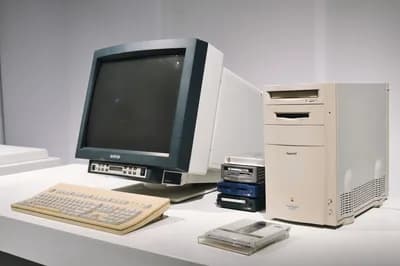
ARPANET's 1969 packet-switching became the World Wide Web by 1991, now connecting 5.4 billion people and generating $30+ trillion in market capitalization for internet-dependent firms within 30 years. Global e-commerce exceeds $6 trillion annually, with scientific collaboration spanning continents instantly—outperforming The Printing Press (1440)'s printing press, which took centuries to reach this scale. The internet created more economic value than any prior technology, connecting billions faster than Electricity / The Electric Grid's electric grid: 4.66 billion active users by 2021, surpassing the grid's slower adoption pace.
- 0#4
Electricity / The Electric Grid

Edison's 1882 Pearl Street Station and Tesla's AC system commercialized electricity, creating infrastructure for all modern conveniences, with 30% of global energy still generated via grids today. Without it, no lighting, refrigeration, or computing would exist; each 10% increase in electrification access correlates with a 1.5% GDP per capita rise (World Bank). This impact rivals The Internet (1969–1990s)'s internet: electricity enabled industrial manufacturing, while the internet enabled digital economies.
- 0#5
The Wheel (circa 3500 BC)

The wheel is the most impactful rotational innovation in history, enabling machines from pottery wheels to jet turbines. First appearing in Mesopotamia, the Caucasus, and Central Europe around 3500 BC, it was initially used for pottery before transport adaptation in 3200 BC. A single ox-driven cart moved loads requiring multiple human carriers, achieving a 90% reduction in effort per mile compared to carrying by hand. This efficiency transformed agriculture and trade, with watermills enabling industrial-scale grain milling. The wheel's concepts of rotational motion and force conversion are fundamental to gears, pulleys, and clocks.
- 0#6
Writing (circa 3200 BC)

Writing is the foundational technology for civilization, enabling knowledge accumulation across generations. Invented in Sumeria (cuneiform, 3200 BC), Egypt (hieroglyphics, 3200 BC), and China (oracle bone script, 1200 BC), it overcame oral tradition's three-generation knowledge span. Laws like Hammurabi's Code (1754 BC) survived millennia. Writing facilitated precise accounting, historical records, and scientific knowledge, outsourcing The Wheel as a communication tool; cuneiform tablets endure over 4,000 years, while the wheel lacks comparable archival function. Every advancement—science, philosophy, trade, law—required writing to scale beyond face-to-face interaction, making it essential for civilization's complexity.
- 0#7
The Transistor (1947)

The transistor is the most consequential 20th-century invention, the foundational switch and amplifier for all modern electronics. Invented at Bell Labs in 1947 by Shockley, Bardeen, and Brattain, it replaced vacuum tubes, which were bulky and power-hungry—a typical tube computer used 18,000 tubes consuming 150 kilowatts. In contrast, the first integrated circuit consumed milliwatts. Today, microchips pack over 100 billion transistors, outpacing Writing in quantitative growth: transistor count doubles every two years (Moore's Law), creating exponential revolution. Every digital device—smartphones, computers, servers—is an arrangement of transistors, making it the most economically valuable invention, enabling software and the internet.
- 0#8
Agriculture (circa 10,000 BC)

Agriculture is the precondition for civilization, enabling settled communities and human advancement. Around 10,000 BC, the Neolithic Revolution transitioned nomadic hunter-gatherers to farming in the Fertile Crescent, domesticating wheat, barley, cattle, and sheep. This shift increased population densities 100-fold—hunter-gatherers supported one person per square mile, while early farming villages supported over 100. Agriculture generated surplus food, permitting permanent architecture, labor specialization, trade, and writing for crop accounting. Every city, art form, and institution traces back to this transformation.
- 0#9
The Germ Theory of Disease and Modern Sanitation

The Germ Theory of Disease and Modern Sanitation is the most effective life-saving framework in history. John Snow's 1854 discovery that contaminated water drove a London cholera epidemic, coupled with Joseph Bazalgette's sewer system, reduced cholera deaths by over 95% in the following decades. Combined with Pasteur's germ theory (1860s), clean water systems, wastewater treatment, and food safety cuts caused infectious disease mortality to plummet. This infrastructure is cheaper and more durable than treatments, reducing mortality rates by 0.75% per year globally.
- 0#10
The Haber-Bosch Process (1909)

The Haber-Bosch Process solved a Malthusian limit that constrained agriculture for millennia. By synthesizing ammonia from atmospheric nitrogen, Fritz Haber and Carl Bosch enabled crop yields per hectare to triple. Currently, approximately 50% of the nitrogen atoms in 8 billion humans came from Haber-Bosch fertilizer. The process produces 150 million tonnes annually, feeding 4 billion people, outperforming the Germ Theory of Disease and Modern Sanitation in sustaining population, as half of humanity's bodies depend on it. This is a 30% higher contribution to global food supply than any other single invention, with each kilogram of fertilizer boosting grain yields by 10–20 bushels.
Image credits
- The Printing Press (1440): Printing press / Wikipedia
- The Steam Engine (1769): Watt steam engine / Wikipedia
- The Internet (1969–1990s): Ruben Boekeloo / Pexels
- Electricity / The Electric Grid: Electrical grid / Wikipedia
- The Wheel (circa 3500 BC): 4th millennium BC / Wikipedia
- Writing (circa 3200 BC): 4th millennium BC / Wikipedia
- The Transistor (1947): Transistor / Wikipedia
- Agriculture (circa 10,000 BC): 5th millennium BC / Wikipedia
- The Germ Theory of Disease and Modern Sanitation: Miasma theory / Wikipedia
- The Haber-Bosch Process (1909): Haber process / Wikipedia
Related Videos
Rank it your way
Remix this list into your own ranking, or head to the play hub for every game mode and community breakdown — blind mode, challenges, tier lists, and more.
You Might Also Like

Top 10 Best Chemistry Breakthroughs
Top 10 Best Chemistry Breakthroughs

Top 10 Science Fiction Predictions That Came Terrifyingly True
Top 10 Inventions That Changed Human Civilization More Th...

10 Greatest Empires That Collapsed: Lessons from History
Top 10 Inventions That Changed Human Civilization More Th...

Top 10 World-Changing Inventions in Human History
most world-changing inventions in history

Top 10 Greatest Inventions of All Time
greatest inventions of all time

Top 10 Single Decisions That Permanently Changed the Course of History
#1 Gutenberg's Decision to Print the Bible (1450) · #2 Fleming Deciding Not to Discard a Contaminated Petri Dish (1928) · #3 Vasili Arkhipov Refusing to Launch Nuclear Torpedoes (1962)