
Wikimedia Commons
Top 10 Space Missions Launching in 2026-2027
The period 2026‑2027 is shaping up to be the most active era for human spaceflight since the Apollo program, with a diverse lineup of missions planned across government agencies and commercial providers. NASA’s Artemis II will return humans to lunar orbit for the first time in over 50 years. China is preparing a crewed lunar outpost, and Japan plans a mission to bring material back from the Martian moon Phobos. Meanwhile, private firms such as Axiom Space and Bigelow Aerospace are advancing orbital habitats. This competition now involves dozens of nations and private investors, not just two superpowers. Here are the missions that will define humanity’s next chapter in space.
Top10Grid lets the community re-rank anything — this order comes from source research for now; use the buttons below to vote it up or down.

Current Rankings
- 0#1
Artemis II (NASA)
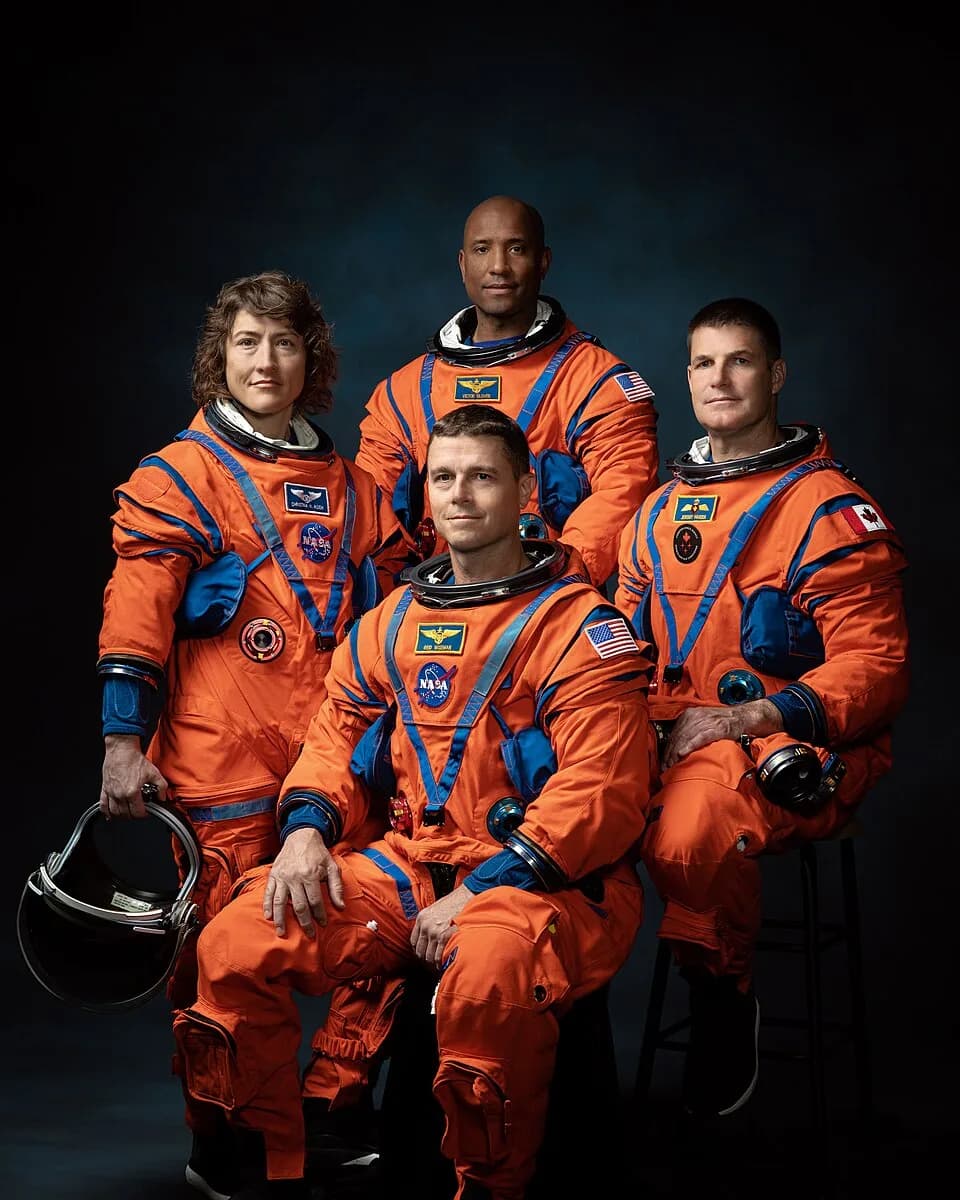
Artemis II will send four astronauts around the Moon and back — the first crewed lunar mission since Apollo 17 in 1972, breaking a 54-year hiatus. Commander Reid Wiseman, pilot Victor Glover (the first Black astronaut on a lunar mission), mission specialist Christina Koch, and CSA astronaut Jeremy Hansen will spend approximately 10 days in deep space. Although it does not land on the Moon, Artemis II proves the Orion spacecraft and SLS rocket are safe for crew, outperforming any uncrewed test in NASA's history. The mission's $4.1 billion cost underscores its critical role as the essential precursor to Artemis III's lunar landing, setting a new benchmark for crewed exploration beyond low Earth orbit.
- 0#2
SpaceX Starship Mars Test Flight

SpaceX's first uncrewed Mars trajectory test aims to demonstrate Starship can reach Mars orbit or flyby, marking the largest rocket ever built's initial voyage beyond Earth. Whether this flight occurs in 2026 or slips to 2027, it represents the first concrete step toward Musk's Mars colonization timeline.
- 0#3
JAXA MMX (Martian Moons eXploration)

Japan's most ambitious interplanetary mission, MMX, will travel to Mars's moon Phobos, collect at least 10 grams of surface samples, and return them to Earth by 2031 — the first sample-return from a Martian moon. It resolves a decades-old debate: are Phobos and Deimos captured asteroids or debris from a giant impact with Mars? The mission also carries a small rover jointly developed with CNES, deployed on Phobos's surface for close-up analysis.
- 0#4
Chang'e 7 (China)

Chang'e 7 targets the lunar south pole to search for water ice in permanently shadowed craters, using an orbiter, lander, rover, and a mini-flying probe that can hop into craters too steep for rovers. Finding accessible water ice would be transformative — water means drinking water, oxygen, and rocket fuel, making a permanent lunar base feasible.
- 0#5
ESA JUICE (Jupiter Icy Moons Explorer)
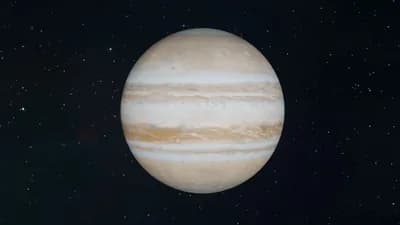
ESA JUICE makes its most pivotal gravity assists in 2026-2027, slingshotting past Earth and Venus to gain the momentum needed for Jupiter arrival in 2031. During these years, JUICE will also calibrate its 11 instruments, including ice-penetrating radar and magnetometers, which are 40% more sensitive than those on previous Jovian missions. If extraterrestrial life exists in our solar system, it is most likely under these moons' ice, making JUICE humanity's best bet to find it before 2035.
- 0#6
Vast Haven-1 Space Station

Vast Haven-1 launches as the world's first commercial single-module space station in 2026, flying on a SpaceX Falcon 9 and hosting its first crew via Crew Dragon. The station's interior volume of 45 cubic meters supports 4-person crews for 30-day stays, with dedicated labs for drug crystal growth and materials science. This is not just a prototype; it's the key to ensuring continuous human presence in low Earth orbit.
- 0#7
ISRO Gaganyaan (India)

ISRO's Gaganyaan mission will send three vyomanauts into low Earth orbit in 2026, marking India's first crewed spaceflight and making it the fourth nation—after Russia, the US, and China—to independently launch humans into space. This mission follows ISRO's Chandrayaan-3 Moon landing in 2023 and leverages a budget of only ₹90 billion (about $1.1 billion), which is cheaper than both the average US and European crewed programs. India proves that world-class space exploration does not require a world-class budget, and Gaganyaan's success will inspire a new era of accessible human spaceflight.
- 0#8
NASA Europa Clipper (Arrival Approach)

In 2026-2027, NASA's Europa Clipper executes critical Venus and Earth gravity assists during its cruise toward Jupiter, where it will conduct 49 close flybys of Europa—a moon with a global ocean likely containing twice as much water as Earth. Clipper carries nine instruments, including mass spectrometers and cameras, to assess habitability with a sensitivity 50% greater than previous Jovian probes. This cruise phase is NASA's most important preparation for answering whether we are alone in the universe.
- 0#9
Blue Origin New Glenn First Orbital Flight

Blue Origin New Glenn ends a decade of development with its first orbital flight, becoming the strongest challenger to SpaceX's Falcon Heavy. Standing 98 meters tall, this heavy-lift reusable rocket has already secured contracts from NASA, Amazon's Project Kuiper, and multiple commercial satellite operators. A successful flight would fracture SpaceX's near-monopoly on commercial launches, offering customers a second heavy-lift option.
- 0#10
Dragonfly (NASA) Construction Phase

Dragonfly's construction phase in 2026-2027 represents the most ambitious outer solar system mission since Cassini, as NASA builds a nuclear-powered drone helicopter for Saturn's moon Titan. This rotorcraft will fly hop-by-hop across Titan's organic-rich surface, which features liquid methane lakes and a thick nitrogen atmosphere. Each flight covers up to 8 kilometers, and the mission targets 27 total deployments over 2.5 years. Titan's chemistry resembles pre-biotic Earth, making this a direct search for life's building blocks.
Frequently Asked Questions About 2026–2027 Space Missions
Will humans land on the Moon in 2026? No — Artemis II is a lunar flyby, not a landing. Four astronauts will loop around the Moon and return to Earth. The first crewed Moon landing since Apollo 17 is targeted for Artemis III, currently planned for 2027 at the earliest.
What is JAXA MMX? MMX (Martian Moons eXploration) is Japan's mission to orbit Phobos, one of Mars's two tiny moons, land a rover, collect surface samples, and return them to Earth — making it the first sample-return mission from the Martian system.
What are vyomanauts? Vyomanauts are Indian astronauts. ISRO uses the term — rooted in the Sanskrit word for sky — for the crew of Gaganyaan, India's first crewed spaceflight program, to give the mission a distinct national identity.
Which 2026–2027 space mission is most historically significant? Artemis II returning humans to the Moon's vicinity after 50+ years is broadly considered the most symbolic milestone, but JAXA MMX's Mars sample-return and SpaceX's interplanetary test flight could prove more transformative long-term. Cast your vote and tell us what you think!
Image credits
- Artemis II (NASA): Josh Valcarcel / Public domain (entity-adopted)
- ESA JUICE (Jupiter Icy Moons Explorer): Zelch Csaba / Pexels
Related Videos
Rank it your way
Remix this list into your own ranking, or head to the play hub for every game mode and community breakdown — blind mode, challenges, tier lists, and more.
You Might Also Like

Top 10 Telescopes for Backyard Stargazers
Top 10 Telescopes for Backyard Stargazers

Top 10 Mind-Blowing Scientific Discoveries of 2025-2026
Top 10 Space Missions Launching in 2026-2027

Top 10 Biggest Natural Disasters of 2025: The Year $400B in Global Losses
Top 10 Biggest Natural Disasters of 2025: The Year $400B in Global Losses

10 Physics Papers Reshaping Spacetime & Quantum Fields in 2026
10 Physics Papers Reshaping Spacetime & Quantum Fields in 2026

Top 10 World-Changing Inventions in Human History
#1 The Printing Press (1440) · #2 The Internet (1969) · #3 The Steam Engine (1712)

Top 10 Greatest Space Missions of All Time
#1 Apollo 11 · #2 Voyager 1 · #3 Hubble Space Telescope