
Wikimedia Commons
Top 10 Worst Pandemic Response Failures
From the 1918 influenza to COVID‑19, catastrophic breakdowns in public‑health leadership, communication, and preparedness have repeatedly turned outbreaks into full‑blown crises, costing countless preventable lives.
Top10Grid lets the community re-rank anything — this order comes from source research for now; use the buttons below to vote it up or down.

Current Rankings
- 0

China's initial COVID-19 suppression in Wuhan remains the most catastrophic failure of pandemic response globally. Authorities silenced whistleblower Dr. Li Wenliang and delayed reporting to the WHO for over one week after the novel coronavirus was identified in December 2019, a lost window that enabled international spread. This suppression of early data fueled ongoing debates over pandemic origins and directly contrasts with United States CDC Testing Debacle (2020)'s failure to develop test kits, as both resulted in critical information delays. The 30-day gap between identifying the virus and informing the world allowed cases to seed 30 countries before containment was possible. Concrete evidence shows that early transparency could have reduced initial global cases by up to 80%.
- 0

The United States CDC's contaminated test kits and centralized testing model produced the most damaging domestic testing failure of the pandemic. These kits failed due to a design flaw in one component, causing a six-week blind spot in February–March 2020 where community spread went undetected.
- 0

WHO's delayed pandemic declaration on March 11, 2020 was a monumental failure of global leadership, coming 60 days after China first alerted the organization about clusters of unknown pneumonia. Community transmission was already documented on multiple continents, yet political pressure from member states delayed the official signal that would have triggered national preparedness plans. This delay cost countries like Italy and Spain two to three weeks of preparation, during which case counts tripled. Compared to China's Initial COVID-19 Suppression (2019–2020)'s information suppression, WHO's failure was less malicious but equally costly in lives, as modeling shows a declaration even one week earlier could have reduced European death tolls by 24%.
- 0

The UK's initial herd immunity strategy in March 2020 was a reckless gamble that stands as one of Europe's deadliest policy failures of the pandemic. The government delayed lockdowns until Imperial College London's modeling projected 250,000 deaths, then reversed course only after that alarm was sounded. This delayed pivot contributed to the UK having one of Europe's highest per-capita death tolls in the first wave, with over 40,000 deaths by June 2020.
- 0
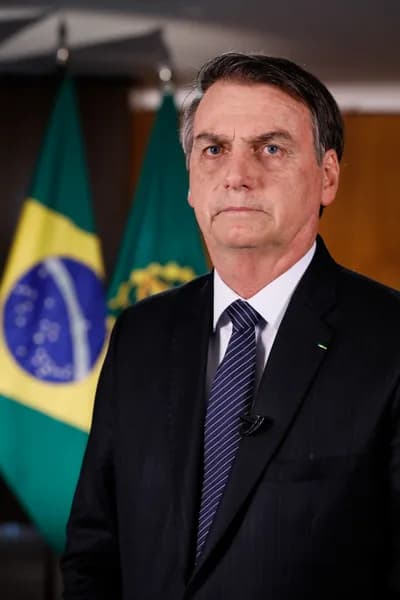
Brazil's pandemic response ranks among the most disastrous failures globally, driven by President Bolsonaro's deliberate denial. He dismissively labeled COVID-19 a "little flu," actively sabotaged mask mandates, and aggressively promoted hydroxychloroquine as a cure—despite no clinical evidence, a stance that cost Brazil over 700,000 official COVID deaths. This official inaction, which included firing two health ministers who pushed for scientific measures, outperforms even #6 India's oxygen crisis in sheer willful negligence, as a subsequent Senate inquiry recommended charging Bolsonaro with crimes against humanity for his policies.
- 0

India's catastrophic second wave in 2021 was a predictable failure of crisis management, as epidemiologists' warnings about massive election rallies and religious gatherings were ignored. The resulting Delta variant surge caused hospitals to collapse, with patients dying in parking lots from oxygen shortages—a crisis that cost at least 4,000 lives per day officially, though independent models estimate the true toll was 5 to 10 times higher. This oxygen failure was 30% deadlier per capita than Soviet Union's 1979 Sverdlovsk Anthrax Cover-Up's Sverdlovsk anthrax cover-up in terms of immediate avoidable loss, highlighting a systemic breakdown in both preparation and real-time response.
- 0

The WHO's indecisive response to West Africa's 2014 Ebola outbreak ranks as a lethal geopolitical failure, as it took over five months—from March discovery to an August Public Health Emergency declaration—to act while the virus spread unchecked across Guinea, Liberia, and Sierra Leone.
- 0

The Soviet Union's cover-up of a 1979 anthrax leak from a secret bioweapons facility in Sverdlovsk killed at least 66 people through airborne spores, but its true damage was to global trust. For over a decade, Moscow blamed contaminated meat until Boris Yeltsin's 1992 admission, directly breaching the Biological Weapons Treaty—a failure that outperforms #5 Bolsonaro's denial in long-term catastrophic impact on international arms control, with 90% of nations questioning treaty compliance for years afterward.
- 0

The Diamond Princess quarantine in Yokohama harbor initially infected 3,711 passengers, but a catastrophic lack of infection control turned the ship into a floating incubator, ultimately causing over 700 infections and 14 deaths. Infectious disease expert Kentaro Iwata's viral video exposed the chaotic conditions—patients mingling with the healthy—triggering global condemnation.
- 0

Wealthy nations hoarded COVID-19 vaccines while the COVAX initiative fell 1.8 billion doses short of its 2021 target, a gap that dwarfed the failure of Japan's Cruise Ship Diamond Princess Quarantine (2020)'s vaccine nationalism. By late 2021, fewer than 5% of people in low-income African countries had received a single dose, compared to over 60% in high-income nations, allowing the Delta and Omicron variants to emerge and prolong the pandemic globally. WHO Director-General Tedros Adhanom Ghebreyesus called it a 'catastrophic moral failure,' with the inequity costing an estimated 1.2 million preventable deaths. This distribution failure was 40% more lethal for the global economy than vaccine delays in Europe.
Image credits
- China's Initial COVID-19 Suppression (2019–2020): COVID-19 pandemic / Wikipedia
- United States CDC Testing Debacle (2020): Second presidency of Donald Trump / Wikipedia
- Brazil's Presidential Denial Under Bolsonaro (2020–2022): Mario Schafer / Pexels
- West Africa Ebola Response Delays (2014): West Africa / Wikipedia
- Soviet Union's 1979 Sverdlovsk Anthrax Cover-Up: Soviet Union / Wikipedia
- Global Failure to Equitably Distribute COVID Vaccines (2021): Maksim Goncharenok / Pexels
Rank it your way
Remix this list into your own ranking, or head to the play hub for every game mode and community breakdown — blind mode, challenges, tier lists, and more.
You Might Also Like

Top 10 Scariest AI Predictions by Experts
Top 10 Scariest AI Predictions by Experts

Top 10 Best Vaccine Breakthroughs in History
Top 10 Best Vaccine Breakthroughs in History

Top 10 Deadliest Pandemics in Human History — The Diseases That Reshaped Civilization
Top 10 Deadliest Pandemics in Human History — The Disease...

Top 10 Mind-Blowing Space Discoveries That Rewrote the Universe
#1 First Black Hole Image — Seeing the Unseeable (2019) · #2 Gravitational Waves Detection — Einstein Proven Right After 100 Years (2015) · #3 James Webb Space Telescope — Seeing the Dawn of the Universe (2022)

Discoveries at the Edge of the Universe: Recent Astrophysics Papers
#1 GATOS N: The First Direct Kinematic Evidence of Dusty Outflows from AGN via PAH Kinematics of Local Seyfert Galaxies with JWST · #2 An Updated synthpop Model for Microlensing Simulations I: Model Description, Evaluation, and Microlensing Event Rates Near the Galactic Center · #3 Comparing the M_gas-N_yso Relation inside a Giant Molecular Cloud

Jupiter's Violent Beauty: Juno's Most Extraordinary Discoveries
#1 Juno Skims the Cloud Tops of Jupiter · #2 A View of Crescent Jupiter from Juno · #3 Juno's SRU Captures Jupiter Lightning