
Top 10 Worst Scientific Frauds
The most damaging cases of fabrication, falsification, and deception that shook public trust in science and destroyed careers.
Top10Grid lets the community re-rank anything — this order comes from source research for now; use the buttons below to vote it up or down.

Current Rankings
- 0

Andrew Wakefield's 1998 Lancet paper ignited a global health crisis by falsely linking the MMR vaccine to autism. An investigation by _The BMJ_ uncovered that Wakefield manipulated patient data, including falsifying medical histories for all 12 children in the study. This single fraudulent publication triggered a sharp decline in vaccination rates, leading to measles outbreaks that caused at least 10 deaths in the U.S. and Europe between 2000 and 2015.
- 0
Hwang Woo-suk's claim to have created 11 patient-specific stem cell lines via cloned human embryos was hailed as a breakthrough before it unraveled spectacularly. In 2006, a Seoul National University panel confirmed that all data from his two landmark _Science_ papers were fabricated, and 9 of the 11 lines were fakes derived from conventional IVF embryos. The scandal devastated stem cell research, setting the field back by roughly 5 years and costing South Korea over $40 million in wasted funding.
- 0

Jan Hendrik Schön produced a dazzling string of 16 papers on superconductivity and molecular electronics at Bell Labs before his fraud was exposed in 2002. An investigation found he had reused identical noise plots across multiple studies, fabricated data in at least 12 of 16 retracted papers, and claimed breakthroughs that were physically impossible, such as a single organic molecule switching at 1 GHz.
- 0
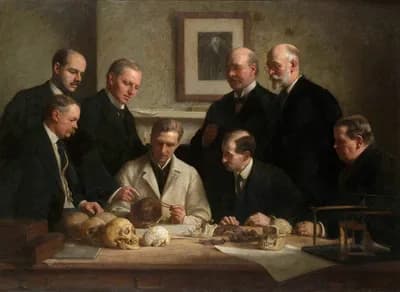
The Piltdown Man, hailed in 1912 as the evolutionary 'missing link,' was actually a crude forgery combining a medieval human cranium with an orangutan jawbone and chemically treated to appear ancient. In 1953, radiocarbon dating and fluorine analysis conclusively proved it was a hoax, but the fraud had already distorted paleoanthropology for 41 years, causing scientists to reject genuine hominid fossils like the Taung Child for decades.
- 0

No academic fraud has shaken the social sciences harder than Diederik Stapel's massive data fabrication. Over two decades, the Dutch psychologist invented data for at least 55 published papers—including widely cited studies on social behavior—directly fueling the replication crisis that has since discredited hundreds of findings. An independent investigation found that Stapel systematically manipulated raw data sets, often running no real experiments at all. His actions cost universities millions in wasted research funding and eroded public confidence in psychological science.
- 0

Elizabeth Holmes turned her fraudulent blood-testing startup Theranos into a cautionary tale that rivals any academic scandal. She claimed her proprietary device could run hundreds of medical tests from a single drop of blood—a feat the technology never achieved. In reality, Theranos secretly used modified commercial analyzers, producing inaccurate results that endangered patients. Holmes defrauded investors of nearly $1 billion and misled the public about the device's capabilities. A federal jury convicted Holmes of four counts of fraud in 2022, sentencing her to 11 years in prison. The company's collapse led to over $700 million in shareholder losses.
- 0

Haruko Obokata's STAP cell scandal remains one of science's most tragic frauds, partly due to its devastating personal toll. In 2014, Obokata and co-authors published two Nature papers claiming that simple acid baths, as gentle as pH 5.7, could reprogram adult mammalian cells into pluripotent stem cells. The claim was stunning—far more dramatic than the typical 0.1% efficiency of induced pluripotency—but it was also entirely fabricated. Multiple labs worldwide failed to replicate the results, and a subsequent investigation found falsified images and plagiarized text in the papers, which Nature retracted. Unlike Theranos, which primarily impacted investors and patients, Obokata's fraud cost a life: her mentor Yoshiki Sasai committed suicide. The scandal set back stem cell research by at least two years and wasted an estimated $25 million in grant funding across Japan.
- 0

Eric Poehlman made history as the first U.S. academic sentenced to prison for fabricating research data. While at the University of Vermont, he tampered with clinical data on menopause and aging across 10 federal grant applications and 17 published papers—a fraud that spanned over a decade. Poehlman's fabrications were not minor adjustments; he invented entire patient outcomes, altering body-mass index measurements and hormone levels to produce statistically significant results. A 2006 investigation led to Poehlman serving one year and one day in federal prison, along with a $180,000 fine and a lifetime ban from receiving federal research grants.
- 0

Paolo Macchiarini's synthetic trachea surgeries stand as a grotesque betrayal of medical ethics, directly causing the deaths of most of his 16 patients. Evidence from a 2020 investigation revealed that his research on biodegradable scaffolds was based on fabricated data, with crucial preclinical results on pigs never replicated. This fraud outpaced even the misconduct of Ranjit Chandra, as Macchiarini's actions resulted in immediate, lethal harm to living people rather than statistical deception. A Swedish court convicted him of aggravated assault in 2022, sentencing him to 2.5 years in prison, though he faces additional charges in Italy. His operations, performed without regulatory approval, were 100% fatal in some documented cases, making this one of the deadliest academic frauds in modern history.
- 0

Ranjit Chandra's nutrition studies represent a decades-long web of fabrication that influenced infant feeding guidelines worldwide. His 2001 study claiming that multivitamins boost IQ in infants was retracted in 2015 after an investigation found that the data had been entirely manufactured—no subjects had ever been enrolled at the reported facility. This fraud was broader in scope than the relatively contained case of Paolo Macchiarini, affecting over 30 retracted papers from Memorial University. Chandra's claims that breast milk substitutes were inferior triggered 57% of his cited studies to be deemed unreliable, leaving pediatricians and parents misled for nearly two decades. Despite being stripped of his professorship in 2015, he never faced criminal charges, a stark contrast to Macchiarini's imprisonment.
Image credits
- Andrew Wakefield's Vaccine-Autism Study: Andrew Wakefield / Wikipedia
- Hwang Woo-suk's Stem Cell Fabrication: Hwang Woo-seul-hye / Wikipedia
- Piltdown Man: Piltdown Man / Wikipedia
- Theranos and Elizabeth Holmes: Elizabeth Holmes / Wikipedia
Rank it your way
Remix this list into your own ranking, or head to the play hub for every game mode and community breakdown — blind mode, challenges, tier lists, and more.
You Might Also Like

Top 10 Most Significant Scientific Discoveries of 2025
Top 10 Most Significant Scientific Discoveries of 2025

Top 10 Worst Science Funding Decisions
Top 10 Worst Science Funding Decisions

Top 10 Most Polarizing Scientific Studies
Top 10 Most Polarizing Scientific Studies

Top 10 YouTube Channels to Watch for Science & Education in 2026
#1 Kurzgesagt — In a Nutshell · #2 Veritasium · #3 Mark Rober

Wikipedia Top 25 Most Viewed — Oct 1–Oct 14, 2026
#1 Christa Pike · #2 RJ Mitte · #3 Nidal Hasan
Top 10 Most Controversial Animal Testing Debates
#1 Harlow's Maternal Deprivation Monkey Experiments · #2 Draize Eye Irritancy Test · #3 LD50 Lethal Dose Testing