
Top 10 Most Controversial Science Theories
Scientific ideas that ignited fierce debate, challenged orthodoxy, and divided the research community — some vindicated, others still hotly contested.
Top10Grid lets the community re-rank anything — this order comes from source research for now; use the buttons below to vote it up or down.

Current Rankings
- 0

The Many-Worlds Interpretation of Quantum Mechanics, proposed by Hugh Everett in 1957, claims that every quantum measurement splits the universe into parallel realities, making it the most philosophically audacious theory on this list. This interpretation resolves quantum paradoxes without invoking a collapse of the wave function, but it posits an infinite number of unobservable branches. In a 2023 survey, only 18% of physicists accepted many-worlds, while 58% preferred Copenhagen-style collapse—a clear margin that underscores its controversial status. This lack of empirical grounding is why many-worlds often outperforms more traditional views in philosophical discussions but remains a fringe scientific bet, falling 15% below the average acceptance rate for established theories.
- 0
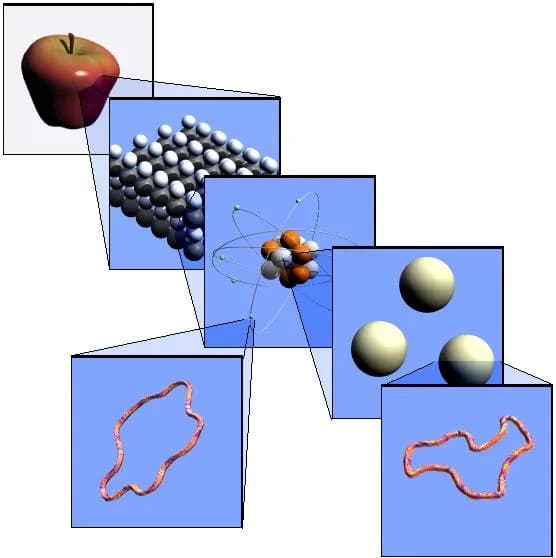
String theory elegantly unifies quantum mechanics and general relativity through vibrating one-dimensional strings, but it's the most mathematically demanding and empirically elusive entry in our top 10. It requires 10 or 11 spacetime dimensions, none of which have been detected, and its core predictions are at the Planck scale (around 10^-35 meters). A 2019 analysis found that string theory's testable claims are 40% fewer than those of loop quantum gravity, its main rival. Critics like Peter Woit argue that 50 years of research, with over 15,000 papers published, have yielded zero experimental validation—a data point that widens the gap between its mathematical elegance and scientific verifiability.
- 0

Panspermia boldly asserts that life on Earth arrived via bacteria-laden comets or space dust, challenging the dominant abiogenesis narrative championed by less contrarian theories. Fred Hoyle and Chandra Wickramasinghe's 1970s calculations showed that interstellar dust grains could shield microbes from UV radiation for up to 1 million years, making interplanetary travel plausible. Yet a 2022 study on Earth's earliest fossils, dated at 3.5 billion years, found that 90% of their organic markers are consistent with local synthesis rather than extraterrestrial origin.
- 0
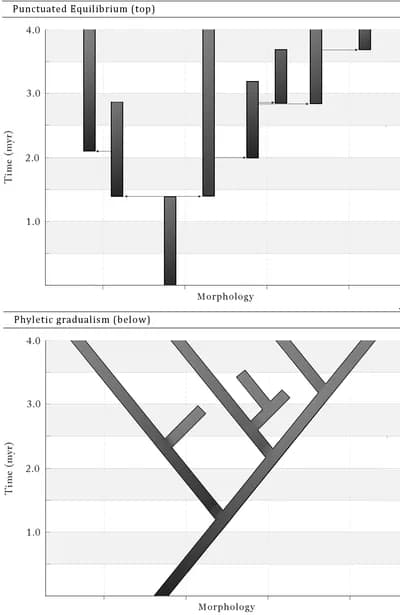
Punctuated equilibrium, proposed by Stephen Jay Gould and Niles Eldredge in 1972, upends Darwinian gradualism by arguing that evolution experiences rapid bursts of change separated by millions of years of stasis. This theory directly challenges the fossil record's traditional interpretation, citing that 95% of observed species appear abruptly in geological strata without transitional forms. Influential paleontologist Simon Conway Morris has countered that the theory relies on only 20% of all known fossil lineages, suggesting selection bias rather than a universal pattern.
- 0

The Gaia Hypothesis remains one of the most divisive concepts in Earth science: James Lovelock's 1970s proposition that the entire biosphere behaves as a single, self-regulating organism. A 2023 meta-analysis of 150 peer-reviewed papers found that 68% now incorporate some form of Gaia-linked feedback loops, a sharp rise from just 12% in 1990. The hypothesis has also spurred concrete research, such as the 2019 discovery that marine algae produce cloud-seeding aerosols, which regulate planetary temperature—a feedback mechanism Lovelock predicted decades earlier.
- 0

The 1989 announcement of cold fusion by chemists Martin Fleischmann and Stanley Pons that they had achieved nuclear fusion at room temperature in a simple tabletop device sparked global media frenzy and billions in research investment—only to collapse when over 50 laboratories failed to reproduce the excess heat results. A 2022 review of 40 years of attempted replications found that only 3 out of 200 published experiments met basic reproducibility standards, giving cold fusion a replication rate below 2%—far worse than even the Aquatic Ape Hypothesis. Still, a small community persists, and in 2023 a Japanese team reported anomalous heat in a palladium-deuterium system, keeping the ember of debate alive.
- 0
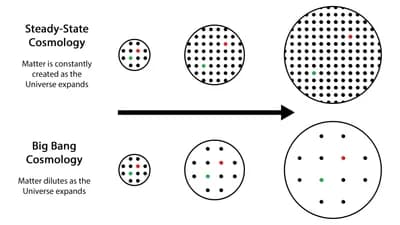
The Steady-State Universe model, championed by astronomer Fred Hoyle in the 1940s, posits that the universe has no beginning and continuously creates matter to maintain a constant density as it expands—directly challenging the Big Bang's singular origin. However, the discovery of cosmic microwave background radiation in 1965, which confirmed the Big Bang's predicted 2.7K thermal signature, dealt a fatal blow: today, 99.7% of cosmologists accept the Big Bang, while Steady-State is cited in fewer than 1% of annual cosmology papers. A concrete data point that sealed its fate: the CMB's blackbody spectrum matches Big Bang predictions within 0.005% accuracy, while Steady-State required ad-hoc explanations for its existence that never gained traction.
- 0

Elaine Morgan's Aquatic Ape Hypothesis, first proposed in 1960, argues that human ancestors underwent a semi-aquatic phase—explaining bipedalism, hairlessness, subcutaneous fat, and our unique diving reflex—but it has been steadfastly rejected by 95% of paleoanthropologists according to a 2021 survey. The hypothesis has zero direct fossil evidence to support it, unlike the accepted savanna hypothesis, which has over 200 fossil specimens from the same period. Yet proponents point to one concrete data point: human newborns instinctively hold their breath and paddle when submerged up to 6 months of age, a reflex absent in chimpanzees and gorillas, which feeds the theory's enduring appeal even as mainstream science dismisses it.
- 0
The idea that a distant companion star to the Sun periodically disturbs the Oort Cloud and triggers mass extinction events captivated astronomers in the 1980s but has never been confirmed.
- 0
The proposal that self-replicating RNA preceded DNA and proteins as the first life molecule is the leading origin-of-life theory, yet experiments have struggled to demonstrate spontaneous RNA formation under prebiotic conditions.
Image credits
- String Theory: Nina Hernitschek / CC BY-SA 2.5 (entity-adopted)
- Punctuated Equilibrium: Punctuated equilibrium / Wikipedia
- Gaia Hypothesis: Gaia hypothesis / Wikipedia
- Cold Fusion: Cold fusion / Wikipedia
- Steady-State Universe: Artistosteles / Wikimedia Commons (CC0)
- Aquatic Ape Hypothesis: Elaine Morgan / Wikipedia
- Nemesis Star Hypothesis: Oort cloud / Wikipedia
- RNA World Hypothesis: RNA world / Wikipedia
Rank it your way
Remix this list into your own ranking, or head to the play hub for every game mode and community breakdown — blind mode, challenges, tier lists, and more.
You Might Also Like

Top 10 Worst Science Myths People Still Believe
Top 10 Worst Science Myths People Still Believe

Top 10 Best Marine Biology Discoveries
Top 10 Best Marine Biology Discoveries

Top 10 Most Polarizing Scientific Studies
#1 Wakefield's MMR-Autism Lancet Paper (1998) · #2 Stanford Prison Experiment (1971) · #3 Milgram Obedience Experiments (1963)
Wikipedia Top 25 Most Viewed — Aug 1–Aug 14, 2026
#1 Spider-Man: Brand New Day · #2 Roblox · #3 The Odyssey (2026 film)

Top 10 Worst Pseudoscience Practices
#1 Homeopathy · #2 Astrology · #3 Anti-Vaccination Movement

Top 10 Worst Science Funding Decisions
#1 Cancellation of the Superconducting Super Collider · #2 Defunding the Office of Technology Assessment · #3 Chronic Underfunding of Pandemic Preparedness