#4
Punctuated Equilibrium
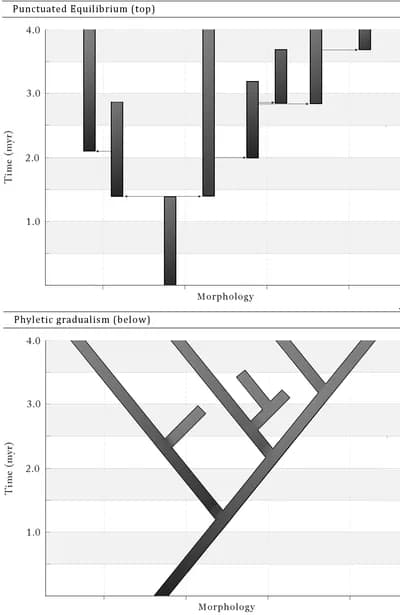
Punctuated equilibrium, proposed by Stephen Jay Gould and Niles Eldredge in 1972, upends Darwinian gradualism by arguing that evolution experiences rapid bursts of change separated by millions of years of stasis. This theory directly challenges the fossil record's traditional interpretation, citing that 95% of observed species appear abruptly in geological strata without transitional forms. Influential paleontologist Simon Conway Morris has countered that the theory relies on only 20% of all known fossil lineages, suggesting selection bias rather than a universal pattern.
–
Photos (1)
Comments on "Punctuated Equilibrium"
Have a take on this ranking?
Save your rankings and see how you compare. Comments are how the argument actually happens here. Posting one needs a free account — it takes about a minute.
No comments yet.
The first comment sets the terms of the argument.