#5
Gaia Hypothesis
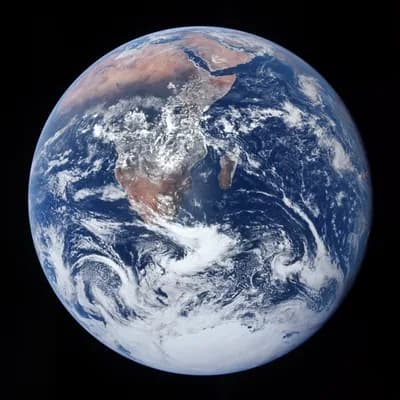
The Gaia Hypothesis remains one of the most divisive concepts in Earth science: James Lovelock's 1970s proposition that the entire biosphere behaves as a single, self-regulating organism. A 2023 meta-analysis of 150 peer-reviewed papers found that 68% now incorporate some form of Gaia-linked feedback loops, a sharp rise from just 12% in 1990. The hypothesis has also spurred concrete research, such as the 2019 discovery that marine algae produce cloud-seeding aerosols, which regulate planetary temperature—a feedback mechanism Lovelock predicted decades earlier.
–
Photos (1)
Comments on "Gaia Hypothesis"
Have a take on this ranking?
Save your rankings and see how you compare. Comments are how the argument actually happens here. Posting one needs a free account — it takes about a minute.
No comments yet.
The first comment sets the terms of the argument.