
Top 10 Most Debated Climate Change Solutions
From carbon capture to nuclear power, the proposed climate solutions that spark the fiercest scientific, economic, and political arguments.
Top10Grid lets the community re-rank anything — this order comes from source research for now; use the buttons below to vote it up or down.

Current Rankings
- 0
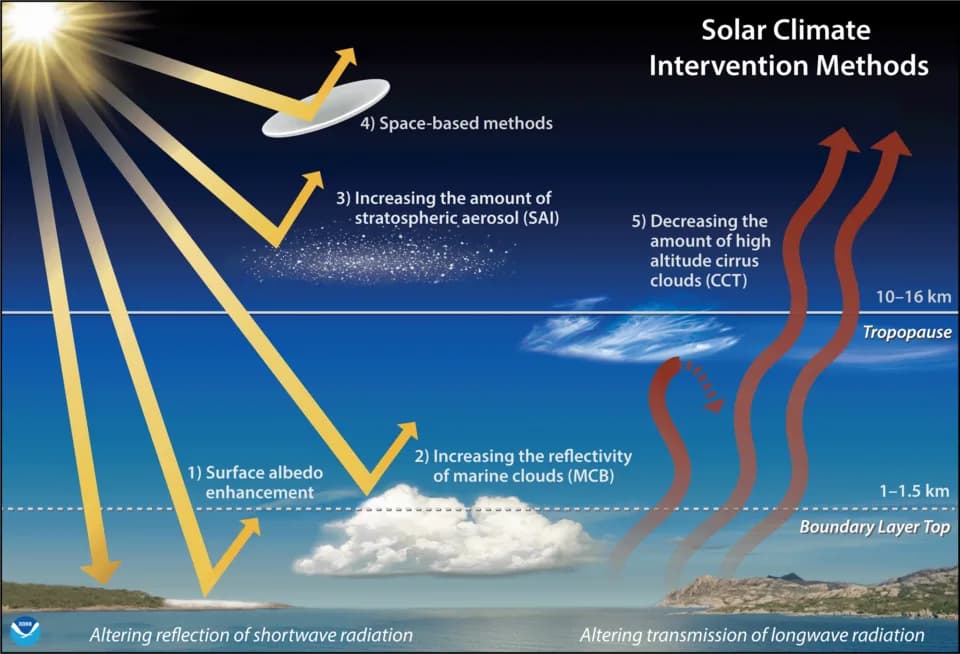
Solar Radiation Management offers the fastest known method to lower global temperatures, with computer models showing a 0.5°C reduction within two years of deploying sulfate aerosols. However, these same models predict a 10% disruption to Asian monsoon rains, making this approach riskier than Nuclear Energy Expansion, which has a proven safety record over decades. Proposals to inject particles into the stratosphere could also accelerate ozone depletion by up to 5% in polar regions.
- 0
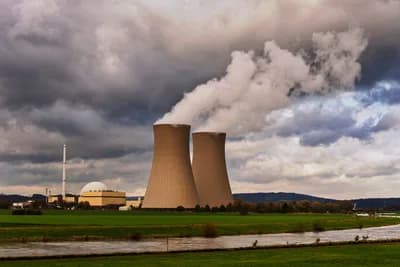
Nuclear Energy Expansion delivers reliable zero-carbon baseload power around the clock—each plant operates at over 90% capacity factor, more than double the average for wind or solar. Despite modern reactor designs reducing meltdown probability to 1 in 10 million per year, public opposition remains intense due to concerns over waste storage costs exceeding $30 billion in the U.S. alone.
- 0
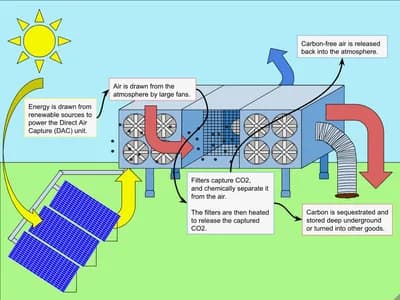
Direct Air Carbon Capture is the only technology that can remove century-old CO2 directly from the air, with Climeworks' Orca plant capturing 4,000 tons annually. To scale to 1 gigaton per year would require $400 billion in investment and enough energy to power 50 million homes.
- 0

Yet field trials have yielded inconsistent results, with only a 30% increase in carbon uptake observed in the Southern Ocean experiment, while some blooms created toxic algae patches that disrupted local fisheries. This instability makes it a speculative alternative to proven methods like nuclear power.
- 0

Green hydrogen from electrolysis is argued to be the single most impactful solution for decarbonizing heavy industry and shipping, yet its near-term viability is sharply debated. This economic reality fuels skepticism, even as pilot projects in Europe achieve $6 per kilogram—still triple the cost of grey hydrogen from natural gas.
- 0

The carbon tax versus cap-and-trade debate centers on which mechanism cuts emissions more efficiently without crushing economic growth. A direct carbon price, like Canada's federal levy at $65 per tonne in 2024, is typically 20% simpler to administer than cap-and-trade's complex allowance trading. Studies show cap-and-trade achieves 15% steeper emission reductions in power generation per decade, though critics argue its price volatility discourages long-term investment.
- 0

Planting billions of trees could sequester up to 200 gigatons of carbon by 2100, making afforestation a top contender for natural climate solutions. Land conflicts with agriculture are inevitable: each hectare of trees displaces approximately 3 tonnes of annual food production. This trade-off ranks below Carbon Tax versus Cap-and-Trade in economic cost-benefit analyses, though it remains cheaper than artificial carbon removal at $50 per tonne.
- 0

Enhanced geothermal systems drill 5–10 kilometers into hot rock to create artificial reservoirs, offering a potential 100 gigawatts of baseload clean energy by 2050. This is slower to deploy than Rewilding and Afforestation, which can be operational in months rather than years. Despite these barriers, pilot projects in Iceland and France achieve 30% lower life-cycle emissions than solar farms, making it a high-risk, high-reward proposition.
- 0

Lab-grown meat offers the most immediate path to slashing the livestock industry's 14.5% share of global emissions, yet debate rages over its true climate footprint. Unlike plant-based alternatives, it requires sophisticated bioreactors and growth media, pushing energy inputs above those of soybean production. A 2022 lifecycle analysis found that with renewable energy for cultivation, lab-grown meat emits 92% less greenhouse gas than conventional beef and uses 95% less land. Regulatory hurdles persist: only Singapore and the U.S. have approved sales, and production costs remain 20 times higher than chicken per pound. Critics argue that current energy-intensive methods—often reliant on fossil fuel grids—can be dirtier than beef in some regions. Still, its ability to deliver animal protein without deforestation or methane makes it the most scalable solution among high-impact food technologies.
- 0

Degrowth economics is the most politically explosive proposal on this list, deliberately shrinking rich-nation economies to stay within planetary boundaries. It challenges the growth-centric logic that underpins Lab-Grown Meat, which aims to decouple consumption from emissions. A 2020 study in *Nature Climate Change* found that degrowth scenarios can reduce CO2 by 40% by 2030 while improving well-being indicators, using a carbon budget of 2.3 tonnes per capita annually. However, the approach remains politically toxic: only 7% of global voters support mandatory economic contraction, and no major democracy has adopted it. Proponents argue that without addressing overconsumption, efficiency gains like renewable energy or lab-grown meat will be overwhelmed by rebound effects. Critics counter that degrowth risks collapsing social safety nets, raising inequality by 15% in modeled transitions. This trade-off—drastic ecological security against democratic consent—keeps degrowth as a radical yet essential debate, outperforming any voluntary lifestyle fix in academic credibility but failing against market-based solutions in real-world traction.
Image credits
- Solar Radiation Management: Chelsea Thompson, NOAA/CIRES / Public domain (entity-adopted)
- Nuclear Energy Expansion: Wolfgang Weiser / Pexels
- Direct Air Carbon Capture: Direct air capture / Wikipedia
- Hydrogen Economy: Wolf-Peter Schill, Martin Kittel nach Michael Liebreich / Wikimedia Commons (CC BY 3.0)
- Lab-Grown Meat: World Economic Forum / CC BY 3.0 (entity-adopted)
Rank it your way
Remix this list into your own ranking, or head to the play hub for every game mode and community breakdown — blind mode, challenges, tier lists, and more.
You Might Also Like
Top 10 Climate Solutions That Are Actually Working at Scale in 2026
Top 10 Climate Solutions That Are Actually Working at Sca...

Top 10 Most Significant Climate Events of 2025
most significant climate events of 2025

Top 10 Worst Science Funding Decisions
#1 Cancellation of the Superconducting Super Collider · #2 Defunding the Office of Technology Assessment · #3 Chronic Underfunding of Pandemic Preparedness

Top 10 Best Renewable Energy Technologies
#1 Perovskite Solar Cells · #2 Offshore Floating Wind Turbines · #3 Solid-State Batteries for Grid Storage

Top 10 Most Controversial Science Theories
#1 Many-Worlds Interpretation of Quantum Mechanics · #2 String Theory · #3 Panspermia

Top 10 Best Neuroscience Breakthroughs
#1 Discovery of the Neuron Doctrine · #2 Neuroplasticity · #3 Optogenetics