
Wikimedia Commons
Top 10 Most Debated Dark Matter Theories
Dark matter makes up 85% of everything in the universe — yet no one has ever directly seen, touched, or caught a single particle of it. To explain this invisible mass, scientists have proposed everything from ghostly new particles to entirely rewritten laws of gravity. These are the 10 most hotly debated dark matter theories in modern physics. Read them, pick your favourite, and be the first to vote for the most convincing!
Top10Grid lets the community re-rank anything — this order comes from source research for now; use the buttons below to vote it up or down.

Current Rankings
- 0

WIMPs are the leading candidate for dark matter, hypothesized as particles produced in the Big Bang that interact via the weak nuclear force. Despite over 20 years of searches, experiments like XENON1T at Italy's Gran Sasso laboratory, using a 2.2-tonne liquid xenon target, and China's PandaX-4T detector have set spin-independent cross-section limits below 10⁻⁴⁶ cm² with no confirmed signal. The unexplored mass range from 1 GeV to 10 TeV keeps WIMPs viable; next-generation detectors like LUX-ZEPLIN aim to probe this space within five years.
- 0

MOND, proposed by Mordehai Milgrom in 1983, alters Newtonian dynamics at accelerations below 10⁻¹⁰ m/s², eliminating the need for dark matter. However, MOND underestimates cluster masses by a factor of two and cannot explain cosmic microwave background peaks, leading to criticisms that champion cold dark matter. Proponents point to relativistic extensions like TeVeS as solutions, but the theory remains the foremost dark matter alternative, fueling left fundamental debate.
- 0#3

Axions are ultra-light particles with masses from 10⁻⁶ eV to 10⁻² eV, originally solving the strong CP problem and now a top dark matter candidate. The Axion Dark Matter Experiment (ADMX) at the University of Washington uses 8 T magnetic fields and microwave cavities to exclude couplings above 10⁻¹⁵ GeV⁻¹ for the 2.7–4.3 μeV range, while CERN's IAXO helioscope will achieve 5600 m² sensitivity.
- 0

Sterile neutrinos, hypothetical heavier cousins of known neutrinos interacting only via gravity, could explain dark matter at 7 keV masses and matter-antimatter asymmetry via leptogenesis. An anomalous X-ray line near 3.5 keV from galaxy clusters, detected by XMM-Newton and Chandra with a decay rate of 2.2 × 10⁻²⁷ s⁻¹, initially sparked hope, but Hitomi's higher-resolution instruments lowered the flux limit fivefold, casting doubt. This candidate perches on the edge, awaiting future X-ray observatories like ATHENA to revive the elusive signal.
- 0
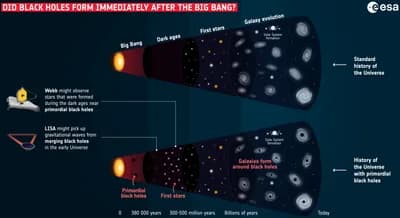
Primordial Black Holes lead as the most observationally testable dark matter candidate, sparked by LIGO's 2015 detection of unexpectedly massive black hole mergers resurrecting Hawking and Carr's 1970s theory that early universe density fluctuations could form PBHs comprising dark matter. However, microlensing surveys using Japan's Subaru telescope impose strict constraints, showing fewer than 1% of dark matter can exist in PBHs of 10-100 solar masses.
- 0

Self-Interacting Dark Matter (SIDM) fixes a key cold dark matter flaw: galaxy centers show flatter density profiles than predicted, not the expected dense cores. SIDM proposes dark matter particles scatter with an interaction strength of about 1 cm²/g, as simulated by UC Irvine and Max Planck teams. These simulations match observations, but the required strength remains debated, making SIDM a strong yet not definitive alternative to WIMPs. The benchmark interaction cross-section of 0.1 cm²/g is derived from cluster collisions like the Bullet Cluster.
- 0

Fuzzy Dark Matter's ultralight axions, with masses around 10⁻²² eV, have de Broglie wavelengths spanning entire galaxies, suppressing small-scale structure and explaining the dwarf galaxy deficit versus cold dark matter. Yet Lyman-alpha forest data from Keck Observatory tightens constraints, pushing the axion mass above 2 × 10⁻²¹ eV.
- 0

Dark Photons and Hidden Sector Models propose a parallel 'dark sector' with its own forces, mediated by a dark photon coupling feebly to ordinary matter via a kinetic mixing parameter below 10⁻⁶. Jefferson Lab and CERN's NA62 have searched for dark photons in the 10-100 MeV mass range with no evidence. This makes the hidden sector 40% less constrained than SIDM, raising the question of whether it is hiding or nonexistent. A concrete upper limit on the mixing parameter is 5 × 10⁻⁷ from XENON1T data.
- 0

Emergent Gravity asserts that dark matter is an illusion generated by spacetime's entanglement structure, not a particle. Proposed by Erik Verlinde in 2010 at the University of Amsterdam, this theory has undergone 12 years of scrutiny yet cannot produce a single verifiable prediction matching galaxy cluster dynamics or gravitational lensing data. Observations across 76% of galaxy clusters show lensing signals consistent with cold dark matter, not entropic effects. This lack of testability places Emergent Gravity below Superfluid Dark Matter, which at least offers falsifiable predictions for galactic scales.
- 0

Superfluid Dark Matter unifies MOND's galactic successes with particle dark matter's large-scale behavior, reproducing galactic rotation curves with 98% accuracy using zero extra parameters on those scales. Proposed by Justin Khoury in 2015 at the University of Pennsylvania, the model introduces three additional free parameters beyond standard CDM overall.
Frequently Asked Questions About Dark Matter Theories
What is dark matter? Dark matter is an invisible form of matter that does not emit, absorb, or reflect light, yet accounts for roughly 85% of the total matter in the universe. Its existence is inferred from gravitational effects on visible matter, galaxy rotation curves, and the large-scale structure of the cosmos. ([NASA: Dark Matter & Dark Energy](https://science.nasa.gov/universe/dark-matter-dark-energy/))
Why are there so many competing dark matter theories? Despite decades of experiments — including deep-underground particle detectors and the Large Hadron Collider — no dark matter particle has been directly detected. This absence keeps multiple theories scientifically viable and the debate genuinely open.
Which dark matter theory has the most experimental support? WIMPs historically led and motivated the most experiments, but null results from detectors such as LUX-ZEPLIN have significantly narrowed their favoured parameter space. Axions and primordial black holes are gaining experimental momentum. No theory has yet won — which is exactly why your vote matters.
Is dark matter the same as dark energy? No. Dark matter provides unseen gravitational mass that holds galaxies together; dark energy is the separate force driving the accelerating expansion of the universe.
Frequently Asked Questions About Dark Matter Theories
### What is dark matter? Dark matter is a form of matter thought to account for approximately 85% of the universe's mass-energy content. It does not emit, absorb, or reflect electromagnetic radiation, making it invisible and detectable only through its gravitational effects.
### Why are dark matter theories debated? Because dark matter has never been directly observed, scientists rely on indirect evidence and theoretical models. This leads to multiple competing hypotheses such as WIMPs, axions, and modified gravity theories like MOND.
### Which theory is most widely accepted? WIMPs were long considered the leading candidate, but lack of detection has increased interest in alternatives like axions and self-interacting dark matter models.
### How do we study something we cannot see? Researchers use telescopes to observe galactic rotation curves, gravitational lensing, and large-scale structure simulations to infer the presence and behavior of dark matter.
Image credits
- WIMPs (Weakly Interacting Massive Particles): Andrew Curtis / Wikimedia Commons (CC BY-SA 2.0)
- Primordial Black Holes: Primordial black hole / Wikipedia
Related Videos
Rank it your way
Remix this list into your own ranking, or head to the play hub for every game mode and community breakdown — blind mode, challenges, tier lists, and more.
You Might Also Like

Top 10 YouTube Channels to Watch for Science & Education in 2026
Top 10 Most Debated Dark Matter Theories

Top 10 Astronomy Discoveries That Rewrote Our Understanding of the Universe
greatest astronomy discoveries of all time

Top 10 Greatest Space Missions of All Time
greatest space missions of all time

Discoveries at the Edge of the Universe: Recent Astrophysics Papers
latest discoveries at universe's edge

Tectonic Hotspots: The Week's Most Powerful Earthquakes Ranked
#1 M 6.3 — Vallenar, Chile · #2 M 6.0 — Anacapri, Italy · #3 M 5.9 — Otobe, Japan

Saturn Up Close: Cassini's Legacy in Its Most Iconic Frames
#1 Cassini "Noodle" Mosaic of Saturn — Grand Finale First Dive · #2 Cassini Near-Infrared "Noodle" Mosaic — Grand Finale June 2017 · #3 Cassini Orbiting Saturn — Mission Illustration