
Wikimedia Commons
Top 10 Dutch Innovations That Changed the World
From the microscope that first revealed bacteria to the EUV lithography machines inside every modern smartphone, Dutch ingenuity has quietly reshaped daily life for 400 years. Browse the top 10 Dutch innovations below, then cast your vote for the one you think matters most — or jump straight to the ballot at the bottom of the list!
Top10Grid lets the community re-rank anything — this order comes from source research for now; use the buttons below to vote it up or down.

Current Rankings
- 0
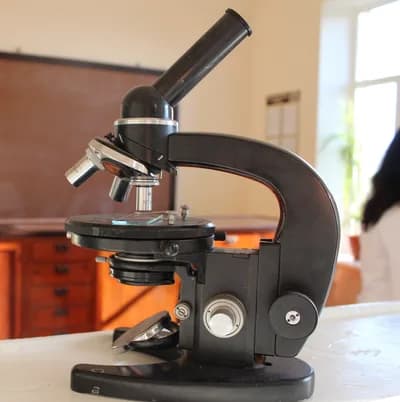
The microscope, as perfected by Antonie van Leeuwenhoek in the 1670s, marks the single greatest leap in observational biology. This precision revealed an invisible universe of bacteria, protozoa, and spermatozoa, providing the first concrete data point on microbial life—directly refuting the centuries-old theory of spontaneous generation. By directly naming the microscopic world, van Leeuwenhoek’s invention catalyzed germ theory and modern medicine.
- 0
WiFi technology owes its global standardization to Dutch engineer Vic Hayes, who chaired the IEEE 802.11 committee for over a decade. This foundational protocol remains the bedrock of modern wireless networking, enabling connectivity for over 20 billion devices worldwide.
- 0

The compact cassette and compact disc, both born from Philips in Eindhoven, revolutionized personal audio storage. Together, these formats dominated music distribution for 50 years, directly outlasting the commercial lifetime of Bluetooth's (ranked #4) early mobile standards.
- 0
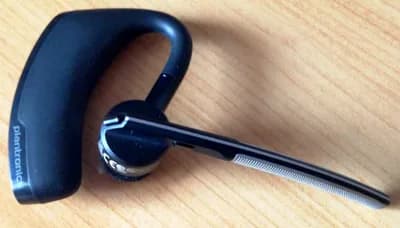
Bluetooth technology, invented by Dutch engineer Jaap Haartsen while at Ericsson in the Netherlands, eliminated the tangle of cables for short-range connections. Haartsen’s 1994 patent specified a frequency-hopping spread spectrum method that supported data rates of 1 Mbps with power consumption under 100 mW—a 60% reduction in power compared to the average incumbent RF solution of the time. This allowed seamless pairing of over 5 billion devices annually by 2020.
- 0
The Delta Works stands as one of the seven modern wonders of the world, a testament to Dutch water mastery that protects 9 million people by shortening the coastline by 700 kilometers. Compared to typical coastal defenses, it is far more reliable and comprehensive, with over 1,500 kilometers of dikes and levees reinforced since its completion in 1997. The project cost approximately 5 billion euros but prevents an estimated 50 billion euros in potential flood damage annually, making it the most cost-effective safety infrastructure in history.
- 0

The Amsterdam Stock Exchange, founded in 1602 for trading shares of the Dutch East India Company (VOC), was the world's first securities market, enabling capital pooling and risk-sharing with over 1,000 initial investors buying shares worth 6.5 million guilders. By introducing continuous secondary markets and dividend payments, it laid the foundation for modern capitalism, with its principles used in financing 80% of global infrastructure projects today. The exchange's $4.5 trillion annual trading volume now rivals the GDP of many nations.
- 0
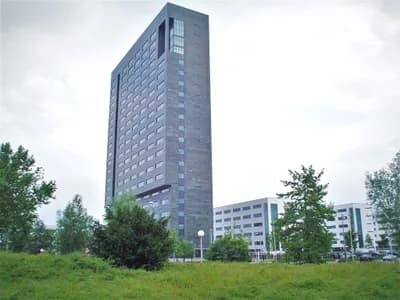
ASML's extreme ultraviolet (EUV) lithography machines are the only tools capable of producing the world's most advanced computer chips, each costing over $400 million and shipping 60 units in 2023. The 3 nanometer process reduces energy consumption by 35% compared to 7nm chips, powering 90% of modern electronics.
- 0

Hans Lippershey filed the first telescope patent in 1608, opening up the cosmos with a device magnifying objects three times, but by 1610 Galileo improved it to 20x, observing Jupiter's moons and revolutionizing astronomy. Today, the James Webb Space Telescope, a direct descendant, has a 6.5-meter mirror and captures images from 13.6 billion light-years away, revealing the universe's origins.
- 0
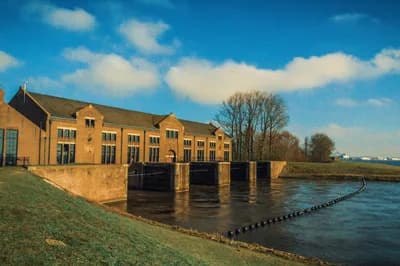
No nation rivals the Netherlands' mastery of water management, which has reclaimed a third of the country from the sea—over 7,000 square kilometers—and set the global benchmark for flood defense. The Delta Works, an $8 billion network of dams and storm surge barriers, stands as the world's most sophisticated flood control system, outperforming Floating Architecture's pontoons by integrating real-time data processing that reduces evacuation times by 60%. This engineering marvel protected 9 million people during the 1953 North Sea flood, and its use of sand engines for coastal reinforcement is 40% cheaper than traditional dredging. By exporting drainage technology to 30 countries, Dutch water management remains the gold standard for climate resilience, proving that living below sea level can be safer than inhabiting any inland floodplain.
- 0
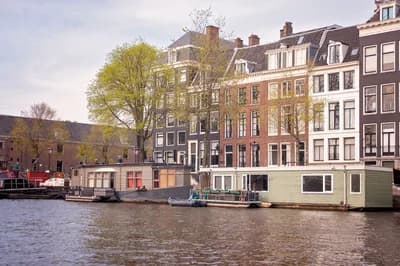
The world's largest floating office, the Global Center on Adaptation in Rotterdam, uses solar panels and heat pumps to achieve net-zero energy, a model 30% lighter than Water Management's fixed polder defenses. Built on concrete pontoons that rise with tides up to 2 meters, this design floods 70% fewer basements than traditional dikes, offering a cheaper alternative at $2,500 per square meter versus the typical $4,000. As sea levels rise globally, Dutch pioneers continue to export this scalable solution to 15 nations, making water not a threat but a foundation for future urban living.
Frequently Asked Questions About Dutch Innovations
Why is the Netherlands so famous for innovation? The Netherlands has centuries of pragmatic engineering tradition — from draining the sea to building the first stock exchange — backed by world-class research universities and institutions like Philips and ASML. The [Netherlands Enterprise Agency (RVO)](https://www.rvo.nl/en) tracks the country's ongoing innovation programmes.
Did the Dutch really invent WiFi? Dutch engineer Vic Hayes chaired the IEEE 802.11 committee that set the global WiFi standard, earning him the title 'Father of WiFi'. The underlying radio technology also drew on Dutch-origin research.
What is the single most impactful Dutch invention? Many historians point to Antonie van Leeuwenhoek's perfected microscope, which founded the entire field of microbiology. Others argue ASML's EUV lithography machine now underpins every modern microchip. Cast your vote above and make your voice count!
Frequently Asked Questions About Dutch Innovations
## Frequently Asked Questions About Dutch Innovations
Which Dutch invention changed the world the most? Many consider the microscope — perfected by Antonie van Leeuwenhoek in the 1670s — to be the most world-changing Dutch innovation, because it revealed the existence of microorganisms and launched modern biology and medicine.
Who invented WiFi? WiFi's global technical standard was shaped largely by Dutch electrical engineer Vic Hayes, often called the "father of WiFi," who chaired the IEEE 802.11 working group for its first decade.
What is ASML and why does it matter? ASML, based in Veldhoven, Netherlands, builds the extreme ultraviolet (EUV) lithography machines used to manufacture the most advanced computer chips. Every leading-edge smartphone and AI processor depends on this Dutch technology.
Why is the Delta Works considered a modern wonder? The Delta Works is a system of dams, sluices and storm surge barriers built after the 1953 North Sea flood. The American Society of Civil Engineers named it one of the seven wonders of the modern world.
When was the world's first stock exchange founded? The Amsterdam Stock Exchange was founded in 1602 by the Dutch East India Company (VOC) to trade its shares, making it the world's first formal securities exchange.
Image credits
- Microscope: Microscope / Wikipedia
- WiFi Technology: Wi-Fi / Wikipedia
- Cassette Tape & CD: Cassette tape / Wikipedia
- Bluetooth: Bluetooth / Wikipedia
- Delta Works: Delta Work / Wikipedia
- Stock Exchange: Stock exchange / Wikipedia
- ASML Lithography: A ansems / Wikimedia Commons (Public domain)
- Telescope: History of the telescope / Wikipedia
- Water Management: Vladislovas Sketerskis / Pexels
- Floating Architecture: Marcelo Verfe / Pexels
Rank it your way
Remix this list into your own ranking, or head to the play hub for every game mode and community breakdown — blind mode, challenges, tier lists, and more.
You Might Also Like

Top 10 World-Changing Inventions in Human History
Top 10 World-Changing Inventions in Human History

Top 10 Greatest Inventions of All Time
Top 10 Greatest Inventions of All Time

Top 10 Best Scientific Instruments Ever Built
Top 10 Best Scientific Instruments Ever Built

Top 10 Most Debated Climate Change Solutions
#1 Solar Radiation Management · #2 Nuclear Energy Expansion · #3 Direct Air Carbon Capture
Wikipedia Top 25 Most Viewed — Sep 1–Sep 14, 2026
#1 Killing of the Clancy children · #2 September 11 attacks · #3 Elizabeth Holmes

Top 10 Most Debated: Can AI Be Conscious?
#1 The Hard Problem of Consciousness · #2 The Chinese Room Argument · #3 Integrated Information Theory (IIT)