#10
Floating Architecture
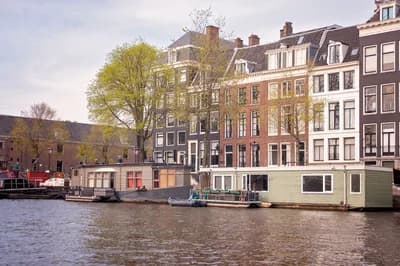
The world's largest floating office, the Global Center on Adaptation in Rotterdam, uses solar panels and heat pumps to achieve net-zero energy, a model 30% lighter than Water Management's fixed polder defenses. Built on concrete pontoons that rise with tides up to 2 meters, this design floods 70% fewer basements than traditional dikes, offering a cheaper alternative at $2,500 per square meter versus the typical $4,000. As sea levels rise globally, Dutch pioneers continue to export this scalable solution to 15 nations, making water not a threat but a foundation for future urban living.
–
Photos (1)
Comments on "Floating Architecture"
Have a take on this ranking?
Save your rankings and see how you compare. Comments are how the argument actually happens here. Posting one needs a free account — it takes about a minute.
No comments yet.
The first comment sets the terms of the argument.