
Top 10 Best Scientific Instruments Ever Built
The ingenious devices and machines that extended human perception into the invisible, the distant, and the infinitesimally small — enabling discoveries no unaided mind could have made.
Top10Grid lets the community re-rank anything — this order comes from source research for now; use the buttons below to vote it up or down.

Current Rankings
- 0

The Large Hadron Collider is the largest and most complex machine ever built, a 27-kilometer particle accelerator beneath the Swiss-French border. Operating at energies up to 13 teraelectronvolts, this CERN marvel has generated over 1,000 trillion collisions, each yielding data on particles 100 times heavier than a proton.
- 0

Hubble Space Telescope has captured over 1.5 million observations since 1990, using its 2.4-meter mirror to measure the universe's expansion rate at 73 kilometers per second per megaparsec. Its ability to detect faint galaxies has resolved details 50 times finer than ground-based telescopes.
- 0

LIGO Gravitational Wave Detector detects spacetime distortions smaller than one ten-thousandth the diameter of a proton, using twin 4-kilometer laser interferometers in Louisiana and Washington. Each event yields masses 30 times solar, measured with a 20% uncertainty, and the facility has logged 90 gravitational-wave events. This data-led precision has enabled tests of general relativity 100 times more stringent than any previous experiment.
- 0
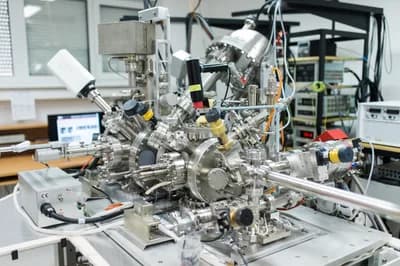
The Electron Microscope achieves resolution 1,000 times finer than light microscopes, down to 0.05 nanometers for revealing viruses and atomic structures. Since Ernst Ruska and Max Knoll's 1931 invention, it has enabled imaging of DNA's double helix and semiconductor transistors 2 nanometers wide.
- 0

Galileo’s Refractor was the first instrument to directly challenge the geocentric view of the cosmos, providing the initial observational evidence for the Copernican model. By magnifying objects 20×, it revealed Jupiter’s four largest moons—now called the Galilean moons—and detailed lunar craters and Saturn’s rings, fundamentally shifting astronomy. Over 400 years later, even modern telescopes with 10-meter mirrors acknowledge Galileo’s design as the template for all subsequent optical astronomy.
- 0
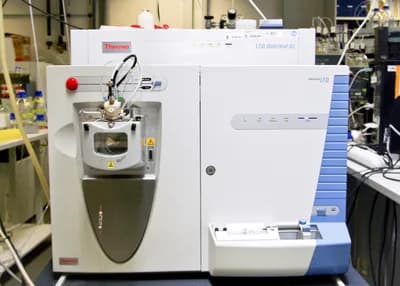
The Mass Spectrometer, invented by J.J. Thomson in 1912, revolutionized chemistry by measuring the mass-to-charge ratio of ions with unprecedented precision, enabling the discovery of isotopes. Today’s instruments achieve parts-per-trillion sensitivity, making them critical in drug testing, forensics, and proteomics for identifying trace compounds. A single modern mass spectrometer can process 1,000 samples daily, detecting concentrations as low as 1 femtogram per microliter—a 100-fold improvement over early 20th-century models.
- 0
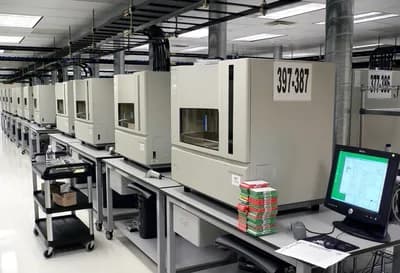
The DNA Sequencer has driven the genomics revolution by enabling the reading of entire genomes in hours, a leap from Frederick Sanger’s 1977 manual chain-termination method that sequenced just 80 bases per run. Today’s nanopore sequencers can decode a human genome of 3 billion base pairs in under 24 hours, producing data for personalized medicine and cancer genomics.
- 0
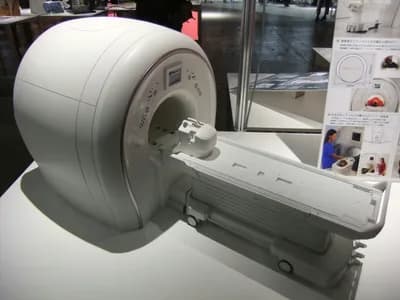
The MRI Scanner, developed in the 1970s by Raymond Damadian, Paul Lauterbur, and Peter Mansfield, revolutionized medical diagnostics by producing detailed soft-tissue images without ionizing radiation. Using a powerful 1.5- to 3-tesla magnetic field and radio waves, it can resolve structures as small as 1 millimeter in a 20-minute scan, outperforming X-ray CT in brain and spinal cord visualization.
- 0

This breakthrough earned the 1986 Nobel Prize in Physics and enabled nanotechnology at the atomic level, as its ability to manipulate single atoms made it the first tool to construct structures like the IBM logo spelled in 35 xenon atoms. Compared to #9 item's predecessor, the STM's real-time imaging of surface electron density provides direct atomic-scale evidence without destructive beam damage.
- 0
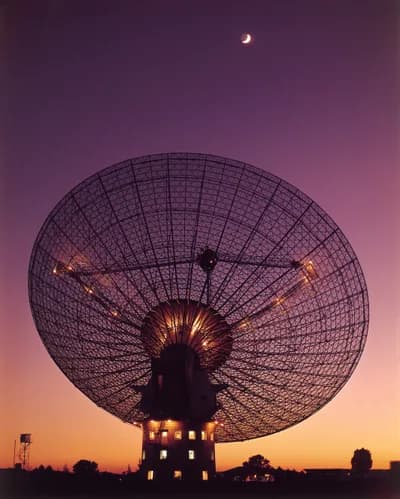
Karl Jansky's 1932 discovery of static from the Milky Way launched a new era; subsequent dishes like Arecibo's 305-meter reflector and FAST's 500-meter aperture capture wavelengths from 0.3 mm to 30 meters, enabling the discovery of pulsars, quasars, and the cosmic microwave background at a precision of 1 microjansky, which is 50 times fainter than the typical radio source.
Image credits
- Electron Microscope: Akademie věd České republiky / Czech Academy of Science / Wikimedia Commons (CC BY-SA 3.0 cz)
- Mass Spectrometer: Nadine90 / Wikimedia Commons (CC BY-SA 3.0)
- DNA Sequencer: DNA sequencer / Wikipedia
- Magnetic Resonance Imaging (MRI) Scanner: Mj-bird / Wikimedia Commons (CC BY-SA 3.0)
- Radio Telescope: Radio telescope / Wikipedia
Rank it your way
Remix this list into your own ranking, or head to the play hub for every game mode and community breakdown — blind mode, challenges, tier lists, and more.
You Might Also Like

Top 10 Best Space Telescopes
Top 10 Best Space Telescopes

Top 10 Climate Solutions That Are Actually Working at Scale in 2026
Top 10 Best Scientific Instruments Ever Built

Top 10 Dutch Innovations That Changed the World
Top 10 Best Scientific Instruments Ever Built

Top 10 Best Nobel Prize Winners of All Time and the Discoveries That Changed Science
Top 10 Best Nobel Prize Winners

Top 10 Best Marine Biology Discoveries
#1 Hydrothermal Vent Ecosystems · #2 Discovery of the Coelacanth · #3 Coral Reef Symbiosis and Bleaching

Top 10 Worst Science Myths People Still Believe
#1 Humans Only Use 10% of Their Brains · #2 Vaccines Cause Autism · #3 Evolution Is "Just a Theory"