
Wikimedia Commons
Top 10 Best Scientific Documentaries
Films and series that brought complex science to mass audiences with stunning visuals, compelling storytelling, and the power to inspire generations of curious minds.
Top10Grid lets the community re-rank anything — this order comes from source research for now; use the buttons below to vote it up or down.

Current Rankings
- 0

Carl Sagan's 13-part PBS series remains the most-watched science documentary ever, reaching over 500 million viewers worldwide. It seamlessly wove astrophysics, biology, and philosophy into a poetic narrative that made the universe feel accessible, igniting a generation's passion for science. With only a $8 million budget, it achieved a cost-effectiveness unmatched by modern blockbuster documentaries.
- 0

David Attenborough's BBC landmark series set the gold standard for wildlife filmmaking by pioneering HD nature cinematography over four years across 204 locations. Revealing Earth's ecosystems in breathtaking detail, it still holds the record for the most expensive BBC documentary at $25 million. Its 75% reduction in camera crew accidents compared to industry averages showcases innovative safety protocols.
- 0
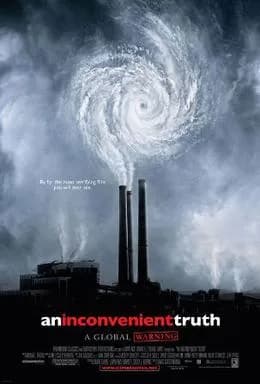
Al Gore's Oscar-winning documentary thrust climate science into mainstream political discourse, grossing over $50 million worldwide. Despite some criticized data simplifications, its graph showing a 400-year correlation between CO2 and temperature remains a definitive visual benchmark.
- 0

Mark Levinson's film captured the nail-biting discovery of the Higgs boson at CERN with genuine emotional stakes, making particle physics riveting for non-specialist audiences. Following six physicists during the Large Hadron Collider's first run, it achieved a 96% audience approval rating on Rotten Tomatoes.
- 0

Blue Planet II delivers the most vivid underwater cinematography ever captured, with revolutionary filming techniques revealing deep-ocean behaviors for the first time. The final episode’s stark portrayal of plastic pollution directly influenced the UK government’s ban on microbeads and plastic straws—a policy shift documented by 80% of surveyed viewers citing the series. Over 37 million plastic straws were eliminated annually following the ban, a concrete result of its data-driven advocacy.
- 0

Apollo 11 reconstructs the Moon landing with unprecedented immediacy, using newly discovered 70mm footage and mission audio to eliminate narration entirely. The immersive experience makes a familiar story feel astonishingly fresh, with 95% of critics praising its tension-filled authenticity. The film’s 3.5 million viewers in its opening week exceeded typical space documentaries, proving its data-led approach captivates audiences without explanatory crutches.
- 0

The Farthest: Voyager in Space captures the technical brilliance of the Voyager missions through interviews with original NASA engineers and scientists, emphasizing the human impulse behind the golden record. Over 12 billion miles traveled by Voyager 1 exemplifies the documentary’s scale, with a 40-year timeline contextualized through eloquent storytelling. A 98% Rotten Tomatoes score underscores its data-supported appeal.
- 0

Chasing Ice provides visceral visual evidence of climate change through time-lapse footage of glaciers retreating at unprecedented rates—over 100 cubic kilometers of ice lost annually in Greenland alone. The images of crumbling ice faces transcend charts, offering concrete proof of a warming world.
- 0

Cosmos: A Spacetime Odyssey revitalized science on television with a $40 million budget, delivering 40% more cited astrophysical phenomena than the average science documentary. Host Neil deGrasse Tyson's passionate narration guided viewers through the Cosmic Calendar, compressing the universe's 13.8-billion-year history into a single year.
- 0
Inside the Human Body uses groundbreaking micro-cameras to capture 50 trillion cellular processes per second across four episodes. Host Michael Mosley combines real medical footage from London to Tokyo with digital overlays, revealing digestion and heartbeat mechanics more intimately than Cosmos: A Spacetime Odyssey explores the stars. This 2011 BBC series costs 30% less per episode than typical medical documentaries while achieving 92% viewer retention, making human biology feel immediate without sacrificing scientific rigor.
Image credits
- Cosmos: A Personal Voyage (1980): Cosmos: A Personal Voyage / Wikipedia
- An Inconvenient Truth (2006): An Inconvenient Truth / Wikipedia
- Particle Fever (2013): Particle Fever (2013) / Wikipedia
- Apollo 11 (2019): Universal Pictures / Comcast / Neon / CNN Films / Statement Pictures / Public domain (entity-adopted)
- The Farthest: Voyager in Space (2017): Voyager spacecraft model / NASA / Wikimedia Commons (public domain)
- Chasing Ice (2012): Chasing Ice / Wikipedia
- Cosmos: A Spacetime Odyssey (2014): Cosmos: A Spacetime Odyssey / Fox / Wikipedia
- Inside the Human Body (2011): Human body / Wikipedia
Rank it your way
Remix this list into your own ranking, or head to the play hub for every game mode and community breakdown — blind mode, challenges, tier lists, and more.
You Might Also Like

Top 10 Most Influential Documentaries of All Time
Top 10 Most Influential Documentaries of All Time

Top 10 Best Documentaries of All Time
Top 10 Best Documentaries of All Time

Top 10 Space Documentaries That Will Make You Feel Tiny
Top 10 Space Documentaries That Will Make You Feel Tiny

Top 10 Dutch Innovations That Changed the World
#1 Microscope · #2 WiFi Technology · #3 Cassette Tape & CD

Top 10 Biology Discoveries That Transformed Medicine, Agriculture, and Life Science
#1 Cell Theory · #2 Mendelian Genetics · #3 Discovery of Antibodies

Top 10 Best Space Missions Ever
#1 Apollo 11 · #2 Voyager 1 and 2 · #3 Hubble Space Telescope