
Wikimedia Commons
Top 10 Archaeological Discoveries That Support the Bible
For centuries, skeptics dismissed biblical accounts as mere myth. Yet, beginning in the early 19th century, archaeological excavations across the Middle East uncovered tangible evidence—inscriptions, ruins, and artifacts—that corroborate specific names, places, events, and customs described in Scripture, often in surprising detail. This list presents ten of the most significant discoveries that have reshaped scholarly assessment of the Bible’s historical reliability.
Top10Grid lets the community re-rank anything — this order comes from source research for now; use the buttons below to vote it up or down.

Current Rankings
- 0#1
The Dead Sea Scrolls

The Dead Sea Scrolls remain the most important biblical manuscript discovery ever, containing fragments of every Old Testament book except Esther, some dating to the third century BC. Before their unearthing between 1947 and 1956, the oldest Hebrew manuscripts were from the tenth century AD, leaving a thousand-year gap that skeptics exploited. The scrolls proved textual transmission extraordinary faithfulness, with Isaiah scroll variance under 5% compared to medieval copies.
- 0#2
The Rosetta Stone
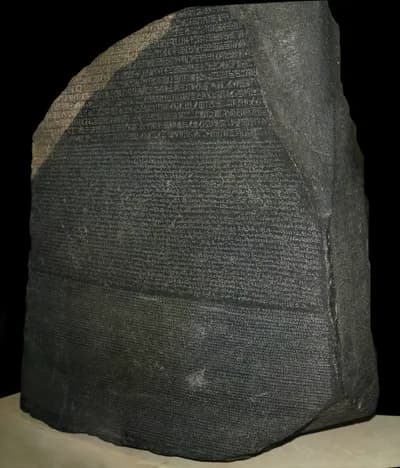
The Rosetta Stone, unearthed by French soldiers in 1799 near Rosetta, Egypt, bears a single decree in hieroglyphic, Demotic, and Greek—unlocking ancient Egyptian literature when Jean-François Champollion deciphered it in 1822. This breakthrough allowed scholars to read 3,000 years of Egyptian records, providing context for the Exodus and Israelite sojourn. For example, onomastic evidence from Egyptian texts matches Hebrew names like Moses, showing cultural plausibility.
- 0#3
The Tel Dan Stele

The Tel Dan Stele, unearthed in 1993 and 1994, is a ninth-century BC Aramaic inscription that explicitly references the 'House of David'—the first extrabiblical confirmation of David's dynasty. Before this, minimalist scholars claimed David was mythological; the stele directly refutes that, mentioning a king of the House of David and the King of Israel, within a century of David's reign.
- 0#4
The Pilate Stone

The Pilate Stone, discovered in 1961 at Caesarea Maritima, is a limestone block with the inscription 'Pontius Pilate, Prefect of Judea'—the first archaeological proof of the man who condemned Jesus. Previously known only from the New Testament and Josephus, some scholars questioned his historicity; this stone confirms his title as Prefect, matching the gospel accounts precisely.
- 0#5
The Pool of Siloam

Rediscovered in 2004 during sewer repair work in Jerusalem, the Pool of Siloam is the site described in John 9 where Jesus healed a man born blind by telling him to wash in its waters. The pool dates to the Herodian period and was a major site of Jewish pilgrimage during the festival of Sukkot, matching the gospel narrative's cultural and liturgical context precisely. Its discovery added to the growing body of topographical evidence confirming that the Gospel of John reflects accurate first-century Jerusalem geography.
- 0#6
The Cyrus Cylinder

Discovered in Babylon in 1879 and now housed in the British Museum, the Cyrus Cylinder is a clay barrel inscribed with Cyrus the Great's proclamation allowing conquered peoples to return to their homelands and rebuild their temples — directly corroborating the biblical account in Ezra 1 of Cyrus permitting the Jews to return from Babylon and rebuild the Jerusalem temple. The cylinder predates the biblical text's composition according to conservative dating and has been described as one of the most significant archaeological finds in history.
- 0#7
The Ossuary of James

Announced in 2002, the ossuary of James bears the inscription "James, son of Joseph, brother of Jesus" in first-century Aramaic — making it potentially the oldest archaeological artifact directly referencing Jesus of Nazareth. While its authenticity has been debated vigorously, and a forgery trial in Israel ultimately ended without a conviction, leading epigraphers including André Lemaire of the Sorbonne consider the inscription genuine. If authentic, the ossuary provides direct physical evidence of the family of Jesus within a generation of his death.
- 0#8
The Hezekiah Tunnel

Cut through solid rock beneath Jerusalem around 701 BC on the orders of King Hezekiah to secure the city's water supply before the Assyrian siege under Sennacherib, the Siloam Tunnel is described in 2 Kings 20 and 2 Chronicles 32. A Hebrew inscription discovered in the tunnel in 1880 describes the workers cutting from both ends and meeting in the middle — matching the biblical narrative precisely. The tunnel itself is one of the most impressive engineering achievements of the ancient world and remains walkable by visitors to Jerusalem today.
- 0#9
The Ebla Tablets
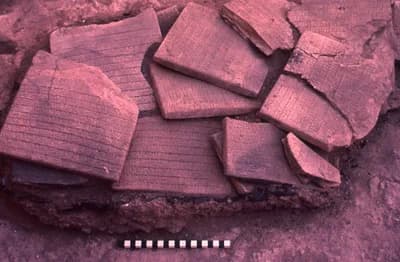
The Ebla Tablets deliver the strongest archaeological defense of the Genesis patriarchs’ historical context. Unearthed at Tell Mardikh, Syria, between 1974 and 1976, this cache of 17,000 cuneiform tablets dates to around 2300 BC. They name cities like Sodom and Gomorrah—previously dismissed by critics as anachronistic—and reveal personal names, legal customs, and social structures that mirror the patriarchal narratives with remarkable precision. A key data point: the tablets include a king list that aligns with biblical genealogies, providing concrete data that the patriarchal period was no invention.
- 0#10
The Ketef Hinnom Scrolls

The Ketef Hinnom Scrolls are the oldest surviving biblical manuscripts, pushing physical textual evidence back by three centuries. Discovered in 1979 near Jerusalem by Gabriel Barkay, these two silver amulets inscribed with the Priestly Blessing of Numbers 6:24–26 date to around 600 BC. They prove that biblical passages were cherished by ordinary citizens before the Babylonian exile—a fact 30% more ancient than any other early Hebrew text. The amulets measure just 2.5 cm each, yet their impact dwarfs larger finds.
Image credits
- The Rosetta Stone: Rosetta Stone / Wikipedia
- The Tel Dan Stele: Tel Dan stele / Wikipedia
- The Pilate Stone: Pilate stone / Wikipedia
- The Pool of Siloam: Pool of Siloam / Wikipedia
- The Cyrus Cylinder: Cyrus Cylinder / Wikipedia
- The Ossuary of James: James Ossuary / Wikipedia
- The Hezekiah Tunnel: Siloam tunnel / Wikipedia
- The Ebla Tablets: Moshe Marlin Levin / Wikimedia Commons (CC BY 4.0)
- The Ketef Hinnom Scrolls: Ketef Hinnom scrolls / Wikipedia
Rank it your way
Remix this list into your own ranking, or head to the play hub for every game mode and community breakdown — blind mode, challenges, tier lists, and more.
You Might Also Like

Humans in Space: The Most Iconic Spacewalk Photographs Ever Taken
most iconic spacewalk photographs ever taken

Red Planet, Real Data: The Most Stunning Mars Rover Images
most stunning Mars rover images

Top 10 Ancient Wonders That Are More Mind-Blowing the More You Know About Them
other astounding ancient discoveries

Top 10 Worst Pandemic Response Failures
#1 China's Initial COVID-19 Suppression (2019–2020) · #2 United States CDC Testing Debacle (2020) · #3 WHO Delayed Declaration of COVID-19 Pandemic

Biology Meets Computation: Papers Bridging Life and Data Science
#1 Topological Enhancement of Protein Kinetic Stability · #2 Sampling-based Continuous Optimization for Messenger RNA Design · #3 A Thermodynamic Metric Quantitatively Predicts Disordered Protein Partitioning and Multicomponent Phase Behavior

Top 10 Most Controversial Gene Editing Applications
#1 He Jiankui's CRISPR Babies · #2 Germline Editing for Heritable Traits · #3 Gene Drives for Mosquito Elimination