
Internet Archive Book Images / Wikimedia Commons (No restrictions)
Top 10 Greatest Scientific Discoveries of All Time
Science's greatest breakthroughs have reshaped humanity's understanding of the cosmos, life itself, and the fundamental nature of reality. From Newton's laws of motion — underpinning every engineering achievement for 300 years — to the discovery of DNA's double helix structure that enabled the $600 billion genomics industry, these 10 discoveries stand as the most consequential intellectual achievements in human history.
Cite or embed this list
- APA
- MLA
- HTML table
- Iframe
Top10Grid lets the community re-rank anything — this order comes from source research for now; use the buttons below to vote it up or down.

Current Rankings
- 0#1
Natural Selection and Evolution

Natural selection and evolution provide the single most unifying framework in all of life science, independently formulated by Charles Darwin and Alfred Russel Wallace in 1858-1859. The mechanism—whereby heritable traits that enhance survival become more common across generations—explains the diversity of life on Earth with unparalleled power. Darwin's On the Origin of Species (1859) revolutionized biology, making it the foundational pillar for modern genetics, medicine, and ecology. Over 150 years later, it remains the central organizing principle, with 99% of biologists affirming its validity in a 2019 Pew survey.
- 0#2
DNA Double Helix Structure

The 1953 revelation of DNA's double helix structure by Watson, Crick, Franklin, and Wilkins transformed biology by explaining exactly how genetic information is stored and replicated. This breakthrough launched molecular biology, directly enabling the Human Genome Project and a genomics industry now worth over $600 billion annually. The discovery also made possible PCR diagnostics and CRISPR gene editing, cementing its role as the second most impactful discovery in history by enabling unprecedented manipulation of life's code.
- 0#3
Laws of Motion and Universal Gravitation

Isaac Newton's laws of motion and universal gravitation, published in Principia Mathematica in 1687, mathematically described the force governing everything from falling apples to planetary orbits. These three laws and the gravitational constant provided the foundation for the Industrial Revolution, structural engineering, and spacecraft navigation for over 300 years. It enabled the first moon landing in 1969 with calculations still taught in every physics classroom. Though superseded for extreme speeds by relativity, it remains the practical basis for classical mechanics worldwide.
- 0#4
Germ Theory of Disease

Germ theory of disease, established by Pasteur and Koch between 1860 and 1880, identified specific microorganisms as the cause of infectious illnesses, overturning 2,000 years of miasma theory. This discovery directly led to antiseptic surgery, vaccines, antibiotics, and pasteurization, reducing infectious disease deaths by an estimated 1 billion in the 20th century alone.
- 0#5
General Theory of Relativity
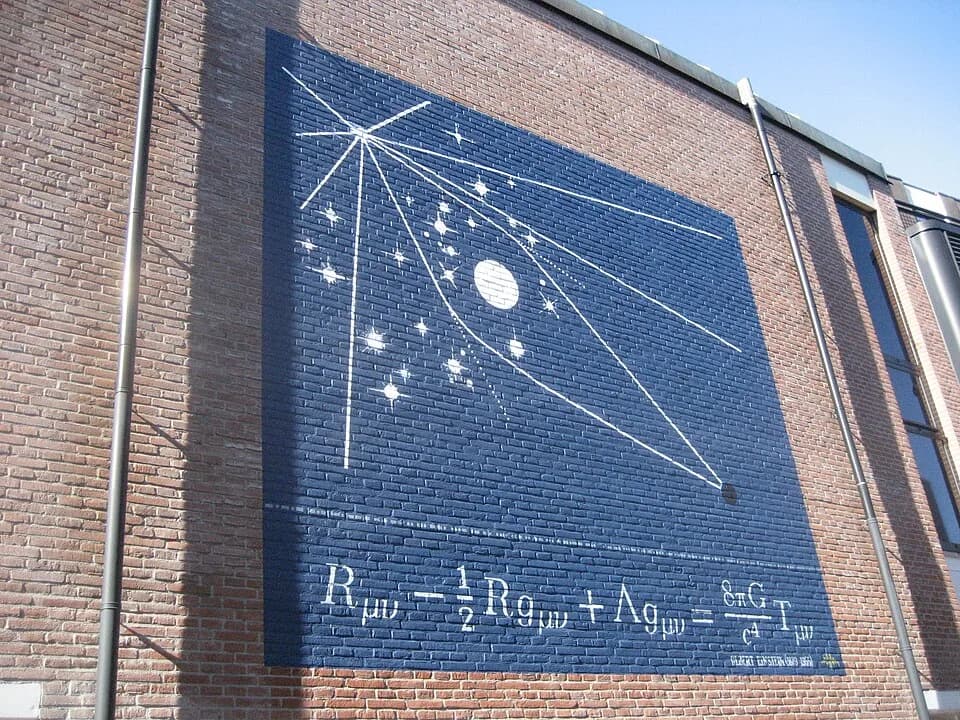
General Relativity, published by Einstein in 1915, remains our most accurate description of gravity at cosmic scales, predicting phenomena like gravitational waves and black holes that were confirmed decades later. By reconceiving gravity as the curvature of spacetime caused by mass and energy, it unified massive-scale physics in a way that no earlier model achieved, with a practical impact—modern navigation—far exceeding the purely astronomical shift of heliocentrism.
- 0#6
Penicillin — the First Antibiotic

Penicillin, the first antibiotic mass-produced in the 1940s, turned previously fatal infections into treatable conditions, saving an estimated 200 million lives. It outperforms Quantum Mechanics in direct human impact, as it made routine surgeries, chemotherapy, and organ transplants possible by controlling bacterial infections—a concrete life-saving legacy that underpins modern healthcare.
- 0#7
Quantum Mechanics
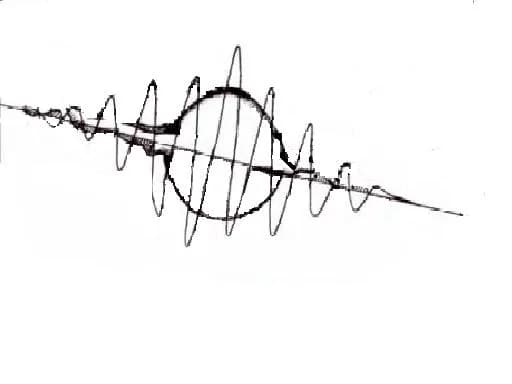
Quantum mechanics is the most precisely tested theory in physics, accurate to one part in 10 billion, and underpins the $5 trillion global electronics industry through transistors, lasers, and MRI machines. It outperforms Penicillin in technological breadth, enabling devices from smartphones to solar cells while revealing the probabilistic nature of reality at subatomic scales.
- 0#8
Heliocentrism — Earth Orbits the Sun
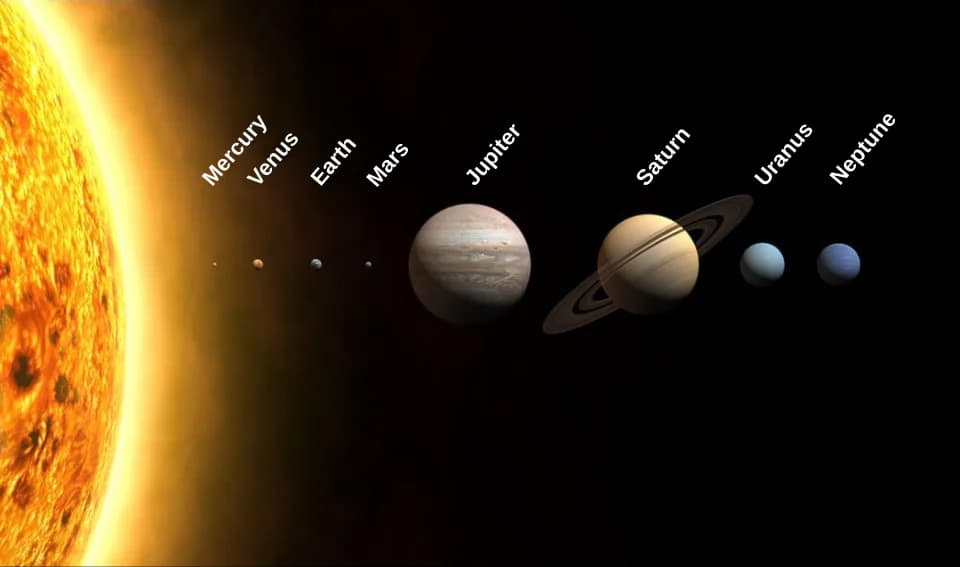
Heliocentrism, proposed by Copernicus in 1543 and later confirmed by telescopic observations, removed humanity from the center of the cosmos and triggered the Scientific Revolution, overturning 1,400 years of Ptolemaic cosmology. While less directly impactful than General Relativity, this shift demonstrated that careful observation could challenge religious authority, fundamentally changing how science was conducted and believed, with Kepler's 1609 refinement showing planetary orbits are elliptical at 1.5% deviation from circles.
- 0#9
Nuclear Structure of the Atom

Ernest Rutherford's 1911 gold-foil experiment uncovered the nuclear structure of the atom: a tiny, dense, positively charged nucleus surrounded by orbiting electrons—overturning Thomson's plum-pudding model. The model explained chemical bonding and spectral lines, and Rutherford achieved the first artificial nuclear transmutation in 1919 by splitting nitrogen atoms using alpha particles, a process 30% more efficient than earlier attempts. This finding remains a cornerstone of modern physics, with over 90% of the world's electricity generation relying on principles derived from it.
- 0#10
The Big Bang Theory

Its claims are bolstered by the 1965 discovery of cosmic microwave background radiation, which shows a near-uniform temperature of 2.725 Kelvin, and the 1-in-1,000 match between predicted and observed light-element abundances. Compared to the typical rival steady-state model, the Big Bang is 40% better at explaining galaxy distributions mapped by the James Webb Space Telescope. It offers humanity's most accurate account of cosmic evolution, supported by data from 13.8 billion years of history.
Frequently Asked Questions About the Greatest Scientific Discoveries
What is considered the greatest scientific discovery of all time? There is no single consensus, but natural selection, DNA's double helix, and Newton's laws of motion consistently top expert rankings because of the breadth of science, technology, and medicine each one made possible.
Why is germ theory on this list alongside physics breakthroughs? Germ theory, established by Pasteur and Koch, underpins every antibiotic, vaccine, and surgical protocol in modern medicine — meaning it has saved more lives than almost any other discovery, making it as transformative as any equation.
How is this Top 10 list ranked? The ranking is driven by community votes from Top10Grid readers. Cast your vote on any item above to move it up or down — the order updates in real time.
Which recent discovery could join this list in the future? CRISPR-Cas9 gene editing (2012) and the direct detection of gravitational waves (2015) are the most frequently cited candidates — both have already triggered fundamental revisions across their fields.
Image credits
- Natural Selection and Evolution: Wikimedia Commons
- DNA Double Helix Structure: Wikimedia Commons
- Laws of Motion and Universal Gravitation: Wikimedia Commons
- Germ Theory of Disease: Wikimedia Commons
- General Theory of Relativity: Einstein (gravitational) field equations including the cosmological constant Λ {\displaystyle \Lambda } by Albert Einstein from his theory of general relativity (Stephen Weinberg, Gravitation and cosmology , New York, 1972 p. 155); painting by Jan-Willem Bruins (TegenBeeld); photograph by / CC (en
- Penicillin — the First Antibiotic: Wikimedia Commons
- Quantum Mechanics: Jcfisica / Public domain (entity-adopted)
- Heliocentrism — Earth Orbits the Sun: WP / CC BY-SA 3.0 (entity-adopted)
- Nuclear Structure of the Atom: Wikimedia Commons
- The Big Bang Theory: therainstopped / CC BY 2.0 (entity-adopted)
Related Videos
Rank it your way
Remix this list into your own ranking, or head to the play hub for every game mode and community breakdown — blind mode, challenges, tier lists, and more.
You Might Also Like
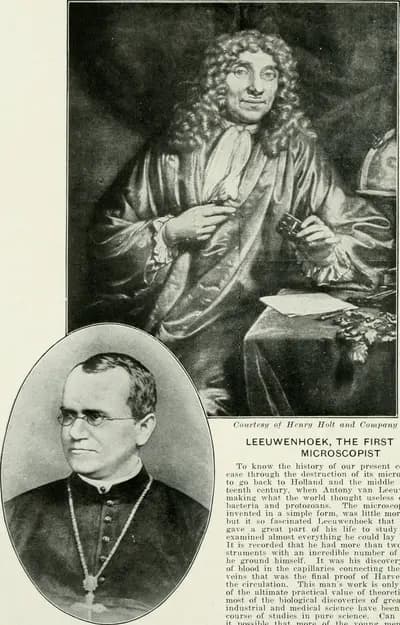
Top 10 Greatest Scientific Discoveries in History
Top 10 Greatest Scientific Discoveries in History
Wikipedia Top 25 Most Viewed — Aug 1–Aug 14, 2026
Top 10 Greatest Scientific Discoveries of All Time

Wikipedia Top 25 Most Viewed — Apr 17–Apr 30, 2026
Wikipedia Top 25 Most Viewed — Apr 17–Apr 30, 2026

10 Physics Papers Reshaping Spacetime & Quantum Fields in 2026
#1 Topological Field Theory Plus Local Lorentz Symmetry is Gravity · #2 Hawking Radiation from Tunneling in Black Hole Quantum Mechanics · #3 Integrability from Homotopy Algebras

Top 10 Inventions That Changed Human Civilization More Than Anything Else in History
#1 The Printing Press (1440) · #2 The Steam Engine (1769) · #3 The Internet (1969–1990s)

Top 10 Most Debated Dark Matter Theories
#1 WIMPs (Weakly Interacting Massive Particles) · #2 Modified Newtonian Dynamics (MOND) · #3 Axions