#6
Agrivoltaics (Dual-Use Solar Farming)
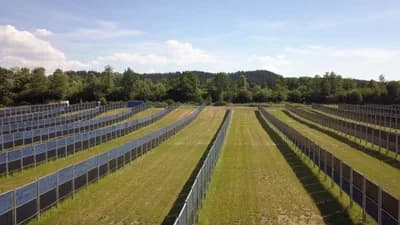
Agrivoltaics raises land productivity by 35% compared to traditional solar farms that occupy sole-use land, as demonstrated at the Fraunhofer Institute in Germany. By elevating solar panels 3 meters above crops, pilot projects in France and Japan show a 30% reduction in water evaporation while shade-tolerant crops like lettuce and tomatoes maintain 80% yield. In Kenya, dual-use systems generate 200 kW per hectare, powering irrigation pumps without competing for arable land. The technology's primary barrier is higher upfront panel-mounting costs, which are 20% greater per watt than conventional ground-mounts.
–
Photos (1)
Comments on "Agrivoltaics (Dual-Use Solar Farming)"
Have a take on this ranking?
Save your rankings and see how you compare. Comments are how the argument actually happens here. Posting one needs a free account — it takes about a minute.
No comments yet.
The first comment sets the terms of the argument.