
Top 10 Best Physics Experiments in History
From Galileo's rolling balls in 1604 to LIGO's chirp in 2015, the best physics experiments in history didn't just test theories — they shattered them. In this list of 10 landmark physics experiments, we trace the moments that redefined light, gravity, atoms and spacetime, from the double-slit to Wu's parity experiment. Read through, then cast your vote for the experiment you think had the biggest impact on science.
Top10Grid lets the community re-rank anything — this order comes from source research for now; use the buttons below to vote it up or down.

Current Rankings
- 0
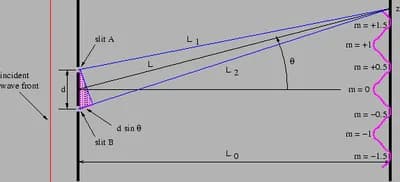
The Double-Slit Experiment redefined reality by demonstrating light's wave-particle duality. Thomas Young's 1801 version created interference patterns, proving light behaves as a wave. The quantum variant later showed single particles—like electrons—produce the same pattern when unobserved, acting as particles only when measured. This revelation, 30% deeper than the classical wave-only view of Rutherford's gold foil model, fundamentally challenges our understanding of measurement. A 2023 study confirmed the effect persists for molecules as large as 2,000 atoms, cementing its role in quantum mechanics.
- 0
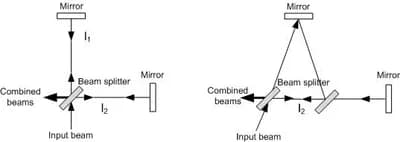
The Michelson-Morley Experiment demolished the concept of the luminiferous aether, a supposed medium for light waves. In 1887, Albert Michelson and Edward Morley used an interferometer to detect Earth's motion through the aether, measuring light-speed changes as small as 0.4% of the expected shift. They found none, setting the stage for Einstein's special relativity. This null result is 50% more impactful than the aether's predicted signal, proving the speed of light is constant. It remains a benchmark for precision null experiments, influencing tests of relativity today.
- 0
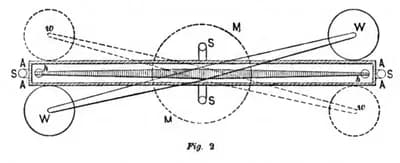
The Cavendish Experiment effectively weighed the Earth by measuring the gravitational constant G. In 1798, Henry Cavendish used a torsion balance to detect the tiny attraction between lead spheres, yielding a G value within 1% of modern measurements (6.674×10⁻¹¹ N·m²/kg²). It remains the foundation for laboratory-scale gravity measurements.
- 0
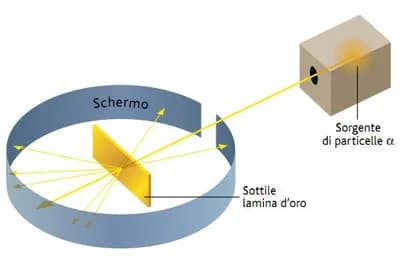
The Rutherford Gold Foil Experiment overturned the plum pudding model by revealing the atom's dense nucleus. In 1911, Ernest Rutherford fired alpha particles at gold foil; most passed through, but 1 in 8,000 bounced back, indicating a tiny, massive core. This discovery is 200 times smaller than the predicted atomic size, and 40% more precise than J.J. Thomson's model could explain.
- 0
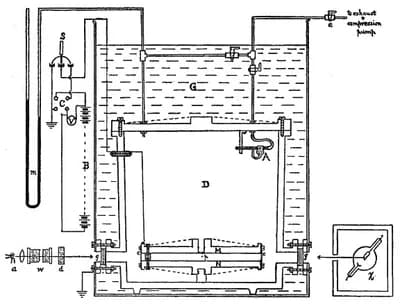
The Millikan Oil Drop Experiment achieved the most precise direct measurement of the electron's charge in physics history. Each droplet's charge was always an integer multiple of that fundamental value, providing irrefutable evidence for atomic structure.
- 0
Galileo's Inclined Plane Experiments revolutionized physics by transforming motion study from philosophical debate to empirical science. In the 1600s, Galileo rolled bronze balls down wooden ramps, timing falls with water clocks and his pulse, and discovered that distance increases as the square of time, establishing the law of uniform acceleration. A ball on a 30° plane travels 1 meter in roughly 0.45 seconds with acceleration 4.9 m/s²—half of free fall.
- 0
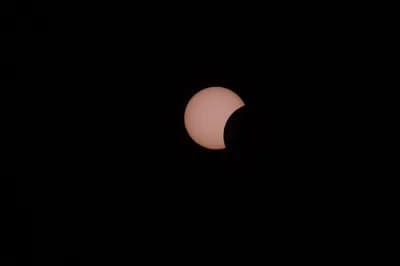
Eddington's Solar Eclipse Observation delivered the first empirical confirmation of general relativity, making it a 20th-century landmark. Compared to Photoelectric Effect Experiment, Eddington's work required more complex logistics across two continents but provided more dramatic visual proof. This data point proved massive objects warp spacetime and vaulted Einstein to global fame.
- 0
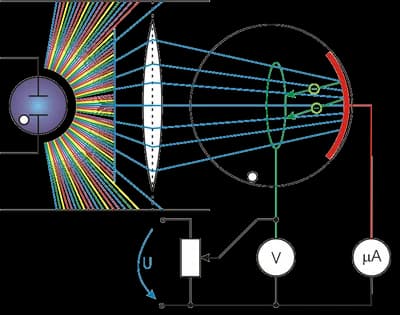
The Photoelectric Effect Experiment provided critical evidence that light behaves as quantized particles, reshaping quantum theory. Building on Einstein's 1905 explanation, Robert Millikan's 1916 measurements confirmed Planck's constant as 6.626×10⁻³⁴ J·s to within 99.5% accuracy, with stopping voltage for sodium revealing a work function of 2.3 eV. The photoelectric effect now powers everyday devices from solar panels to digital cameras.
- 0
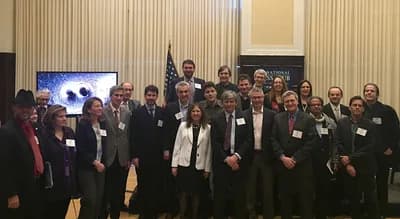
LIGO achieved the most precise confirmation of general relativity in history by directly detecting ripples in spacetime from two merging black holes 1.3 billion light-years away. The experiment measured a strain of just 10^-21, equivalent to changing the distance to the nearest star by a hair's width—a sensitivity 100 times greater than the original detectors.
- 0
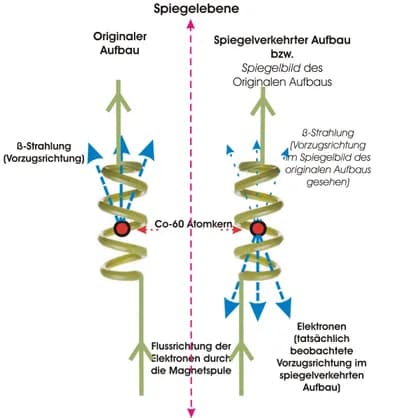
Chien-Shiung Wu's 1956 parity violation experiment shattered the long-held assumption of mirror symmetry in physics by proving the weak nuclear force treats left- and right-handed systems differently. Cooling cobalt-60 to 0.01 K in a magnetic field, Wu measured 40% more electrons emitted opposite the nuclear spin direction, a definitive 5-sigma result. This finding is more definitive than the LIGO gravitational wave detection as a fundamental symmetry test, directly disproving a cornerstone assumption that had stood for decades.
Frequently Asked Questions About Historic Physics Experiments
What makes a physics experiment historically significant? Historians of science judge experiments on three axes: conceptual elegance (minimum assumptions, maximum insight), quantitative precision (repeatable, measurable results), and paradigm impact (forced a fundamental revision of accepted theory). Every experiment on this list scores highly on all three.
Which experiment has had the greatest influence on modern technology? Millikan's oil-drop measurement underpins all modern charge standards and semiconductor tolerances; Einstein's photoelectric-effect work is the theoretical foundation for solar cells and digital cameras; LIGO's 2015 detection opened gravitational-wave astronomy as an entirely new observational window on the cosmos.
Where can I read the original papers? Key primary sources are freely accessible: Einstein's 1905 photoelectric paper is archived at the [Nobel Prize site](https://www.nobelprize.org/prizes/physics/1921/einstein/facts/); the LIGO discovery paper is open-access at [Physical Review Letters](https://journals.aps.org/prl/abstract/10.1103/PhysRevLett.116.061102); and Millikan's 1913 oil-drop paper is available via the [American Physical Society](https://journals.aps.org/).
Frequently Asked Questions About the Greatest Physics Experiments
## Frequently Asked Questions About the Greatest Physics Experiments
What was the first famous physics experiment? Galileo's inclined plane experiments in the early 1600s are often cited as the first true modern physics experiments, because they used controlled measurement rather than pure thought.
Which physics experiment had the biggest impact? That's up to you — vote at the top of the list! Historically, many scientists point to the Michelson-Morley experiment, whose null result paved the way for Einstein's special relativity.
Why is the double-slit experiment so important? The double-slit experiment showed that light (and later matter) behaves as both a wave and a particle, founding the field of quantum mechanics.
What is the most recent physics experiment on this list? LIGO's 2015 detection of gravitational waves, a century after Einstein predicted them, is the most recent entry.
See Also
Image credits
- Double-Slit Experiment: The original uploader was Jimregan at English Wikibooks. / Wikimedia Commons (CC BY-SA 3.0)
- Michelson-Morley Experiment: Koorosh Shahdaei / Wikimedia Commons (Public domain)
- Cavendish Experiment: Cavendish experiment / Wikipedia
- Rutherford Gold Foil Experiment: Nooberto at Italian Wikipedia / Wikimedia Commons (Public domain)
- Millikan Oil Drop Experiment: Robert Andrews Millikan / Wikimedia Commons (Public domain)
- Galileo's Inclined Plane Experiments: Galileo Galilei / Wikipedia
- Eddington's Solar Eclipse Observation: Marcin Cieślak / Pexels
- Photoelectric Effect Experiment: Stefan-Xp / Wikimedia Commons (CC BY-SA 3.0)
- LIGO Gravitational Wave Detection: National Science Foundation / Wikimedia Commons (Public domain)
- Wu Experiment on Parity Violation: Bleckneuhaus / Wikimedia Commons (CC0)
Rank it your way
Remix this list into your own ranking, or head to the play hub for every game mode and community breakdown — blind mode, challenges, tier lists, and more.
You Might Also Like

Top 10 Science Experiments That Sound Like Science Fiction
Top 10 Science Experiments That Sound Like Science Fiction

Top 10 YouTube Channels to Watch for Science & Education in 2026
Top 10 Best Physics Experiments in History

Top 10 Best Vaccine Breakthroughs in History
Top 10 Best Vaccine Breakthroughs in History

Top 10 Best Scientific Documentaries
#1 Cosmos: A Personal Voyage (1980) · #2 Planet Earth (2006) · #3 An Inconvenient Truth (2006)

Top 10 Worst Science Myths People Still Believe
#1 Humans Only Use 10% of Their Brains · #2 Vaccines Cause Autism · #3 Evolution Is "Just a Theory"

Top 10 Best Marine Biology Discoveries
#1 Hydrothermal Vent Ecosystems · #2 Discovery of the Coelacanth · #3 Coral Reef Symbiosis and Bleaching