#3
Cavendish Experiment
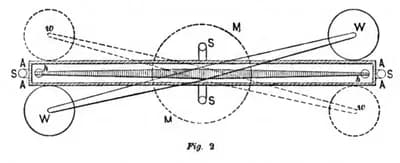
The Cavendish Experiment effectively weighed the Earth by measuring the gravitational constant G. In 1798, Henry Cavendish used a torsion balance to detect the tiny attraction between lead spheres, yielding a G value within 1% of modern measurements (6.674×10⁻¹¹ N·m²/kg²). It remains the foundation for laboratory-scale gravity measurements.
–
Photos (1)
Comments on "Cavendish Experiment"
Have a take on this ranking?
Save your rankings and see how you compare. Comments are how the argument actually happens here. Posting one needs a free account — it takes about a minute.
No comments yet.
The first comment sets the terms of the argument.