#2
James Webb Space Telescope (2021–present)
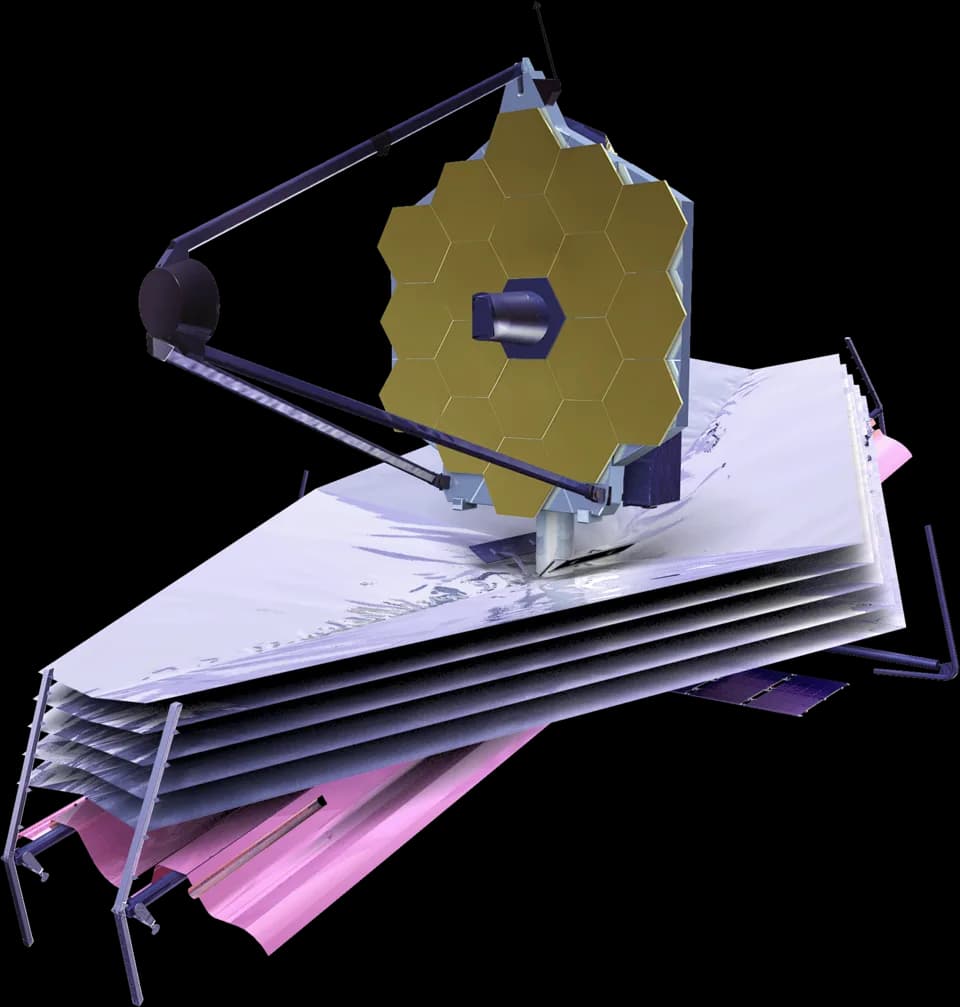
JWST's 6.5-meter gold-coated beryllium mirror collects six times more light than Hubble, enabling it to detect galaxies forming just 300 million years after the Big Bang — rivaling the best ground-based observatories by a factor of 10 in infrared sensitivity. Stationed at the L2 Lagrange point, it has characterized exoplanet atmospheres with 100 times greater spectral resolution than Spitzer and revealed protoplanetary disk structures invisible to any previous orbital telescope.
–
Photos (1)
Comments on "James Webb Space Telescope (2021–present)"
Have a take on this ranking?
Save your rankings and see how you compare. Comments are how the argument actually happens here. Posting one needs a free account — it takes about a minute.
No comments yet.
The first comment sets the terms of the argument.