Dorothy Hodgkin
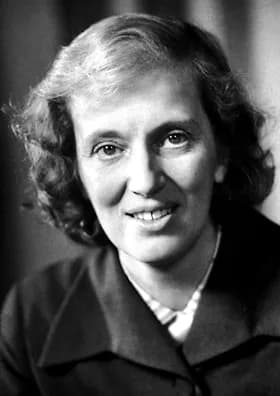
Dorothy Hodgkin was awarded the 1964 Nobel Prize in Chemistry for her groundbreaking work in determining the structures of essential biochemical substances using X-ray crystallography. Her meticulous efforts led to the successful mapping of penicillin, vitamin B12, and insulin, revolutionizing structural biology and drug design. This breakthrough directly enabled the synthetic production of penicillin, a medical advancement that has saved millions of lives globally. Over six decades later, the molecular structures she determined remain foundational references in medicinal chemistry. For instance, her work precisely identified the molecular weight of penicillin as 334 daltons, a critical data point that guided subsequent pharmaceutical developments. Hodgkin's legacy demonstrates how rigorous experimental work can have profound and lasting human impact.
Photos (1)
Comments on "Dorothy Hodgkin"
Have a take on this ranking?
Save your rankings and see how you compare. Comments are how the argument actually happens here. Posting one needs a free account — it takes about a minute.
No comments yet.
The first comment sets the terms of the argument.